Map compost odor control across the route
Odor control depends on which system holds the food scraps. A kitchen caddy needs containment and timely removal. A backyard pile needs moisture balance and oxygen. A powered appliance needs its model-specific input, cleaning, airflow, and carbon instructions. Diagnose the system first instead of transferring one system's fix to another.
Start With the Right System
Food scraps can move through several systems, but each one controls odor differently. Trace where the material is now, how long it stays there, its temperature, containment, moisture, and the next destination.
| Route Stop | What to Check |
|---|---|
| Kitchen collection caddy | Fitted lid, cleaning, approved liner if any, removal cadence |
| Municipal cart or common bin | Local accepted-material, liner, set-out, and cleaning rules |
| Backyard compost pile | Browns-to-greens balance, wrung-sponge moisture, coverage, aeration |
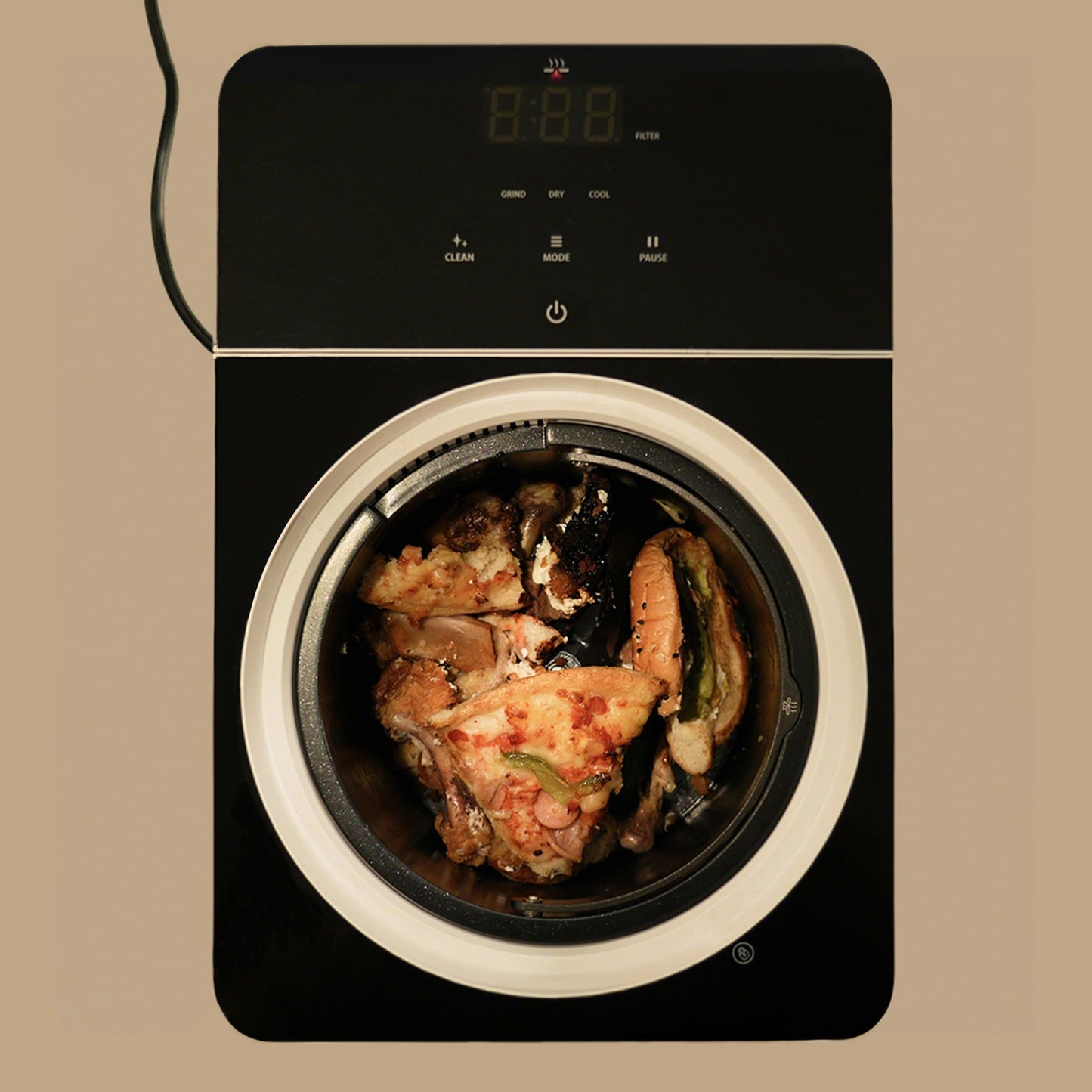
| Powered appliance | Model-approved inputs, residue, seals, vents, screens, fan, filter seating, carbon condition |
Do not deliberately aerate a kitchen collection caddy because an outdoor pile needs air. Do not add paper or water to an appliance because a pile needs browns or moisture. And do not assume one city's liner rules apply to another: Toronto permits specified plastic or paper liners, while Seattle says plastic bags contaminate its compost stream.
Sources: Toronto Green Bin guide and Seattle kitchen storage tips, retrieved September 11, 2026.
Kitchen Caddy: Contain, Clean, and Move
Use a fitted lid and wash the caddy with detergent or dish soap. Move the contents on a cadence that works with your household and collection service. Seattle recommends emptying a kitchen container every few days and refrigerating or freezing scraps when practical; Toronto also recommends freezer storage for meat, fish, and similar material until collection. These are collection tactics, not appliance-loading instructions.
Use only the liner allowed by your local program. “Empty daily” and “never use a liner” are not universal rules. If a fitted, clean caddy still releases odor, shorten the holding time or refrigerate or freeze suitable scraps rather than adding an unsupported charcoal accessory and assuming the problem is solved.
Backyard Pile: Restore Moisture Balance and Air
EPA recommends two to three volumes of browns for each volume of greens, covering new food scraps with four to eight inches of browns, and keeping the pile about as damp as a wrung-out sponge. Excess water can fill pore space and reduce oxygen. When a pile smells bad, EPA advises adding dry browns and turning it.
That diagnosis is specific to an aerobic pile. It does not tell you how to ventilate a sealed kitchen caddy or what an electric appliance accepts.
Source: US EPA — Composting at Home, retrieved September 11, 2026.
Powered Appliance: Check Source, Air Path, and Carbon
Use the exact model's manual. First check the odor source: an unsupported input, excess liquid, residue, incomplete processing, or retained material. Then inspect the intended air path—maker-defined seals, screens, vents, fan, and filter seating. Finally, evaluate the carbon using the maker's service guidance.
Activated carbon has finite adsorption capacity. An age or cycle reminder is not a measured capacity result. EPA's industrial adsorber guidance identifies inlet concentration, flow, moisture, temperature, leaks, outlet concentration, and carbon activity as relevant variables. Those principles explain why service life depends on the system; they do not establish a replacement interval for a kitchen appliance.
Source: US EPA — Activated Carbon Adsorber Monitoring, retrieved September 11, 2026. The EPA page concerns industrial systems and is used only for adsorption and breakthrough concepts.
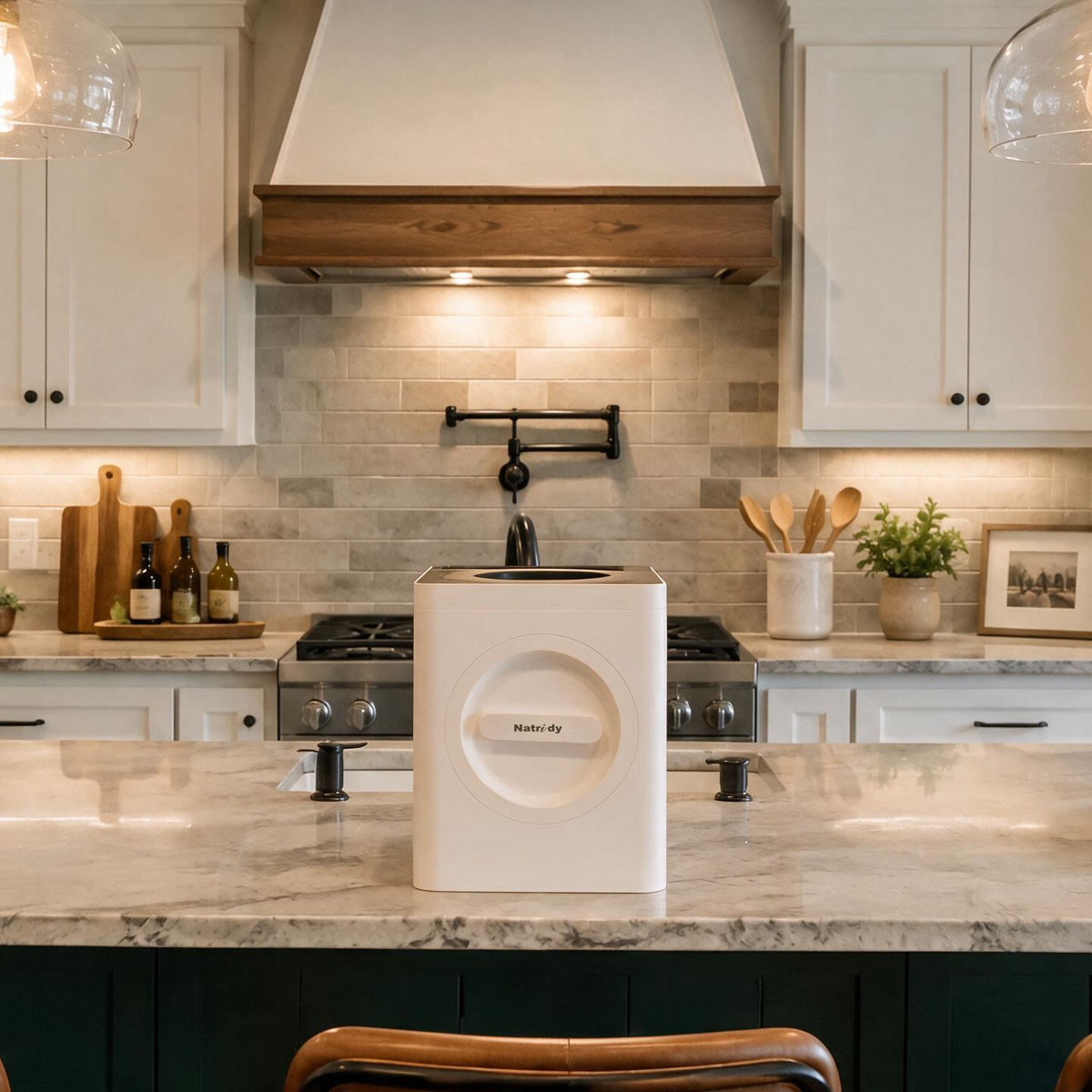
For a powered option, the Natridy Core Unit has a fixed four-hour Quick mode and an Auto mode that varies with the load. Its 100 oz (3 L) bucket has a 68 oz / 2 L working batch, and the measured sound level is 39 dB. The output is dry, ground food-scrap material, not finished compost.
If smells persist, use Electric Composter Odor: A Diagnostic Guide to find the cause.
Natridy product specifications
- Model: CYF01-500CD5
- Bucket capacity: 100 oz (3 L)
- Working batch volume: 68 oz / 2 L
- Energy: ~1 kWh per 4-hour cycle
- Noise: 39 dB (measured)
- Output: dry, ground food-scrap material
FAQ
Why does my kitchen caddy smell even when I empty it often? Wash it with dish soap or detergent, let it dry, and check that the lid fits. Then shorten the holding time or refrigerate or freeze suitable scraps if your collection routine permits. Follow local liner and accepted-material rules; do not assume an outdoor-pile or appliance remedy belongs in the caddy.
How can I reduce odor in an apartment without outdoor space? Use a fitted container and move scraps on a cadence matched to the collection service. Refrigerate or freeze suitable scraps until collection when practical. If frozen scraps will enter Natridy rather than a collection bin, thaw them first and follow the product's input rules.
Does airflow matter for compost odor control? Yes, but the action depends on the system. In an outdoor pile, EPA says a bad odor can indicate excessive moisture or insufficient air; add dry browns and turn the pile. In an appliance, inspect only the maker-defined air path. In a kitchen collection caddy, use containment and local-program handling rather than pile-aeration instructions.
What should I do with the dry material from an electric composter? Natridy produces dry, ground food-scrap material, not biologically stable compost. Follow the maker's destination guidance, local organics rules, or trash requirements. If using it in soil or a compost pile, allow further biological treatment before treating it as compost.
An unusual electrical, burning, or chemical smell is not a compost-balancing problem. Stop using the appliance and follow its safety and support instructions.