Define ‘Best’ Before Comparing Electric Composters
There is no meaningful “best electric composter” until you define the household job and compare the same measurements. Start with the scraps, space, routine, output destination, and maintenance you can actually support. Then normalize capacity, energy, and time claims before scoring a model.
Define the Household Job First
Record one representative week before shopping. Measure the scraps you would actually send to a machine, not all food purchased and not the container they currently occupy. Note the input mix, approximate daily volume or weight, peak cooking days, available floor or counter space, and the route you can use after processing.
The destination matters before the appliance. EPA says residential grinders and dehydrators produce dried food scraps, not biologically stable compost. That output needs composting, curing, or other further treatment before use. If your local organics program does not accept processed material and you have no suitable further-treatment route, reduction alone may not solve your disposal job.
Source: US EPA — Approaches to Composting, retrieved September 12, 2026.
| Household question | Evidence to collect |
|---|---|
| What enters? | A measured week of model-approved scraps |
| Where does it sit? | Counter or floor dimensions, clearance, outlet, sound sensitivity |
| When can it run? | Batch availability or retained-material feeding routine |
| What remains inside? | Emptyable bucket or required standing inventory |
| Where does output go? | A permitted composting, curing, collection, or disposal route |
Normalize Capacity Before Comparing It
Capacity language can describe several different things. Lomi describes a 3 L bucket. FoodCycler lists 3.5 L and 5 L buckets. Mill's emptying guide uses the dry grounds reaching the fill line as the trigger for emptying. Reencle publishes recommended and maximum daily input in grams. Those figures are not one shared measurement.
Additional sources: Lomi FAQ, FoodCycler model comparison, and Reencle model specifications, retrieved September 12, 2026. These are maker-published figures, not an independent head-to-head test.
For each model, label the number before placing it in a table:
- vessel or bucket volume;
- usable working batch;
- recommended daily input;
- maximum input;
- mass accumulated before emptying; or
- typical time to a fill line.
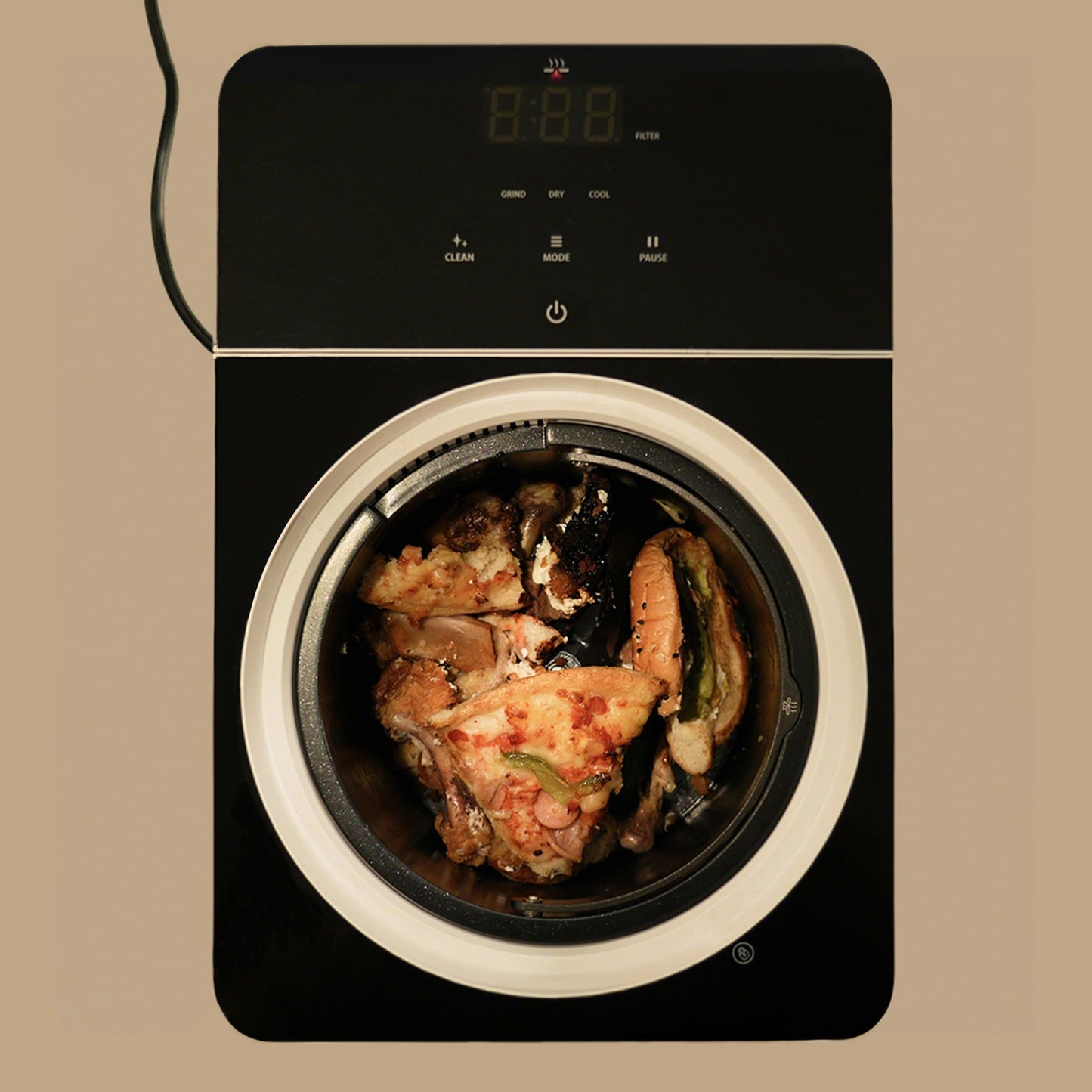
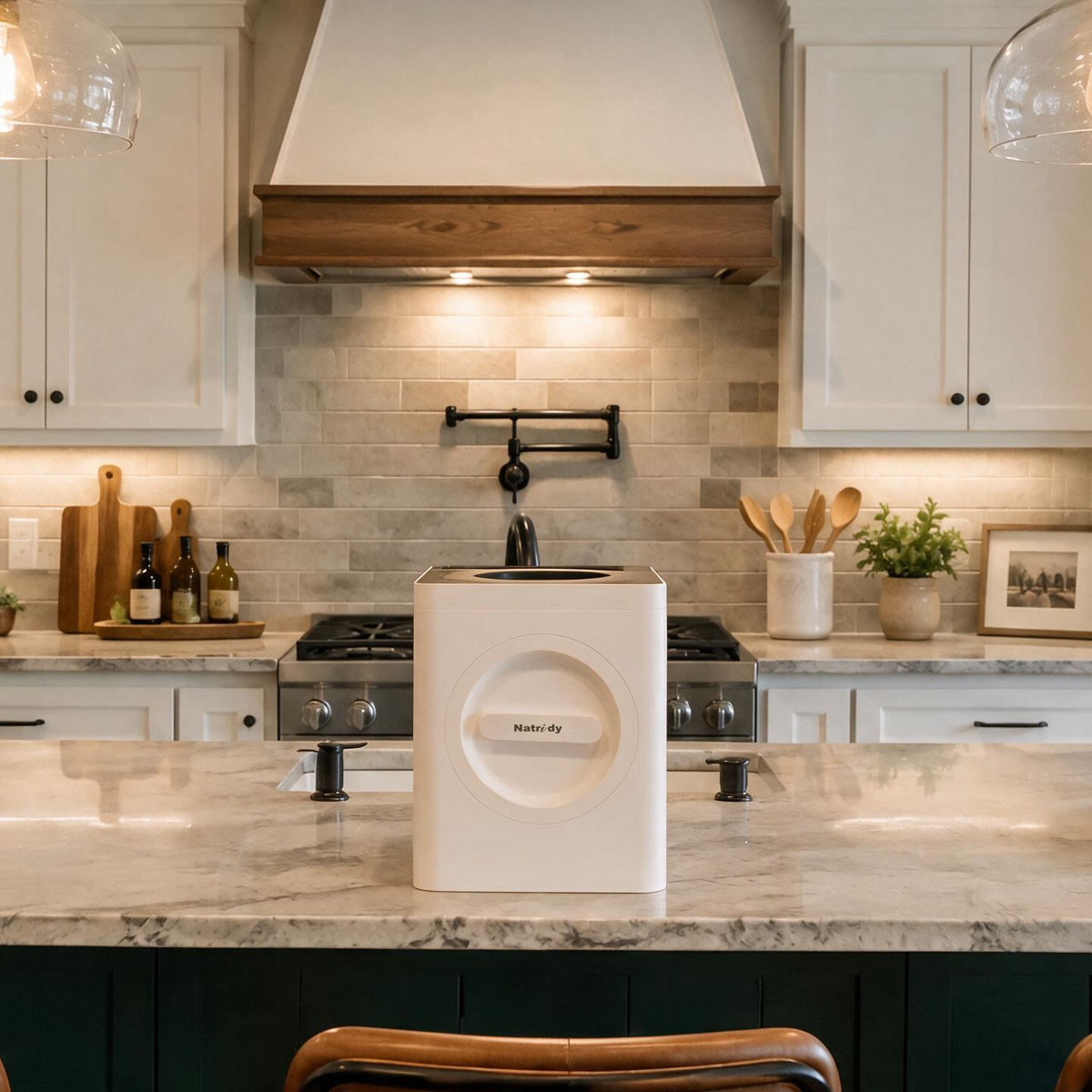
The Natridy Core Unit has a 100 oz (3 L) bucket capacity and a 68 oz / 2 L working batch. Use the working batch—not the vessel's brim volume—when estimating run frequency. Then confirm that the measured scrap mix is allowed in the model-specific input guide.
Separate Cycle Time From Ownership Time
A batch cycle answers how long one run takes. It does not tell you how long material stays in a kitchen or when a retained bin reaches its emptying line. The cycle-time versus retention-time guide explains the distinction.
Compare routines with direct questions:
- Can the vessel return to empty after today's load?
- Can scraps be added during processing, or must the batch wait?
- What material must remain between additions?
- What triggers emptying: every batch, a cycle limit, a fill line, or a harvest line?
- What cleaning, bed care, filter service, and post-processing are required?
Compare Energy and Sound on the Same Basis
Per-cycle energy cannot be ranked directly against per-day energy. Normalize the same food mass and starting moisture over the same observation window, including idle or always-on power. Also hold the final material state and retained inventory constant; otherwise one test may stop with more water or material still in the machine.
A sound figure also needs context: distance, room background, operating phase, load, and instrument method. Natridy reports 39 dB (measured), but that number alone does not prove how another machine would sound in the same kitchen.
Score the Whole Ownership Route
Build a scorecard only after the terms are normalized. Give each criterion a weight before seeing brand names: approved inputs, usable capacity, routine, comparable energy, sound evidence, cleaning, carbon service, output state, destination, dimensions, warranty, and total cost.
For Natridy, Quick is fixed at four hours and Auto is about 2–8 hours. Natridy reports about 1 kWh per four-hour cycle. Its output is dry, ground food-scrap material—not finished compost or fertilizer—and still needs a permitted next step. Those facts describe one option; they do not create a universal winner.
Source: Natridy Core Unit product page, retrieved September 12, 2026.
When you are ready to compare named machines, Lomi vs FoodCycler vs Natridy uses one shared criteria list. For a home without a yard, first map the real destination with the apartment food-scrap guide.
Natridy product specifications
- Model: CYF01-500CD5
- Bucket capacity: 100 oz (3 L)
- Working batch volume: 68 oz / 2 L
- Energy: ~1 kWh per 4-hour cycle
- Noise: 39 dB (measured)
- Output: dry, ground food-scrap material
FAQ
What is the first step in choosing an electric composter? Measure one representative week of scraps that the intended model accepts. Record volume or weight, peak days, input mix, available space, desired routine, and the permitted destination after processing. That evidence defines the job before marketing claims influence the scorecard.
How do I compare electric composter noise levels? Compare sound figures only when distance, room background, operating phase, load, and measurement method are disclosed on the same basis. A single maker's decibel number can describe that product, but it does not establish a quieter winner against figures collected under unknown conditions.
Does capacity matter more than cycle time? Neither automatically matters more. Working-batch volume estimates loads per run; cycle time estimates when a batch machine becomes available again. A retained-bin volume or daily-input figure describes another routine. Use measured household scraps to determine which constraint binds first.
Does dry, ground output count as finished compost? No. EPA says residential grinder/dehydrator output is not biologically stable compost and requires composting, curing, or other further treatment before use. Texture and weight reduction describe physical state; they do not establish maturity, stability, pathogen reduction, or local acceptance.