Apartment Food-Scrap Smell: Where It Starts
This page covers one narrow question. For the apartment odor and storage routine, see the apartment composting guide.
Apartment food-scrap odor is an inventory-and-time problem before it is a fragrance problem. Wet organic material changes while it waits. Reduce the amount waiting, shorten the handoff interval, keep it cold, clean the container, or remove water with an electric dryer. Each option manages the source differently; none eliminates the destination.
Why a closed lid is not the whole answer
A lid can contain splashes and slow room-air exchange, but it does not stop changes inside wet food. Scraps arrive with water, sugars, proteins, fats, microbes, and trapped air. As the mixture sits, different compounds can be released.
Cornell's compost guidance explains that excess moisture can fill pore space, limit oxygen movement, and contribute to foul-smelling anaerobic zones. Cornell also notes that some odors can arise under aerobic conditions. A kitchen caddy is not a managed compost pile, so this does not mean every apartment smell has one cause. It shows why wet inventory and airflow matter.
Sources: Cornell monitoring compost moisture, factors leading to anaerobic conditions, and odor management, retrieved August 27, 2026.
Five levers change the source
| Lever | What changes | Practical tradeoff |
|---|---|---|
| Less inventory | Fewer wet scraps remain indoors | More frequent handoff |
| Less time | Material reaches collection sooner | Routine must match pickup or drop-off |
| Lower temperature | Microbial growth slows or pauses while cold | Refrigerator or freezer space is used |
| Less free liquid | Wet pooling and leakage are reduced | Drain only under local waste and plumbing rules |
| Less water in the stored material | Drying changes weight, texture, and odor source | Appliance, electricity, cleaning, carbon, and output handling |
These levers are more useful than asking which container "blocks odor" because they identify what the container is being asked to hold.
Cold storage changes the clock
USDA says freezing at 0°F inactivates bacteria, yeasts, and molds and prevents microbial growth while food remains frozen. It does not necessarily destroy those organisms, and activity can resume after thawing.
For food scraps, that means a sealed freezer container can pause the waiting problem until collection. It does not make the scraps permanently stable. Plan the transfer so thawing material does not sit warm for another long interval.
Source: USDA Freezing and Food Safety, retrieved August 27, 2026.
Municipal handoff can be the simplest answer
Toronto recommends frequent washing of kitchen catchers and Green Bins and suggests refrigerator or freezer storage to reduce odors and flies. Other cities publish their own accepted-item, wrapping, liner, and collection rules.
The key is cadence. A small catcher emptied every evening may create less indoor odor load than a large sealed bin kept for a week. Capacity without time can make the problem larger.
Source: City of Toronto Green Bin guidance, retrieved August 27, 2026.
Electric drying changes wet inventory into dry inventory
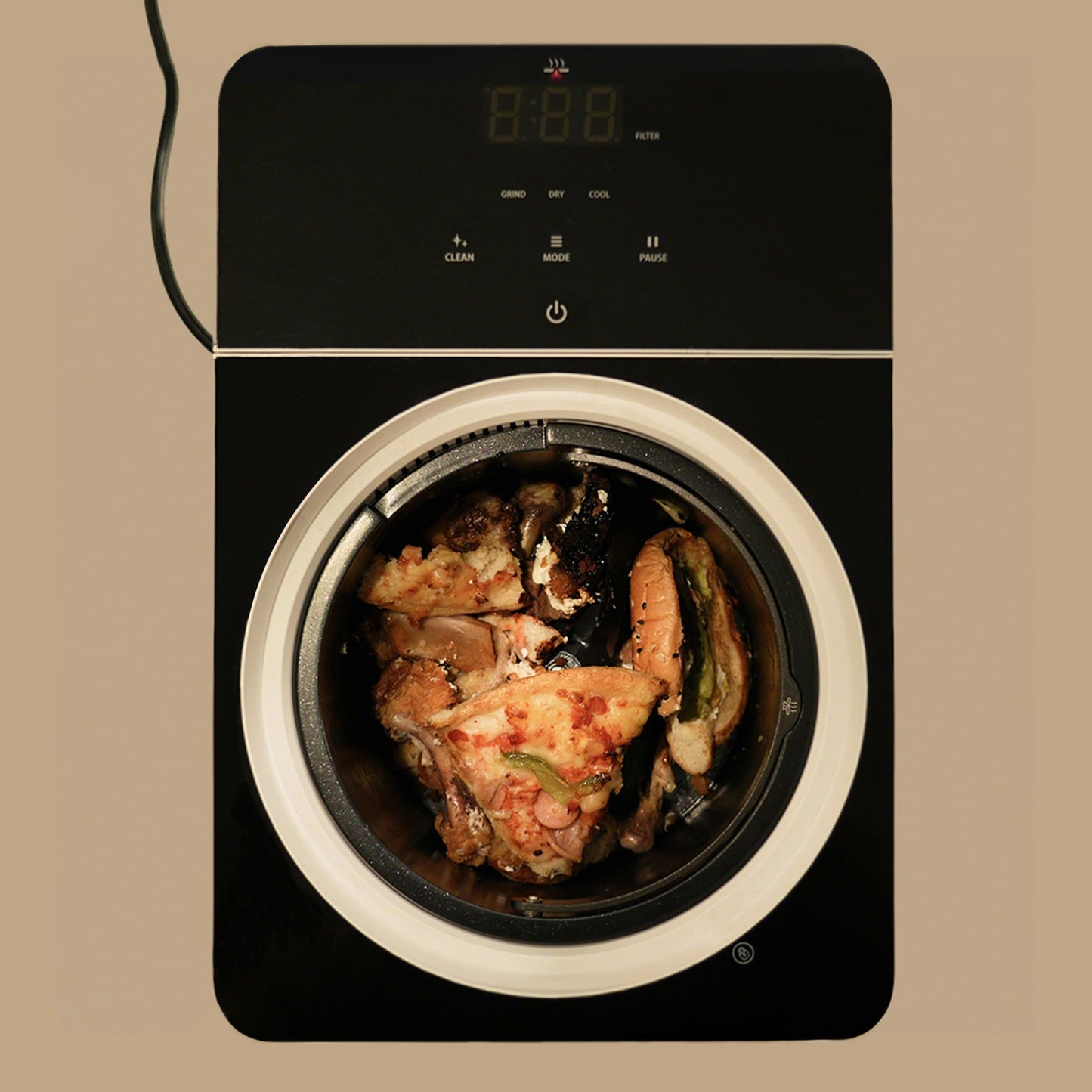
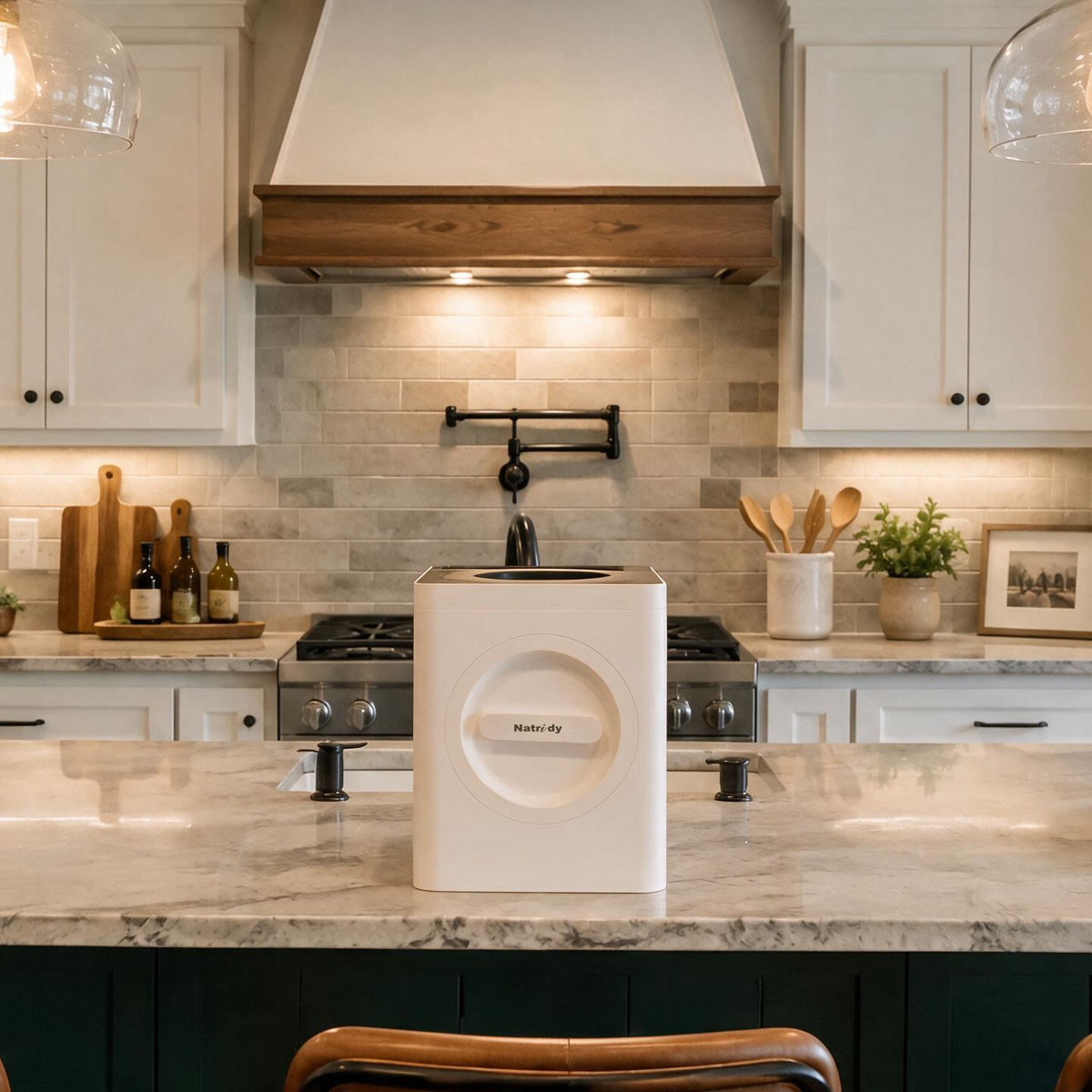
A finish-and-empty electric composter heats, grinds, and removes water from a selected batch. The Natridy Electric Composter produces dry, ground food-scrap material. That can make indoor handling lighter and less wet, but the material still needs a permitted next step.
EPA says residential grinder/dehydrators reduce food-scrap weight and volume into a dry mixture but do not complete biological composting. CalRecycle warns in a commercial-system context that dried food can regain odor and pest risk when rewetted. Keep temporary dry storage dry and confirm the destination.
Sources: US EPA Approaches to Composting and CalRecycle food-scrap technologies, retrieved August 27, 2026.
Diagnose where the smell appears
Smell inside the caddy or drum
Inspect wet inventory, excess liquid, residue, and waiting time first.
Smell at an appliance exhaust
Inspect the source, then the intended airflow path, vents, filter seating, and carbon condition.
Smell after dry material gets wet
Separate the leak or humidity source, then follow local destination and product guidance. Do not assume dry appearance means permanent stability.
Smell in a shared collection room
The building's bin size, cleaning, ventilation, and pickup schedule may dominate the apartment container. Report the condition to property management rather than trying to solve a building-scale source with fragrance inside one unit.
A low-odor weekly routine
- Use the smallest convenient prep container.
- Move high-odor scraps to cold storage or your building handoff promptly.
- Keep lids and seals clean; wash and dry the container on a set trigger.
- Follow local rules for liners, paper, liquids, fats, oils, and grease.
- If using an appliance, inspect output and airflow before blaming carbon.
- Record the actual days between handoffs and shorten the interval if odor returns.
For an apartment destination map, read Apartment Composting With No Yard.
Then use the source-path-carbon diagnostic, compare all kitchen food-waste options, and inspect the Natridy Electric Composter only if drying solves the identified storage problem.
FAQ
Why do food scraps smell faster in a small apartment? The chemistry is not unique to apartments, but a smaller air volume, nearby living space, warm interiors, and limited handoff options can make the source more noticeable. Focus on wet inventory, temperature, container cleanliness, and days until handoff rather than trying to cover the odor.
Does freezing kill everything in food scraps? No. USDA says freezing prevents microbial growth while food remains frozen but does not necessarily destroy bacteria, yeasts, and molds. Activity can resume after thawing. Freezing is useful temporary storage, so pair it with a planned collection or processing route.
Will activated carbon make any food-waste bin odorless? No universal result follows from the presence of carbon. Performance depends on the odor source, air path, installed media, load, humidity, operating time, and breakthrough. Correct wet material, residue, leaks, and blocked airflow before treating carbon replacement as the only answer.
Is a bigger countertop caddy better? Only if its capacity matches a short, disciplined handoff schedule. A larger caddy can also keep more wet inventory indoors for longer. Compare usable volume together with days between emptying, cleaning effort, available cold storage, and the building's collection cadence.