Food-Waste Options for Renters, Condos, and HOA Buildings
For a renter or condo resident, the best food-waste routine starts with the building's actual collection path. Confirm what the property and hauler accept, then choose how to hold scraps until handoff. Prevention, a small pail, cold storage, drop-off, or electric drying can solve different parts of that routine.
Start downstairs, not on a product page
Before buying a container or appliance, answer four building questions:
- Does the property provide an organics stream?
- Which materials and liners does its hauler accept?
- Where is the collection point, and when can residents access it?
- What rules apply to appliances, outlets, balconies, storage rooms, and common areas?
The answers vary by address. Vancouver, for example, says every property must have an organic-waste diversion plan and that most multi-family buildings use private haulers. The city tells properties to confirm service details and accepted materials.
Source: City of Vancouver guidance for apartments, condos, and townhomes, retrieved September 1, 2026. This is Vancouver-specific, not a universal HOA or tenant rule.
Toronto similarly separates resources for multi-residential building management and residents, including in-unit organics and Green Bin sorting information.
Source: City of Toronto apartments, condos, and co-ops, retrieved September 1, 2026. Eligible services and providers can differ by building.
An in-unit appliance may change the form and timing of food-scrap handling. It does not override a lease, condominium rule, electrical requirement, hauler list, or municipal disposal rule.
Prevention is the first capacity upgrade
The least crowded pail is the one that never receives avoidable waste. EPA recommends planning, storage, portioning, and using leftovers before diversion. Its household toolkit is designed to help people determine how much food is actually going to waste.
Source: EPA Preventing Wasted Food at Home, retrieved September 1, 2026.
For one week, separate your stream into:
- food that could still have been eaten;
- unavoidable preparation scraps such as peels or shells;
- items accepted by the building organics program; and
- items that require another disposal route.
That audit prevents an appliance from becoming a reason to ignore preventable waste and gives you a real quantity for sizing.
Option 1: short-interval pail to building organics
If the property has a convenient organics room or cart, a small kitchen catcher may be the simplest system. The main design variables are container size, lid, liner rules, cleaning, and how often you make the trip downstairs.
A smaller container can be an advantage because it forces a shorter handoff interval. It is not a complete odor-control system by itself. Wet residue, room temperature, lid fit, and collection timing still matter.
Use the building's accepted-material list. A bag labeled “compostable” is not automatically accepted by every hauler or processing facility.
Option 2: refrigerator or freezer staging
Cold storage can separate the kitchen-odor clock from collection day. Use a closed, clearly labeled container that does not compromise food safety or contaminate food-storage surfaces. Confirm that the destination accepts frozen scraps and that the container or liner follows local rules.
This option uses refrigerator or freezer space but avoids adding another processing appliance. It can work especially well for a small household with infrequent organics trips. It is less convenient when freezer capacity is already scarce.
Our apartment food-scrap smell guide breaks odor control into source, storage time, airflow, and capture rather than promising that one lid solves every load.
Option 3: a local drop-off routine
Some buildings lack organics collection even when a neighborhood drop-off or subscription service exists. Before relying on one, verify:
- accepted food types and packaging;
- access hours and account requirements;
- the weight and leak resistance of the container you must carry;
- travel distance in bad weather; and
- what happens during vacations or missed trips.
A map pin is not yet a household routine. Simulate the trip with the container and frequency you would actually use.
Option 4: electric drying and grinding
An electric food recycler can reduce moisture and grind supported scraps before the next handoff. For an apartment, compare the whole ownership loop:
| Question | Why it matters in a shared building |
|---|---|
| Counter or floor footprint | Small kitchens have competing storage needs |
| Cycle boundary | Determines whether material resets after a batch or accumulates across additions |
| Noise and timing | Overnight use may share walls or sleeping space |
| Exhaust and carbon service | Odor management depends on source, air path, and maintained media |
| Cleaning access | A difficult bucket can turn occasional residue into an ongoing problem |
| Output destination | Dry grounds still need a permitted route |
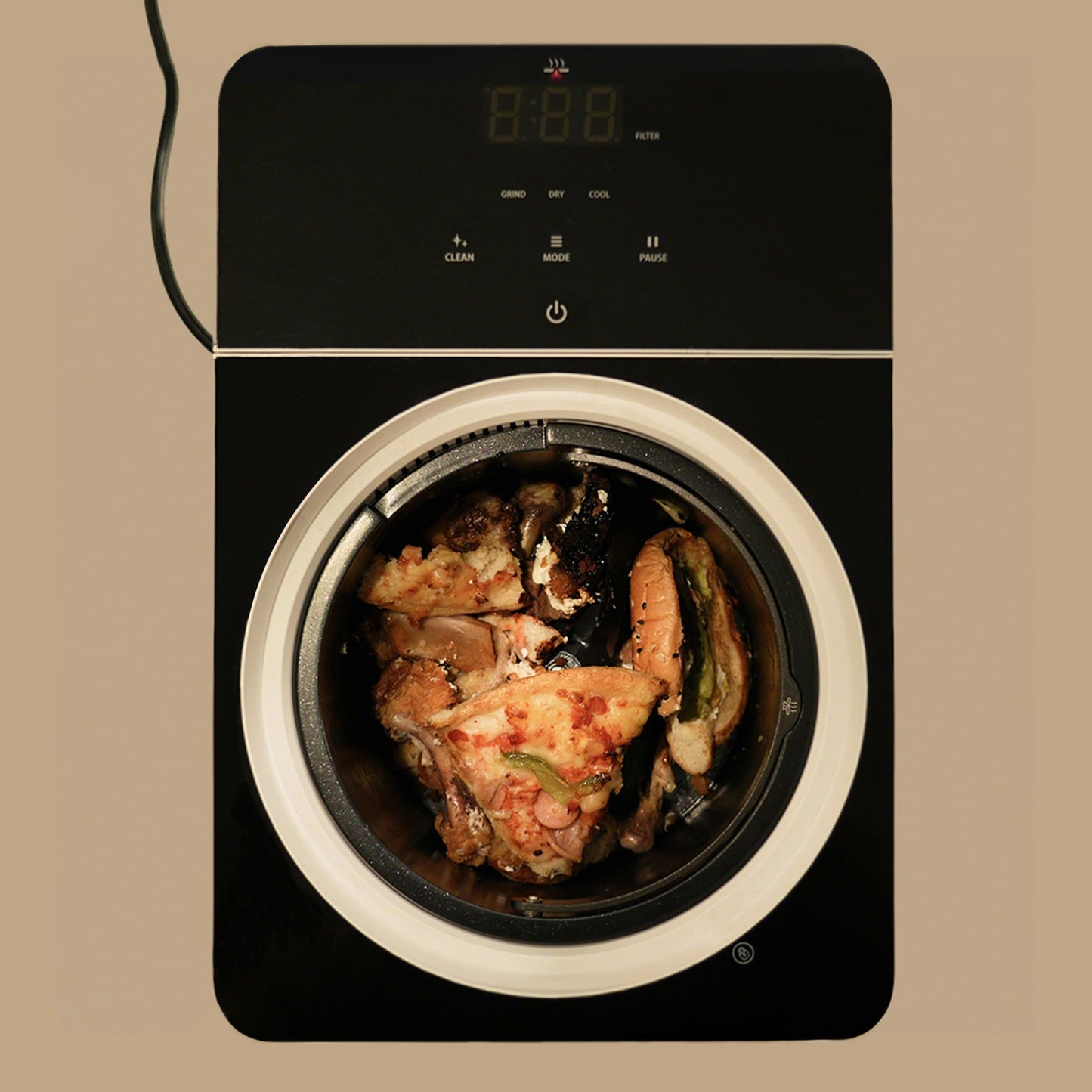
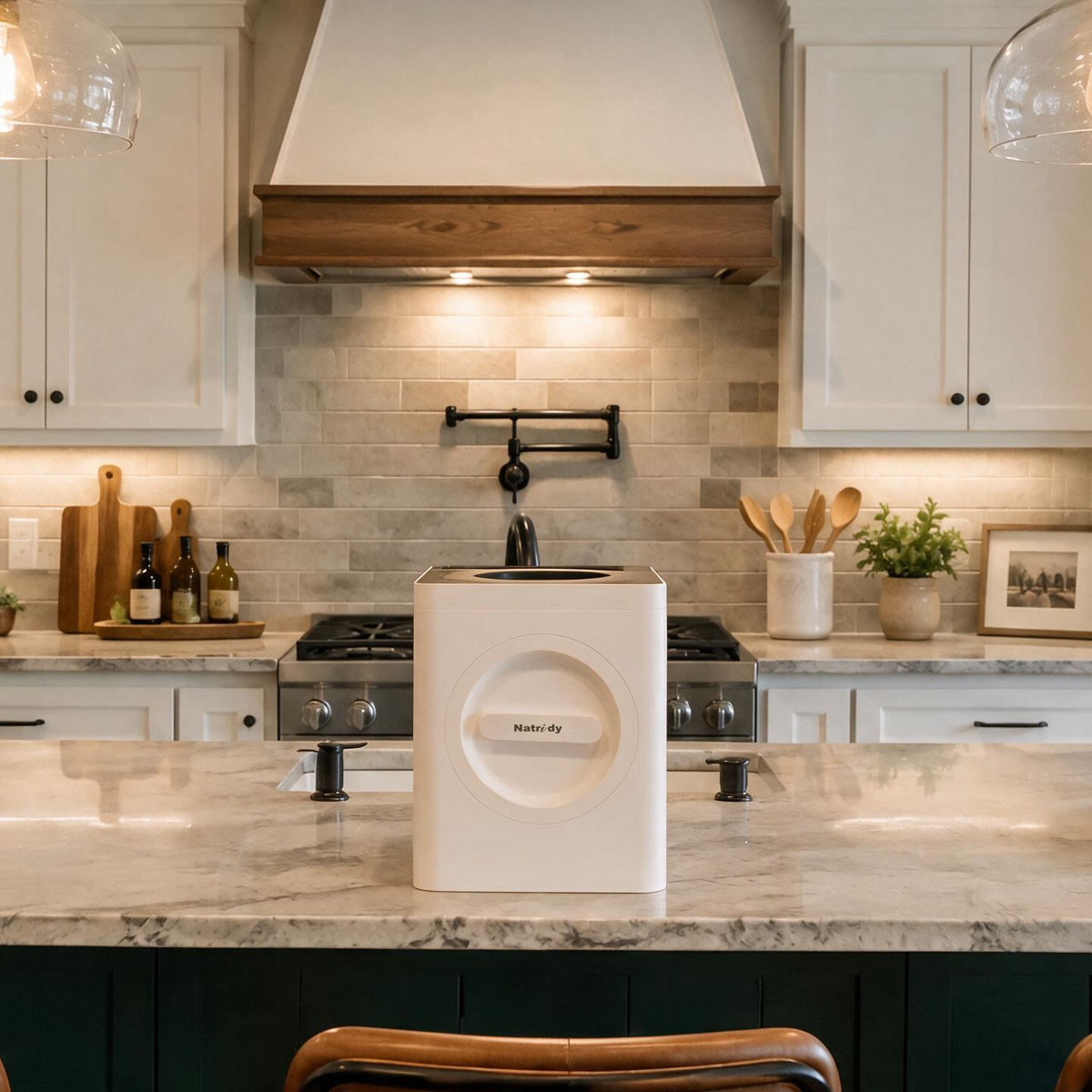
The Natridy Electric Composter is a countertop, finish-and-empty batch appliance. It produces dry, ground food scraps—not finished compost or fertilizer. The owner can mix them into soil or a compost pile to continue decomposition where appropriate, send them to an accepting organics route, or dispose of them as local rules permit.
See what electric-composter output actually is before deciding where it belongs.
Option 5: biological systems where permitted
Worm bins, Bokashi-style fermentation, and other biological methods can fit some homes. They also introduce method-specific inputs, moisture, temperature, harvest, storage, and destination work. Balcony or storage-room placement may be restricted, and cold or heat can change operating conditions.
Do not choose a method from the word “composting” alone. Read the exact system instructions and confirm the building permits the location and material handling.
Build a two-stage system
Many apartments need two linked tools rather than one universal machine:
- In-unit control: prevent avoidable waste, contain the supported scraps, and shorten or manage the wet-storage interval.
- Destination: move the material to the building organics stream, a verified drop-off, a home compost route, soil finishing where appropriate, or permitted garbage.
An appliance can improve stage one while leaving stage two unchanged. A building Green Bin can solve stage two while still requiring a clean, low-friction kitchen routine.
A 15-minute property-manager checklist
Send the building manager or HOA a short list of factual questions:
- Who collects organics, and what is the current accepted-material guide?
- Are liners required, optional, or prohibited?
- Where and when can residents access the bins?
- Is there a cleaning or contamination procedure?
- Which small kitchen appliances are permitted under electrical and building rules?
- Are balcony, storage-room, or common-area food-waste systems restricted?
Ask for the current written rule or hauler link. Do not rely on an old lobby sign or another city's program.
Choose by friction, not aspiration
The best system is the one the household can repeat on a tired week. Measure four points:
- minutes from plate to contained storage;
- days until the next permitted handoff;
- cleaning and consumable work per month; and
- distance, weight, and access friction at the destination.
Use the broader no-yard apartment guide to compare paths. Then test the chosen routine for a week before adding hardware.
FAQ
Can a renter use an electric composter without a yard? Yes, if the appliance is permitted and its electrical, ventilation, and placement instructions fit the unit. A yard is not required for drying and grinding, but the resulting material still needs a permitted destination such as an accepting organics stream, compost route, or garbage.
Does an HOA organics bin accept every item an appliance can process? Not necessarily. Appliance input rules and hauler acceptance rules answer different questions. Check the current building or hauler guide for food types, liners, packaging, and output. Never infer local acceptance from another city or a product's input list.
What if my building has no organics collection? Check verified local drop-offs or subscription services, model refrigerator or freezer staging, and consider an electric or biological system only with a confirmed final destination. Also measure and reduce preventable food waste before sizing any container or appliance.
Is a larger kitchen container better for an apartment? Not automatically. A larger container reduces trips but can extend the time wet scraps remain indoors. Compare usable space, leakage, cleaning, collection timing, and the weight you must carry. A smaller pail with frequent handoff can be the easier routine.