Kitchen Food-Waste Solutions Compared
The best kitchen food-waste system is the one that fits your collection access, storage space, scrap volume, and final destination. A municipal Green Bin is usually simplest. Freezing controls odor until pickup. Bokashi ferments scraps but needs a second step. An electric dryer reduces wet scraps to dry material that still needs an accepted destination.
Disclosure: Natridy manufactures and sells the Natridy Electric Composter. This guide compares four handling methods, including ones we do not sell; acceptance rules are local and are stated as such.
Start with the destination, not the appliance
Food-scrap tools solve different parts of the same chain. A countertop pail stores. A freezer delays odor. Bokashi ferments. An electric dryer removes water and reduces bulk. A municipal program carries material to a larger treatment system.
None of those steps answers the final question automatically: where will the material go?
Before choosing a machine or bin, check the exact rules for your address. Toronto accepts a broad range of fresh, frozen, dried, prepared, cooked, and spoiled food in its Green Bin, including meat, fish, bones, dairy, grains, and produce. Another municipality may use different bags, exclusions, pickup schedules, or processing methods.
Source: City of Toronto Green Bin rules, retrieved August 26, 2026. The rule is Toronto-specific and should not be generalized.
The four practical options
| Option | What it changes | What the owner manages | What must happen next |
|---|---|---|---|
| Municipal Green Bin | Hands scraps to an established collection system | Indoor catcher, liners allowed locally, washing, pickup schedule | Put only locally accepted items out correctly |
| Freezer or refrigerator | Slows odor and flies during storage | Cold-storage space and transfer on collection day | Move the scraps to a Green Bin or another accepted route |
| Bokashi | Ferments compacted scraps in an airtight bin | Inoculated bran, compression, liquid drainage, post-fill wait | Bury away from plants or add to another composting step |
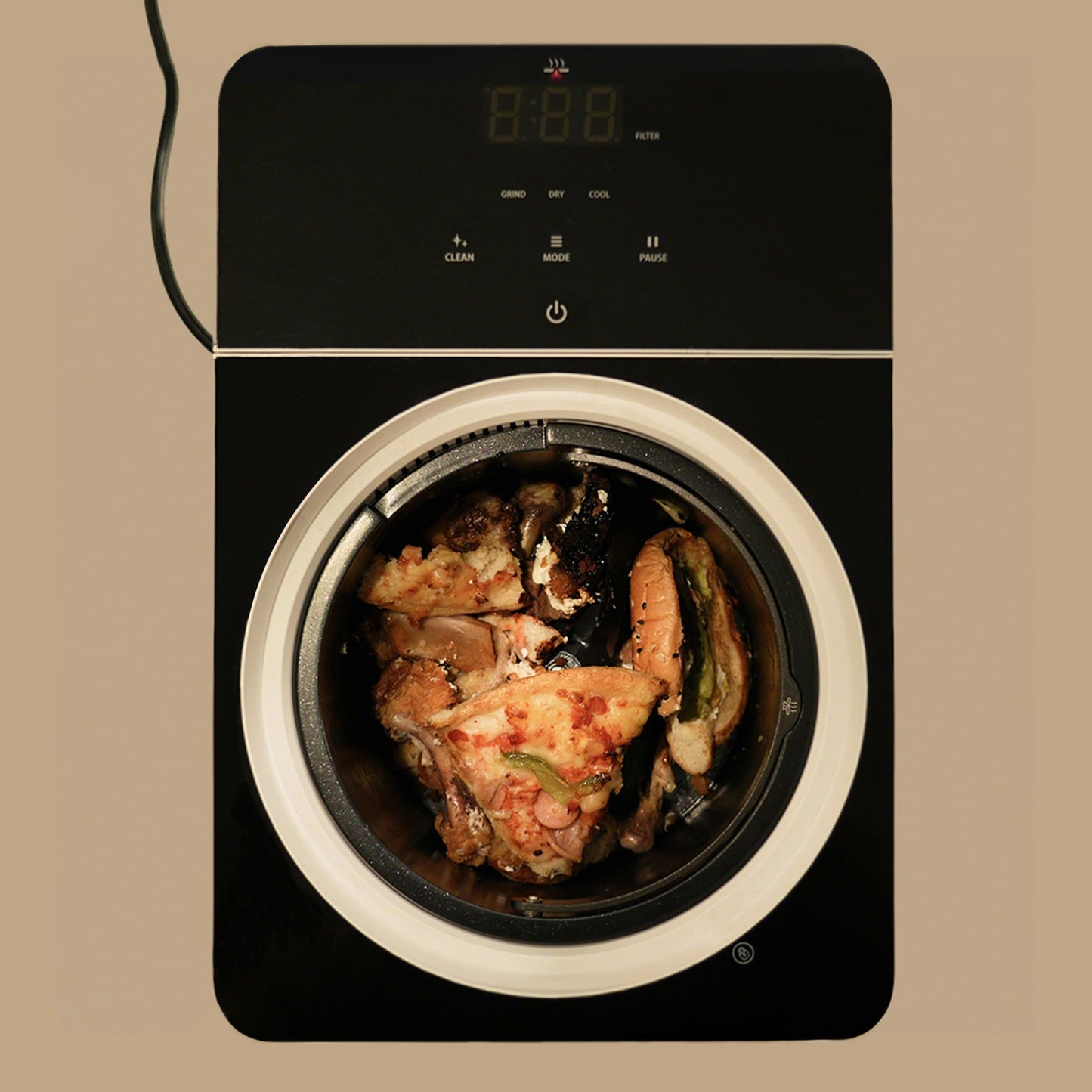
| Electric grinder/dehydrator | Removes much of the water and reduces handling volume | Purchase, electricity, load rules, cleaning, carbon, and emptying | Send dry material to an accepted organics or further-treatment route |
This is not a universal ranking. The right choice depends on which ownership routine removes the actual friction in your kitchen.
Option one: use the municipal Green Bin directly
If collection is convenient and your indoor catcher stays manageable, direct municipal handoff is usually the shortest system. There is no appliance to buy, no special processing cycle, and no new output to interpret.
The work is storage and hygiene. The City of Toronto recommends washing kitchen catchers and Green Bins and suggests refrigerator or freezer storage to reduce odors and flies, especially in summer. Pickup frequency and acceptable liners still matter.
This option fits households with enough indoor or outdoor bin space and reliable collection. It can be harder in a small apartment when pickup is infrequent, the building's organics room is far away, or wet scraps create pests and odor before the handoff.
If those apartment constraints describe your routine, use the no-yard apartment composting guide to compare a Green Bin, drop-off, Bokashi, community composting, and electric drying without assuming outdoor soil.
Option two: freeze or refrigerate the scraps
Freezing is a storage strategy, not a treatment process. It keeps the food cold until you transfer it to a Green Bin, community drop-off, or composting route. Both Toronto and Agriculture and Agri-Food Canada recommend cold storage as a way to prevent odor and flies.
Sources: City of Toronto Green Bin tips and Agriculture and Agri-Food Canada household guidance, retrieved August 26, 2026.
The tradeoff is obvious in a compact kitchen: frozen scraps compete with food for freezer space. There is no established volume reduction in the cited guidance, and the scraps still require a collection or compost destination. But if space is available, freezing can solve the smell problem with almost no new routine.
Option three: ferment with Bokashi
Bokashi uses an airtight container and inoculated bran to ferment food scraps under anaerobic conditions. Arizona's environmental agency describes a routine of compacting layers, adding bran, keeping the container sealed, draining liquid every two to three days, and waiting two weeks after the bin is full.
The filled bucket is not the end of the process. The agency instructs owners to bury the acidic material away from plants or add it to another composting system. Bran is also a recurring input.
Source: Arizona Department of Environmental Quality Bokashi guide, retrieved August 26, 2026. The guidance is intended for household Bokashi systems.
Bokashi can suit someone who wants a sealed, low-power routine and has soil or another composting route for the second step. It is a poor fit when there is nowhere to bury or further process the fermented material.
Option four: dry and grind the scraps
Residential electric food-scrap dryers use heat and mechanical processing to remove water and reduce bulk. The US EPA distinguishes that dry mixture from stable compost and says it should be composted, cured, or otherwise treated before use.
Source: US EPA approaches to composting, retrieved August 26, 2026. The guidance addresses the residential appliance category, not one brand's performance.
Drying changes the handling problem. Wet scraps become easier to store and carry, but the machine adds purchase cost, electricity use, cleaning, loading rules, and filter maintenance. It also does not create a destination. Check whether your municipal program accepts the dry output before assuming it belongs in a Green Bin.
Natridy uses a finish-and-empty batch routine and describes its output as dry, ground food-scrap material. For the output distinction, read what electric composters actually make.
A five-question decision
1. Is there a convenient organics handoff?
If your building has a clean organics room or curbside collection is frequent, direct storage may already solve the problem. If handoff is inconvenient, decide whether freezer space, fermentation, or drying makes the wait easier.
2. Which nuisance matters most?
Name the problem precisely: odor, fruit flies, leaking bags, freezer crowding, frequent trips, or heavy wet scraps. Different tools solve different nuisances. Paying for drying when a covered pail already works is unnecessary.
3. How much routine will you maintain?
A Green Bin needs cleaning and scheduled transfer. Freezing needs reserved space. Bokashi needs bran, compaction, drainage, and a second biological step. An electric dryer needs correct loading, a cycle, emptying, cleaning, electricity, and carbon replacement.
4. Where will the output go every time?
Do not rely on a vague plan to “use it in plants.” Municipal acceptance varies, Bokashi remains acidic after fermentation, and residential dryer output is not biologically stable according to EPA guidance. Decide the repeatable route before buying hardware.
5. What does the full system cost?
Include the container or appliance, consumables, electricity where applicable, storage space, and your time. Environmental impact also depends on electricity use, transport, and what happens to the scraps after collection or processing.
For appliance-specific cost logic, use the honest electric-composter math.
Three apartment setups that make sense
Minimal setup: catcher plus frequent Green Bin trips
Use a small washable catcher and empty it often. This is the lowest-complexity choice when the building handoff is close and reliable.
No-odor-waiting setup: freezer container plus collection day
Reserve a lidded freezer container, line it only if local rules allow, and transfer the frozen scraps on schedule. This trades freezer volume for a calmer indoor storage window.
Lower-wet-volume setup: batch dryer plus verified destination
Run supported scraps in defined batches, empty the dry material into a storage container, and move it to the route your municipality or compost system accepts. This trades machine cost and upkeep for reduced wet weight, leakage, and storage bulk.
FAQ
What is the easiest kitchen food-waste solution? If municipal organics collection is convenient, a washable catcher plus frequent Green Bin handoff is usually the simplest. Freezer storage can extend the indoor waiting period when odor or flies are the main problem.
Does freezing food scraps compost them? No. Freezing stores scraps and slows the odor and fly problem until handoff. The material still needs municipal collection, composting, or another accepted destination.
Is Bokashi output ready for plants? No. Fresh Bokashi material is acidic and needs further processing before direct plant contact. After the sealed fermentation period, the acidic material should be buried away from plants or added to another composting process.
Does an electric food-waste dryer make compost? No. EPA guidance says residential grinder/dehydrators create a dry mixture that is not biologically stable compost. The material still requires composting, curing, or another appropriate treatment before use.
Which option is best for an apartment? The answer depends on Green Bin access, pickup frequency, freezer space, scrap volume, and the destination. Choose the smallest system that removes your actual pain point without creating a second problem you cannot finish.