Apartment Composting Without a Yard
Start with the destination. Confirm the building's organics route or a permitted community drop-off, then choose the smallest clean storage method that gets scraps there. A washable caddy, refrigerator or freezer container, Bokashi system, or electric dryer changes the waiting period; none creates a destination by itself.
Step one: map the handoff
Map the complete route before buying anything:
- Ask the property manager where organics go.
- Check which foods, liners, and processed materials the local program accepts.
- Record how many days scraps wait indoors.
- Choose a container or process that fits that interval.
- Set a cleaning and handoff trigger.
This avoids the most common apartment mistake: solving the container while leaving the output homeless. Building and municipal rules outrank appliance marketing.
Toronto, for example, says its Green Bin program serves most apartment and condominium buildings and recommends washing kitchen catchers frequently. It also suggests refrigerator or freezer storage to reduce odors and flies, especially in summer. Your city and property manager may set different rules.
Source: City of Toronto Green Bin guidance, retrieved August 27, 2026.
Choose a storage clock and manage wet inventory
The useful question is not "Which bin is sustainable?" It is "How long will wet food remain in my living space before handoff?"
| Storage choice | What changes | What you still manage |
|---|---|---|
| Small lidded caddy | Contains the inventory near the prep area | Frequent emptying, washing, locally accepted liner rules |
| Refrigerator or freezer container | Slows or pauses microbial growth while cold | Reserved space, sealed handling, thaw or handoff routine |
| Electric dryer-grinder | Removes water and reduces wet volume | Loading, electricity, cleaning, carbon, and dry-output destination |
| Bokashi bucket | Ferments a packed batch | Bran, liquid management, second-stage destination |
| Direct community drop-off | Shortens indoor retention | Trip timing and accepted-item rules |
Food moisture varies by recipe. Free liquid can increase leaks and residue, and warm wet material can intensify odor while it waits. Keep the indoor inventory small, shorten the handoff interval, use cold storage when appropriate, and clean and dry the container on a repeatable schedule.
USDA says freezing prevents microbial growth while food remains frozen but does not necessarily destroy the organisms. Activity can resume after thawing, so freezer storage still needs a planned handoff.
Source: USDA Freezing and Food Safety, retrieved September 3, 2026.
When an electric composter fits
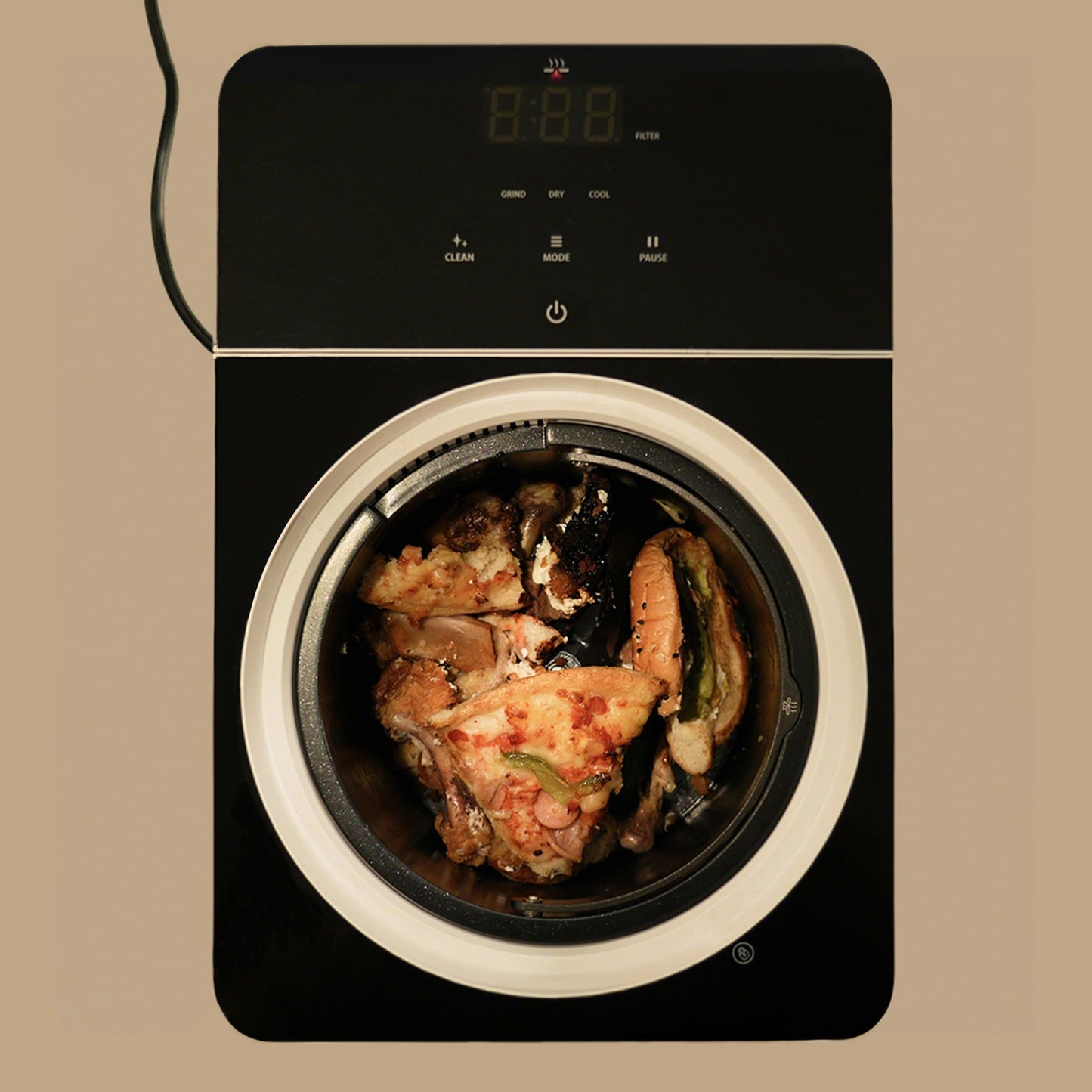
A finish-and-empty electric dryer-grinder can fit an apartment when wet-scrap storage is the real problem and the household has counter space, an outlet, and a destination for the resulting material.
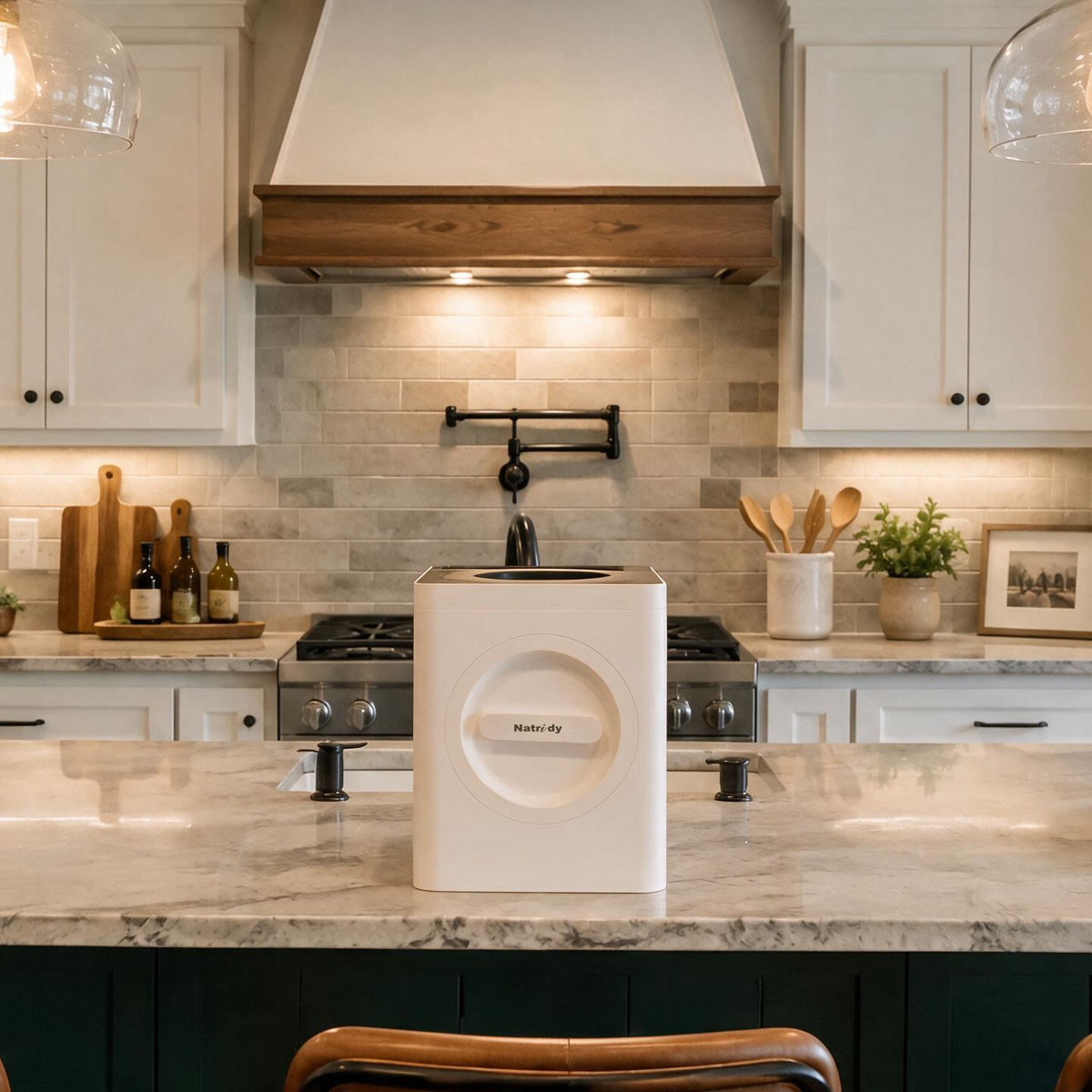
The Natridy Electric Composter has a 68 oz (2 L) working batch inside a 100 oz (3 L) drum. It produces dry, ground food-scrap material. Keep dry output separate from wet scraps and protect it from leaks or rewetting. Do not assume that a city accepts the material: ask the program or hauler.
EPA likewise distinguishes residential grinder/dehydrators from biological composting. Drying and grinding can improve handling, but the output is not automatically ready for direct garden use.
Source: US EPA Approaches to Composting, retrieved September 3, 2026.
Local rules are local
Toronto accepts dried food waste in its Green Bin and recommends frequent catcher washing plus refrigerator or freezer storage to reduce odor and flies. Those directions support a Toronto routine only. Another municipality or building may differ.
Source: City of Toronto — What Goes in the Green Bin, retrieved September 3, 2026.
A clean apartment setup in five zones
1. Prep zone
Keep one small container where scraps are produced. Smaller inventory is easier to inspect and move. Drain excess liquid according to local plumbing and waste rules; never assume oils or fats belong in a sink.
2. Cold or processing zone
Choose freezer space, a frequently emptied caddy, or a correctly placed appliance. Measure the actual counter and lid clearance. Do not block the appliance's prescribed ventilation.
3. Cleaning zone
Make rinsing and drying the caddy part of the handoff. For an appliance, follow its supplied guide; do not transfer dishwasher, soaking, or chemical-cleaner instructions from another model.
4. Output zone
Use a clearly labeled, dry container only if the product guidance and local destination permit temporary storage. Keep wet and dry inventories separate so a leak does not reintroduce moisture.
5. Handoff zone
Pick a repeatable trigger: after every dinner, when the freezer container reaches a line, on the building collection day, or after a finished appliance batch. A visible trigger is more reliable than waiting for odor.
What not to buy your way around
No product fixes a building with no accepted organics route. No lid guarantees zero odor. No carbon filter makes excess liquid disappear. No dry output becomes finished compost because it looks like soil.
If frequent municipal handoff already works, a small caddy may be the best solution. If handoff is infrequent and freezer space is available, cold storage may be simpler than another appliance. If wet scraps create recurring odor, leakage, pest, or carrying problems, electric drying may earn its space.
For a neutral comparison, see Kitchen Food-Waste Solutions.
Then connect the setup to apartment odor storage, honest output handling, and the Natridy Electric Composter.
If odor appears
For a caddy, inspect wet inventory, waiting time, leaks, and cleanliness. For an appliance, use the same sequence everywhere on this site: inspect the source, then the intended airflow path, then carbon condition. See the electric-composter odor guide.
FAQ
Can I compost in an apartment without a balcony? Yes, if you define composting as participation in a valid organics route rather than requiring a private outdoor pile. A building Green Bin, municipal collection, community drop-off, or another permitted local program can supply the destination. Your apartment setup only needs to store and move scraps cleanly until handoff.
Is freezing food scraps wasteful? Freezing uses space and some freezer capacity, but it can pause microbial growth and reduce the odor and fly problem while scraps wait. The relevant comparison is your actual alternative: frequent trips, wet indoor storage, an appliance cycle, or disposal. There is no universal winner without that household context.
Does an electric composter remove the need for a Green Bin? Not necessarily. A dryer-grinder changes wet scraps into dry, ground food-scrap material, but the material still needs an accepted destination. Some households may use a Green Bin less often or carry less wet mass; others may keep using the same collection route after processing.
What is the first thing to ask a property manager? Ask where organics go, which items and liners are accepted, and when the shared bin is serviced. Then ask whether dry appliance output is accepted. Those answers determine container size, freezer needs, handoff cadence, and whether an electric appliance solves a real problem.