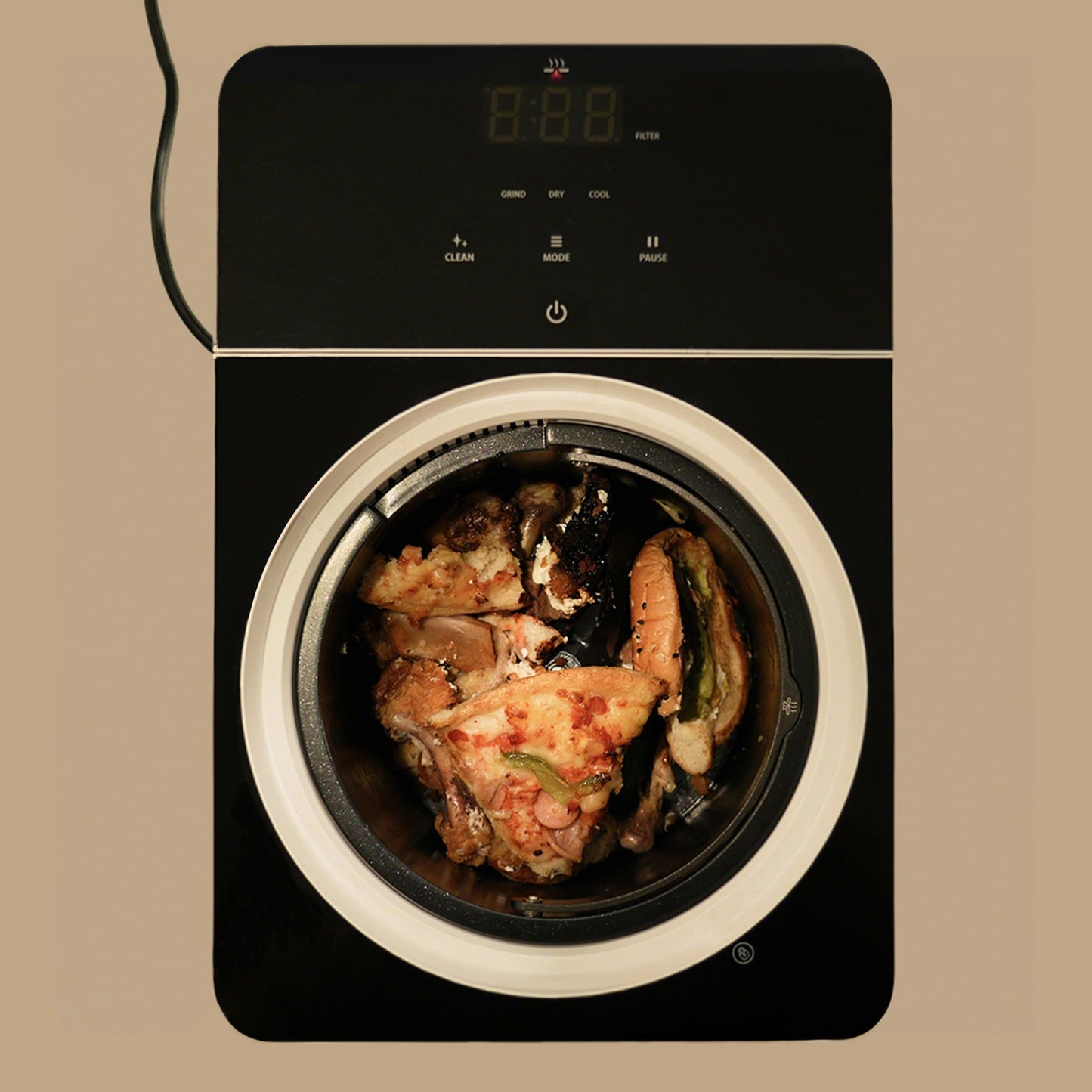
Wet Grounds After a Cycle? Diagnose an Under-Dried Batch
Let the appliance complete its full process and become safe to handle, then observe the result before changing anything. Wet output can follow a liquid-heavy or overfilled load, dense pieces, late additions, the wrong mode, interrupted processing, residue, or a product fault. Check one variable at a time and use the exact model guide.
First classify what "wet" means
Do not diagnose from one adjective. After the complete cooling or safe-handling stage required by the product guide, look for the pattern:
| Observation | What it may narrow | What it does not prove |
|---|---|---|
| Uniformly damp, finely ground material | Overall moisture load or processing duration | A failed heater or sensor |
| Dry grounds mixed with intact wet pieces | Piece size, density, late addition, or uneven loading | A universal machine defect |
| Free liquid or a paste-like mass | Excess liquid, overfilling, or a highly wet recipe | The filter caused the wetness |
| Dense material stuck to the drum | Sugar, starch, fat, moisture, residue, or excessive load | That scraping or forced disassembly is safe |
| Repeated wet results with supported loads | A repeatable operating or product issue | Which component is responsible |
Photograph the result and record the load before cleaning it away. Evidence is more useful to support than "it came out wrong."
Check the load before the machine
Natridy tells owners to drain wet leftovers, avoid lots of oil or liquid, thaw frozen scraps, and moderate sticky or sugary inputs. Its published comfortable working batch is about 68 oz (2 L), inside a 100 oz (3 L) drum.
Source: Natridy Electric Composter, retrieved August 29, 2026. The supplied product guide controls the exact loading and troubleshooting sequence.
Review five variables:
- Fill level: Was the food below the model's working limit with room to move?
- Free liquid: Were sauces, soup, melted ice, or wet leftovers drained?
- Food mix: Was the load dominated by watery produce, dense starch, sugar, or fat?
- Piece size: Were large or fibrous supported inputs prepared as directed?
- Timing: Was food added after the process had already advanced?
Change only one likely cause on the next supported load. Otherwise a better result will not reveal which variable mattered.
Confirm the selected process actually finished
Natridy publishes different operating modes: Auto reads the batch and can run about 2–8 hours; Quick is a fixed four-hour cycle; Storage is fan-only. A fan-only holding mode is not a drying-cycle substitute.
Before interpreting the output, confirm:
- the intended processing mode was selected;
- the cycle was not interrupted by power loss, opening, stopping, or an error;
- the full cooling or safe-handling stage completed; and
- the observed duration is consistent with the selected mode and load.
Do not bypass an error or repeatedly restart a hot appliance. Record the display, sound, timing, and result, then follow the guide or contact support.
Why moisture, mass, and density change the job
Drying requires removing water from the load. More water means more mass must leave as vapor. Large, dense, or matted pieces also change how heat, mixing, and airflow reach the material.
FoodCycler's current FAQ independently names amount, density, and moisture as cycle-time variables. It also says mid-cycle additions can leave material unprocessed. These observations support the diagnostic categories, but FoodCycler's retry and cleaning directions remain specific to its own products.
Source: FoodCycler FAQ, retrieved August 29, 2026.
Lomi likewise says its processing time varies with the food and advises a varied mix, smaller pieces, and moderation with cooked or sugary material. Lomi’s preparation advice applies to Lomi; Natridy owners should use Natridy’s supported-input list.
Sources: Lomi cycle-time guidance and Lomi input guidance, retrieved August 29, 2026.
Inspect residue, seating, and airflow without improvising
Old wet residue can change the next load. Check drum seating and accessible airflow components only as described in the instructions for your model. Record any visible obstruction for support.
Use the cleaning guide to separate removable food-contact surfaces from the electrical housing. Do not transfer another brand's soaking, dishwasher, hot-water, tool, or disassembly instructions.
A carbon filter treats air that reaches it. It does not remove water from food. Wet output and exhaust odor can appear together, but one does not prove the other caused it.
A controlled next-load test
If the guide permits another normal cycle and there is no error, damage, electrical smell, or unusual mechanical noise, make the next observation easier to interpret:
- Start with a clean, correctly seated drum.
- Use only supported inputs.
- Weigh or photograph a moderate load below the working limit.
- Drain free liquid and use a varied texture.
- Select the documented processing mode.
- Do not add material mid-process.
- Record start, finish, errors, and the cooled result.
This is a household diagnostic, not a laboratory performance test. It helps distinguish a one-off load problem from a repeatable condition.
When to stop and contact support
Stop troubleshooting and contact support when wet output repeats under documented supported conditions, or when the appliance reports an error, fails to complete, smells electrical, leaks outside the removable vessel, makes an abnormal mechanical sound, or has visible damage.
Share the model, order details, mode, load photograph, approximate mass, input list, timing, display, and output photograph. Do not open electrical panels or force a blade to diagnose moisture.
Keep the supported-input guide, first-week checklist, cleaning guide, and Natridy Electric Composter together as one troubleshooting path.
FAQ
Should I immediately run wet grounds through another cycle? Do not assume a universal retry rule. Let the product reach the safe state defined by its guide, record the result, and check the selected mode, load, liquid, and errors. Use the exact model's instructions or support before repeating a process.
Does wet output mean the heater is broken? Not by itself. A liquid-heavy or excessive load, dense pieces, late additions, interrupted processing, wrong mode, residue, or airflow condition can also produce a wet result. A repeated pattern under controlled, supported loads gives support better evidence for component diagnosis.
Can the carbon filter make the grounds wet? The carbon path is for odor-bearing air, not primary water removal from the batch. A blocked or mis-seated airflow component may belong in a model-specific inspection, but wet grounds alone do not establish that carbon condition is the cause.
What details should I send Natridy support? Send the model and order information, selected mode, input list, approximate load, whether liquids were drained, start and finish times, any display or sound, and photographs before and after the cycle. Those observations are safer and more useful than improvised disassembly.