Your First Week With an Electric Composter: What to Expect
Your first week is a calibration period, not a promise that every load behaves identically. For a finish-and-empty machine, follow the supplied guide, stay within the working batch, observe how food mix and moisture affect the run, empty the dry material to a planned destination, and build a safe cleaning rhythm from the actual results.
First identify the machine routine
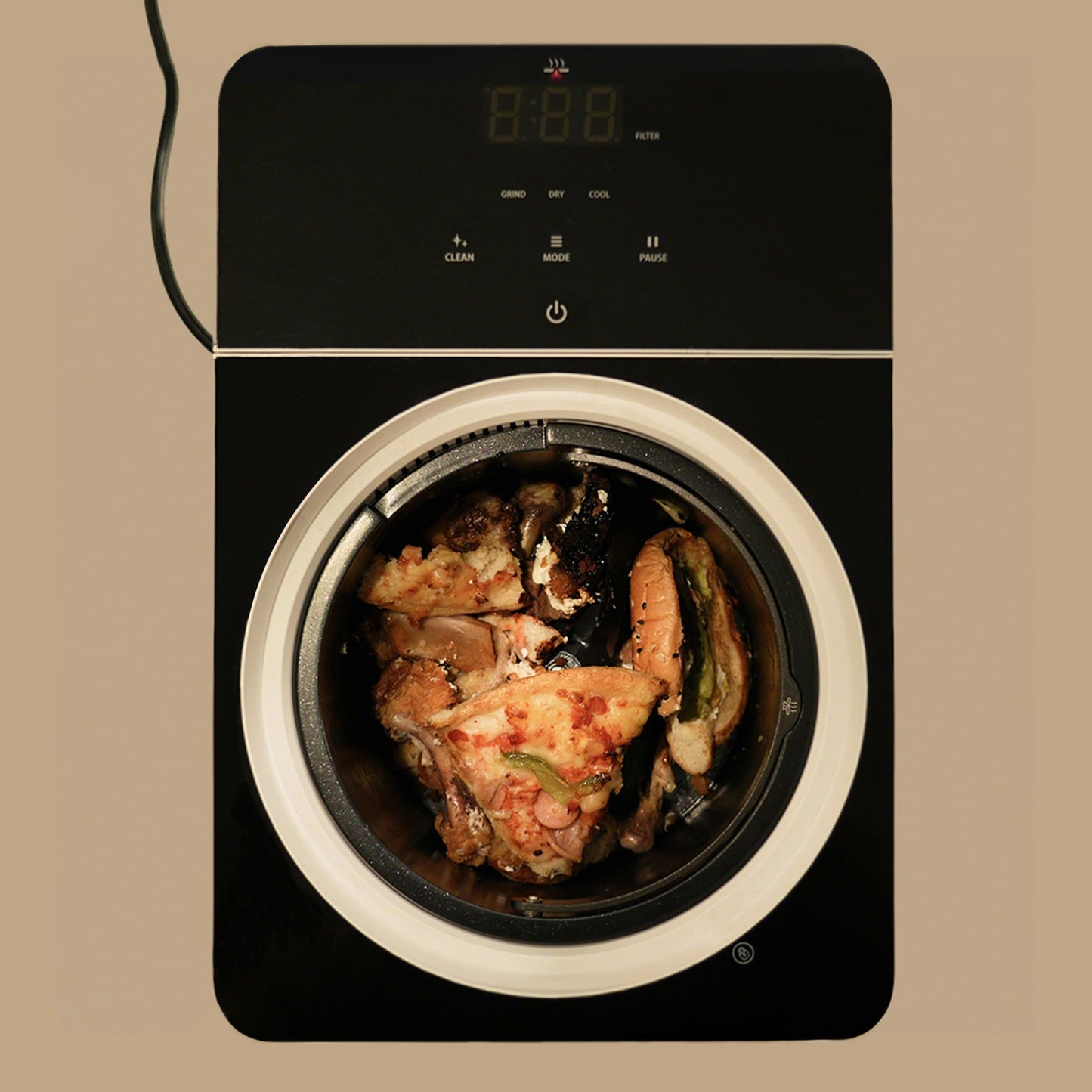
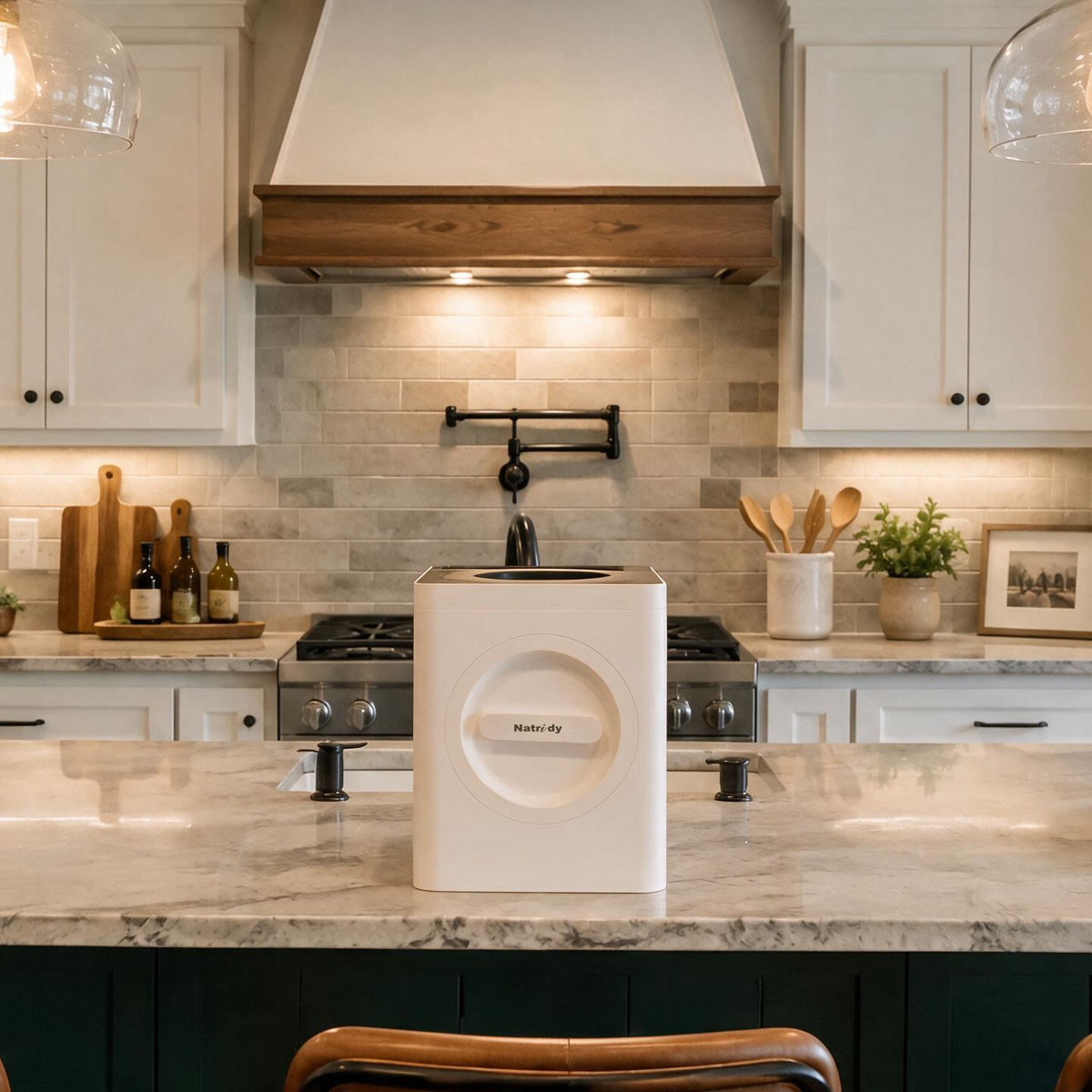
This guide covers a finish-and-empty batch machine such as Natridy, Lomi, or FoodCycler. Load one batch, run a prescribed cycle, remove the result, and make the vessel available for another batch.
Mill dries and grinds additions while dry grounds accumulate. Reencle maintains a moist microbial starter bed that must remain in the chamber during normal harvesting. Their setup and emptying routines differ from a finish-and-empty batch machine. Use the maker's setup instructions for the exact model.
Before day one: choose the destination
The output question comes before the Start button. Natridy produces dry, ground food-scrap material. EPA says residential grinder/dehydrator output is not finished compost and needs an appropriate next step.
Confirm whether your municipal organics program accepts it, whether you have a managed outdoor system, or whether another permitted disposal route will receive it. Keep one dry, labeled container only if temporary storage is allowed and useful.
Source: US EPA Approaches to Composting, retrieved August 27, 2026.
Day one: make the first batch deliberately ordinary
Read the supplied product guide before setup and keep the appliance within its power, clearance, input, and loading instructions. Natridy has a 100 oz (3 L) capacity with a 68 oz (2 L) working batch.
For the first run, choose supported everyday scraps rather than using the machine as a stress test. Record:
- the broad food mix;
- whether excess liquid was drained;
- the approximate load level;
- when the run started and ended;
- how the material looked and felt after completion; and
- whether residue or odor appeared at the drum or exhaust.
This log is more valuable than assuming one batch represents every future input.
Days two and three: change one variable at a time
Moisture, density, particle size, fat, sugar, and load balance can change processing behavior. If the first result is wet, sticky, or uneven, do not change five things at once. Reduce one likely cause on the next supported load and observe the difference.
FoodCycler's current FAQ similarly says its cycle time depends on amount, density, and moisture and that output texture varies with inputs. Those are FoodCycler statements, not Natridy performance promises, but they illustrate why input notes matter across the batch category.
Source: FoodCycler FAQ, retrieved August 27, 2026.
Day four: separate drum odor from exhaust odor
Odor inside the opened drum points first toward the source material, excess liquid, incomplete processing, or residue. Odor mainly at the exhaust after previously clean runs points more strongly toward airflow, filter seating, or carbon condition.
Use this order:
- Inspect the material.
- Clean only the removable surfaces the supplied guide lists.
- Check vents and seating as the guide permits.
- Evaluate carbon after source and path checks.
The odor-control guide explains the full diagnostic.
Days five and six: learn your real batch cadence
Count how much supported food your household generates before deciding how often the machine should run. A household with frequent small loads has a different energy and cleaning rhythm from one that collects a fuller batch less often.
Natridy publishes ~1 kWh per 4-hour reference cycle. That is not a universal claim that every load follows an identical duration. Monthly electricity depends on the number and type of runs you actually choose.
A useful first-week total records cycles, not just days of ownership.
Day seven: write the household rule
At the end of the week, turn observations into one short routine:
- where scraps wait before a run;
- the visible working-load limit;
- which supported inputs need moderation or preparation;
- when a cycle starts;
- where the dry output goes;
- which surfaces are cleaned and dried under the guide; and
- which odor sign triggers a source, airflow, or carbon check.
If the routine feels harder than a freezer container or building Green Bin, say so. The point of the first week is to determine whether the appliance earns its space.
Normal variation is not automatic failure
A university-hosted study of two electric-composter models observed variation across 15 cycles in mass change, energy, noise, heat, odor, and cleaning. Natridy was not tested, so its numbers cannot be transferred. Expect the food mix to affect your experience, and keep notes when comparing batches.
Source: Understanding Electric Composting Machines as a Potential Household Food Waste Management Strategy, retrieved August 27, 2026.
Keep the supported-input guide, output glossary, model-safe cleaning guide, and Natridy Electric Composter in the same first-week checklist.
FAQ
Should my first batch be completely full? Stay within the exact working-load instruction for your model and avoid using the first run as an overload test. Natridy's published specification is a 68 oz (2 L) working batch inside a 100 oz (3 L) capacity. A moderate, supported mix makes it easier to interpret the result.
Will every batch produce the same texture? No. Different food mixtures can produce different textures. For Natridy, drain meat, fish, and leftovers first; thaw frozen scraps; keep bread, rice, and grains to small amounts; and avoid lots of oil, butter, or liquid. If output remains wet or sticky despite those input rules, contact support.
Do I need to clean the drum after every run? Natridy’s product page does not specify a full wash after every run. Empty the processed material after the batch. For cleaning, the blade can be removed with a Phillips screwdriver so the bucket and blade can be rinsed in the sink.
What if the machine smells during the first week? Note when and where the odor appears. Inspect wet material and residue first, then the serviceable airflow path and filter seating. Carbon condition comes after those checks. Persistent, electrical, or unusual symptoms should be handled through the product guide and support, not improvised repair.