What Can (and Can't) Go in an Electric Composter: The Honest List
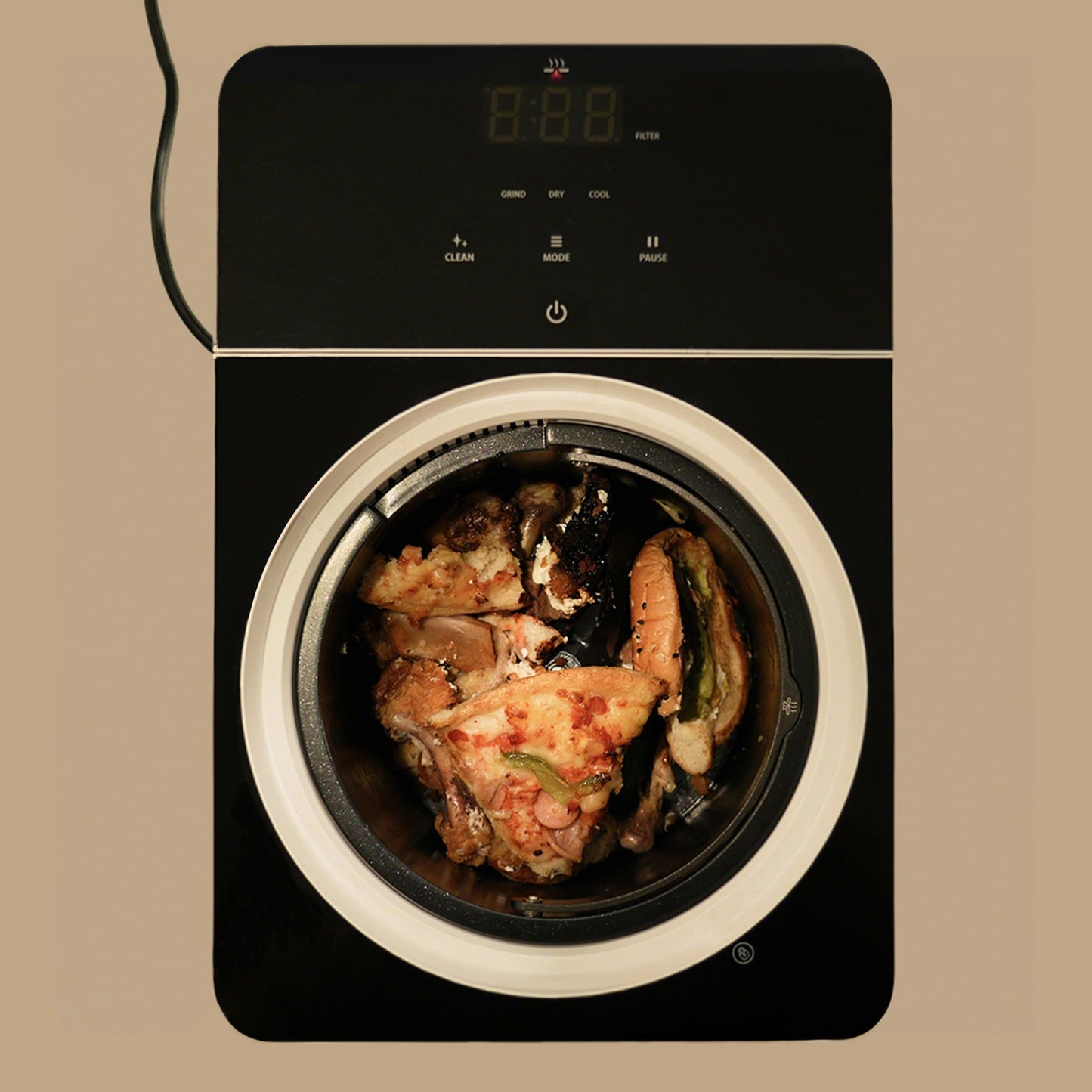
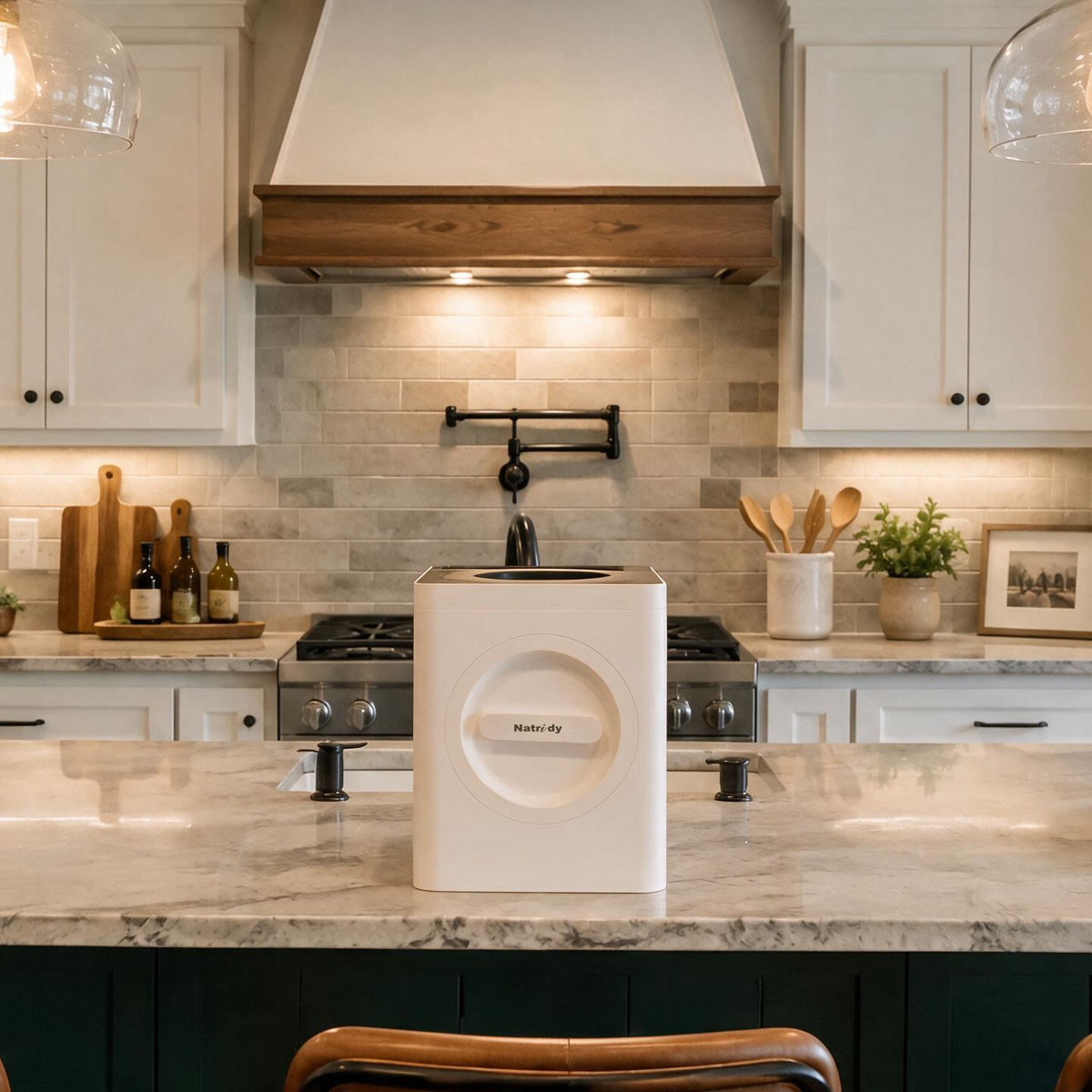
A dryer-grinder is not a compost pile. It removes water and grinds food scraps into a dry material. Natridy publishes its own add-freely and keep-out lists, and this page walks through them and the physics behind each rule.
The list below is Natridy's own, from Natridy's product page. The guide supplied in the box has the final word for an exact model. Other machines publish different lists, like Lomi's current input guide and FoodCycler's current do-and-don't list, both retrieved September 9, 2026. One maker's exceptions never transfer to another machine.
What Natridy lists as add freely
- Fruit and veg scraps
- Coffee grounds
- Eggs and shells
- Plant trimmings
- Loose tea
- Compostable tea bags
- Meat, fish, leftovers (drain first)
- Cooked chicken bones and ribs
- Bread, rice, grains — small amounts
- Corn cobs and husks
Heat-drying removes the water that lets meat and leftovers rot, which is why a dryer can take scraps a backyard pile rejects.
Worth extra care
- Strong-smelling scraps (citrus, onion, garlic) raise the odor load that reaches the carbon filter. A smell after a citrus-heavy week is not proof the carbon is spent — check residue and airflow first. See filter changes.
- Starchy and sugary scraps can turn sticky before they dry. Uncooked dough is on the keep-out list.
- High-water scraps mean more water to remove. Natridy's reference figure is ~1 kWh per 4-hour cycle, but that does not establish the energy for every wet mixture.
- Frozen scraps: thaw first.
What Natridy says to keep out
- Glass, metal, plastic
- Beef bones, pork shank bones
- Hard shells (walnut, clam, oyster)
- Fruit pits (avocado, mango, peach)
- Lots of oil, butter, or liquid
- Frozen scraps (thaw first)
- Uncooked dough
- Pet waste, diapers, hygiene products
Dispose of excess liquids and fats under local rules. Never pour oil or grease down a sink.
What drying changes
Drying removes water and grinding reduces particle size. The output is dry, ground food-scrap material, not finished compost. Mix it into soil or a compost pile to finish, or bin it. The working batch is 68 oz / 2 L inside a 100 oz (3 L) capacity. Cycle noise is 39 dB (measured).
FAQ
Can meat go in an electric composter?
Natridy lists meat, fish and leftovers, drained first. Keep portions modest. Other machines set their own limits, so check the exact model's list before adding meat.
Can bones go in?
It's about density, not the animal. Cooked chicken bones and ribs are listed. Beef and pork shank bones stay out. Other makers differ, so check the exact model's list.
Which scraps shorten filter life?
There is no established ranking. It depends on compounds, moisture, airflow and run time. Diagnose residue and airflow before blaming carbon. See the odor diagnostic guide.
Can compostable plastics, tea bags or paper go in?
Plastic stays out, "compostable" label or not. Natridy lists compostable tea bags and coffee filters. Paper towels are not on its list. Other machines differ.