Temporary storage changes fruit-fly exposure
Fruit flies develop around fermenting organic material, including damaged produce, residue, and trash containers. Limiting access and removing those sources promptly can reduce exposure, but a countertop lid by itself cannot promise a fly-free kitchen.
Start With the Breeding Source
University of Minnesota Extension associates indoor fruit flies with fermenting fruits and vegetables, fermenting liquids, drink containers, and trash containers. That makes source removal more useful than focusing on the adult flies alone. Check the scrap container, but also inspect overripe produce, spills under appliances, recycling residue, and other damp organic material.
A well-closing container reduces direct access to its contents. It is not a complete barrier if flies or eggs arrived with produce, residue remains on the rim, or another source is nearby. Empty the container on a routine suited to your household and local collection schedule, then wash away residue before reusing it.
Draining free liquid can make a scrap container easier to carry and clean. It does not make food scraps biologically stable or establish a safe indoor storage duration. The practical objective is simpler: reduce accessible fermenting material and avoid letting residue build up.
Simple Storage Habits for Families
Small changes in how you store scraps can make a big difference. Here are habits that fit a busy family kitchen.
| Habit | Why It Helps |
|---|---|
| Use a clean container with a well-closing lid | Reduces direct access to the contents |
| Remove scraps frequently enough for your household | Shortens the time fermenting material remains indoors |
| Drain free liquid when practical | Makes the container easier to carry and clean |
| Wash the lid, rim, and nearby residue | Removes overlooked organic material |
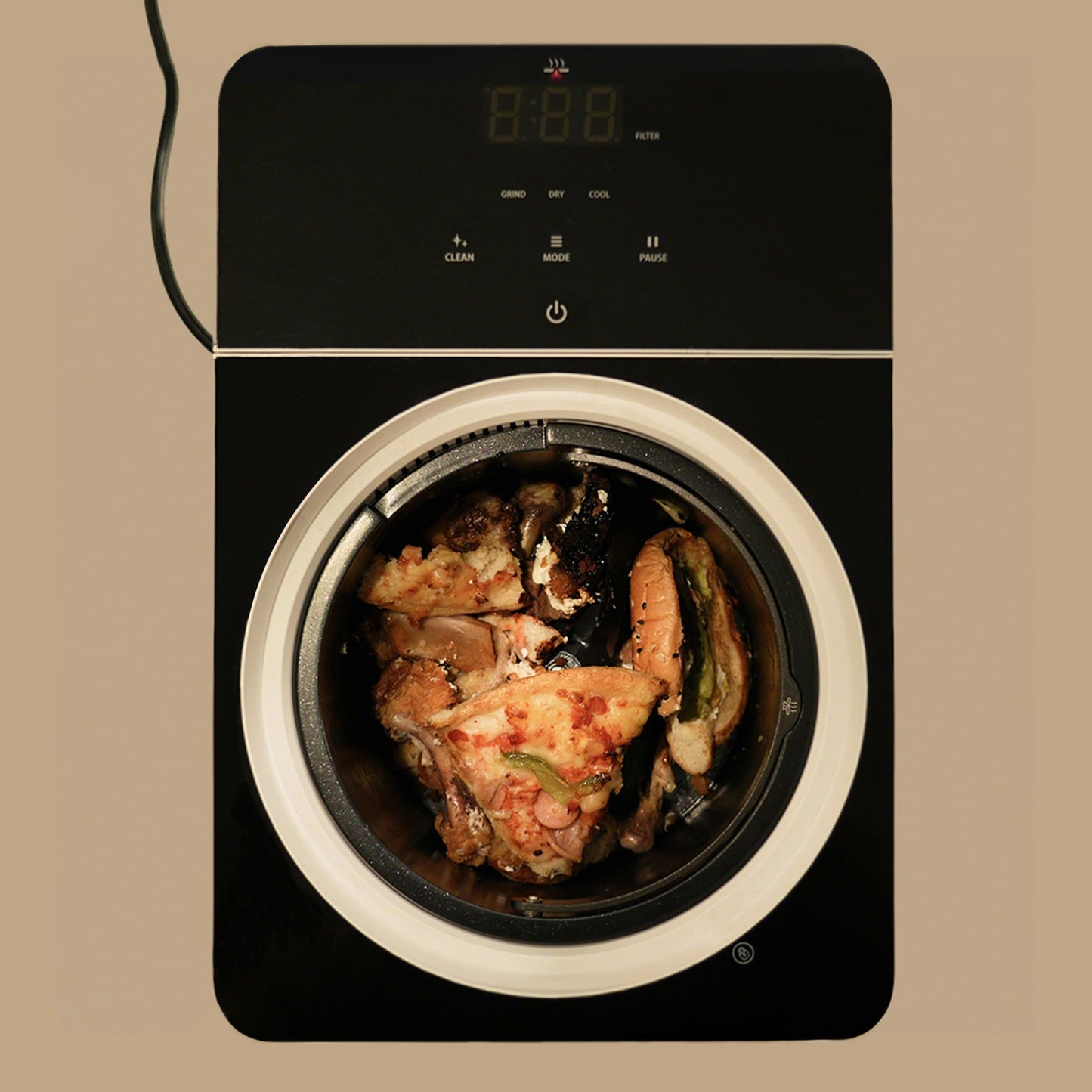
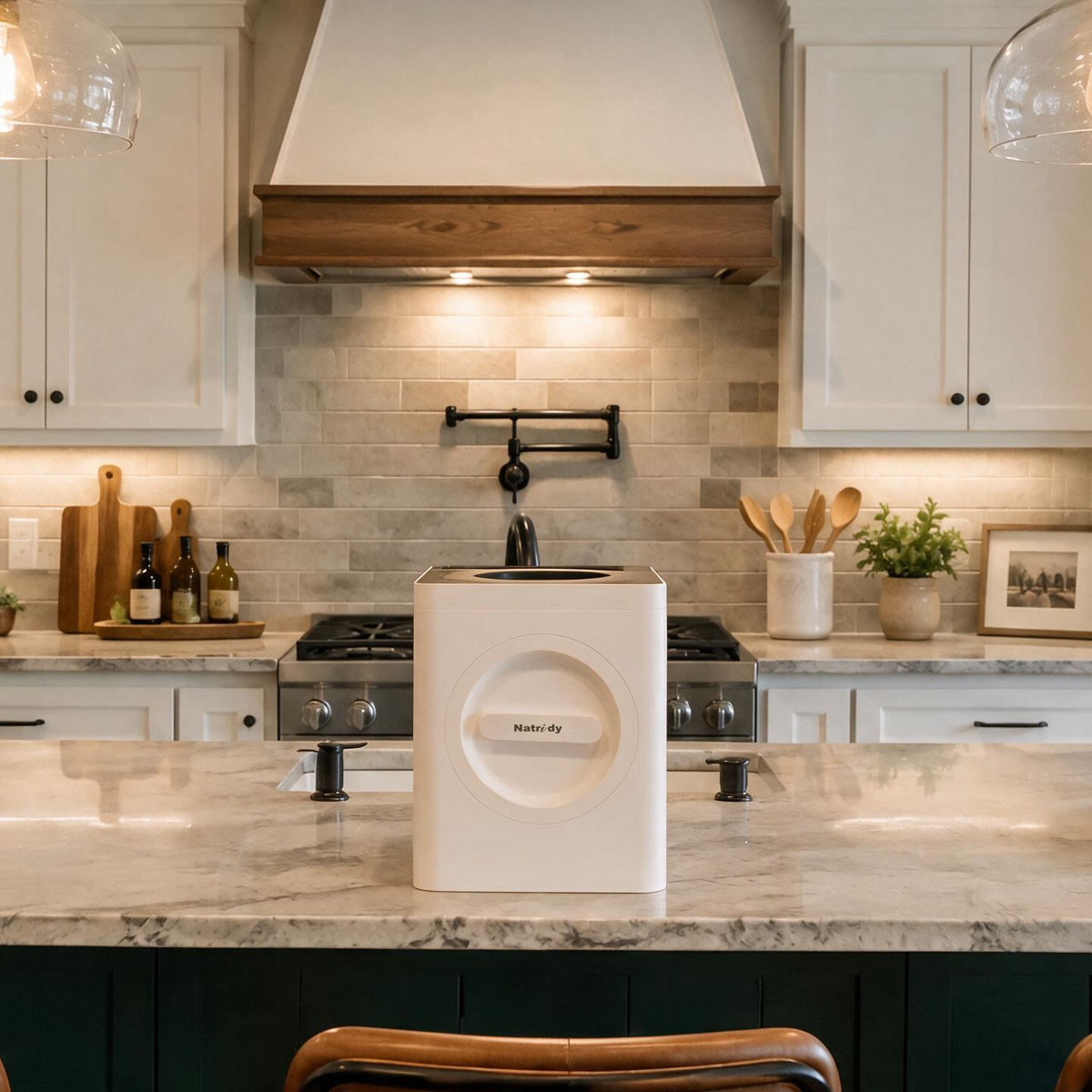
A countertop bin with a well-closing lid can be one part of the routine. If you have a Natridy Core Unit, you can choose to process a supported batch instead of leaving that batch as wet scraps. For a full list of supported inputs, see What Can Go in an Electric Composter?.
If flies appear, widen the inspection beyond the scrap bin. Look at ripe or damaged fruit, bottles and cans awaiting recycling, damp cloths, and organic residue around drains or appliances. Removing the active source matters more than placing a trap next to an unclean container.
For more on diagnosing where kitchen odors begin, read Apartment Food-Scrap Smell: Where It Starts.
What About the Weight of Scraps?
Food scraps often contain substantial moisture, so a full container can be heavy. Draining free liquid before temporary storage can make handling and cleaning easier. For more on this distinction, see Why Food Scraps Are Heavy: Water, Weight, and Kitchen Storage.
If you use a Natridy Core Unit, the dry, ground food-scrap material is much lighter than wet scraps. Natridy dries and grinds food scraps without microbes. Its bucket capacity is 100 oz (3 L), with a working batch volume of 68 oz (2 L). Its energy figure is approximately 1 kWh per 4-hour cycle, and its measured noise figure is 39 dB. The output is not finished compost: mix it into soil or a compost pile to finish, or put it in the trash.
Natridy product specifications
- Model: CYF01-500CD5
- Bucket capacity: 100 oz (3 L)
- Working batch volume: 68 oz / 2 L
- Energy: ~1 kWh per 4-hour cycle
- Noise: 39 dB (measured)
- Output: dry, ground food-scrap material
FAQ
Can I completely prevent fruit flies in my kitchen? No method can promise zero flies. Produce may already carry fruit flies or their immature stages, and another fermenting source may be present. Reduce exposure by removing damaged produce and scrap sources, cleaning residue, and using a well-closing container.
How often should I empty my food scrap container? There is no universal day count. Choose a removal schedule that prevents fermenting material and residue from accumulating in your kitchen and that fits local collection rules. If fruit flies appear, remove suspected sources promptly and clean the container before refilling it.
Does draining liquid from scraps really help? It can make scraps lighter and the container easier to clean. Draining is not a preservation method, however, and it does not turn food scraps into stable compost or set a guaranteed storage period.
Where should I keep my food scrap container to avoid flies? Use a location where the container can remain closed, upright, easy to inspect, and easy to clean. Placement alone cannot prevent fruit flies. The more important controls are removing fermenting sources, cleaning residue, and limiting access.