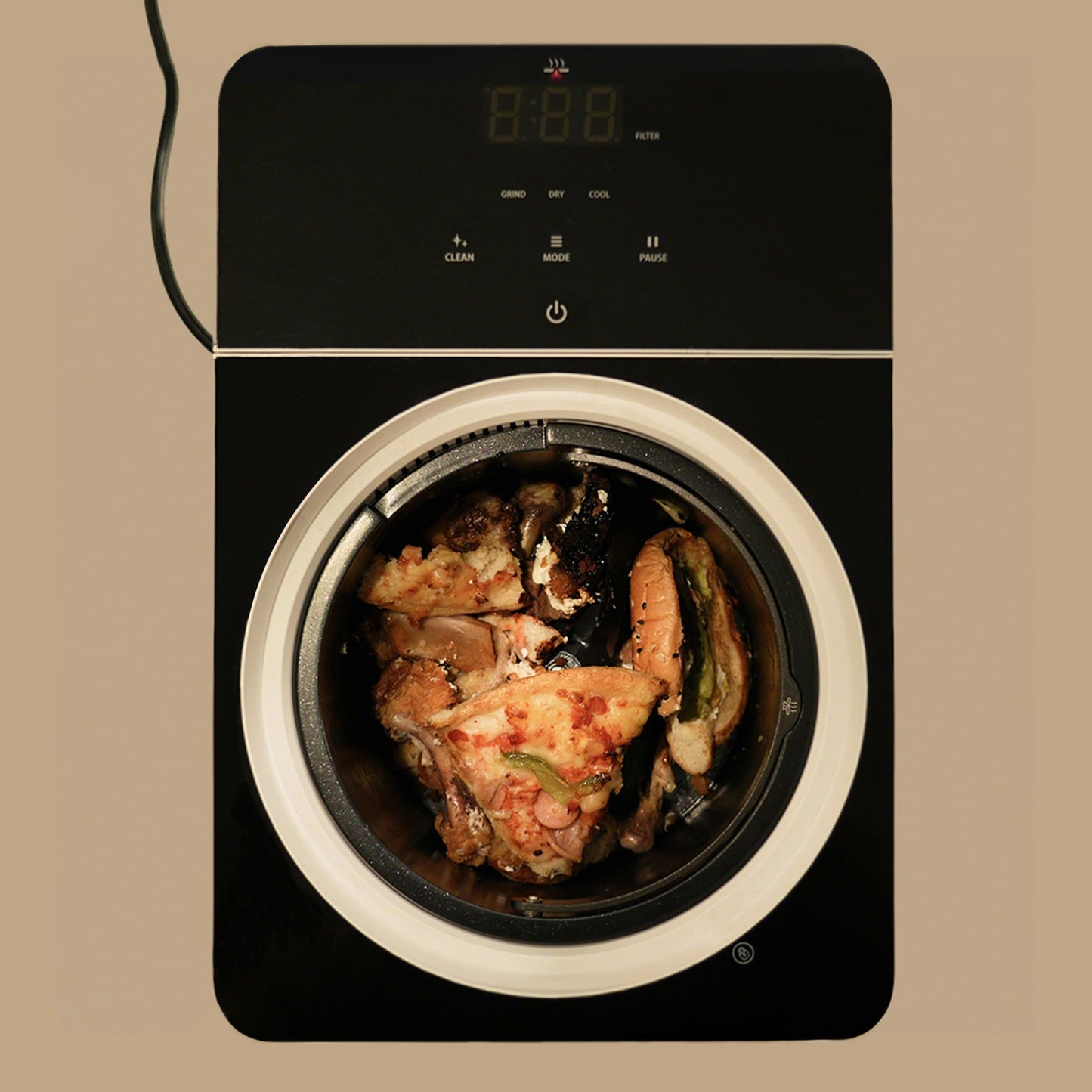
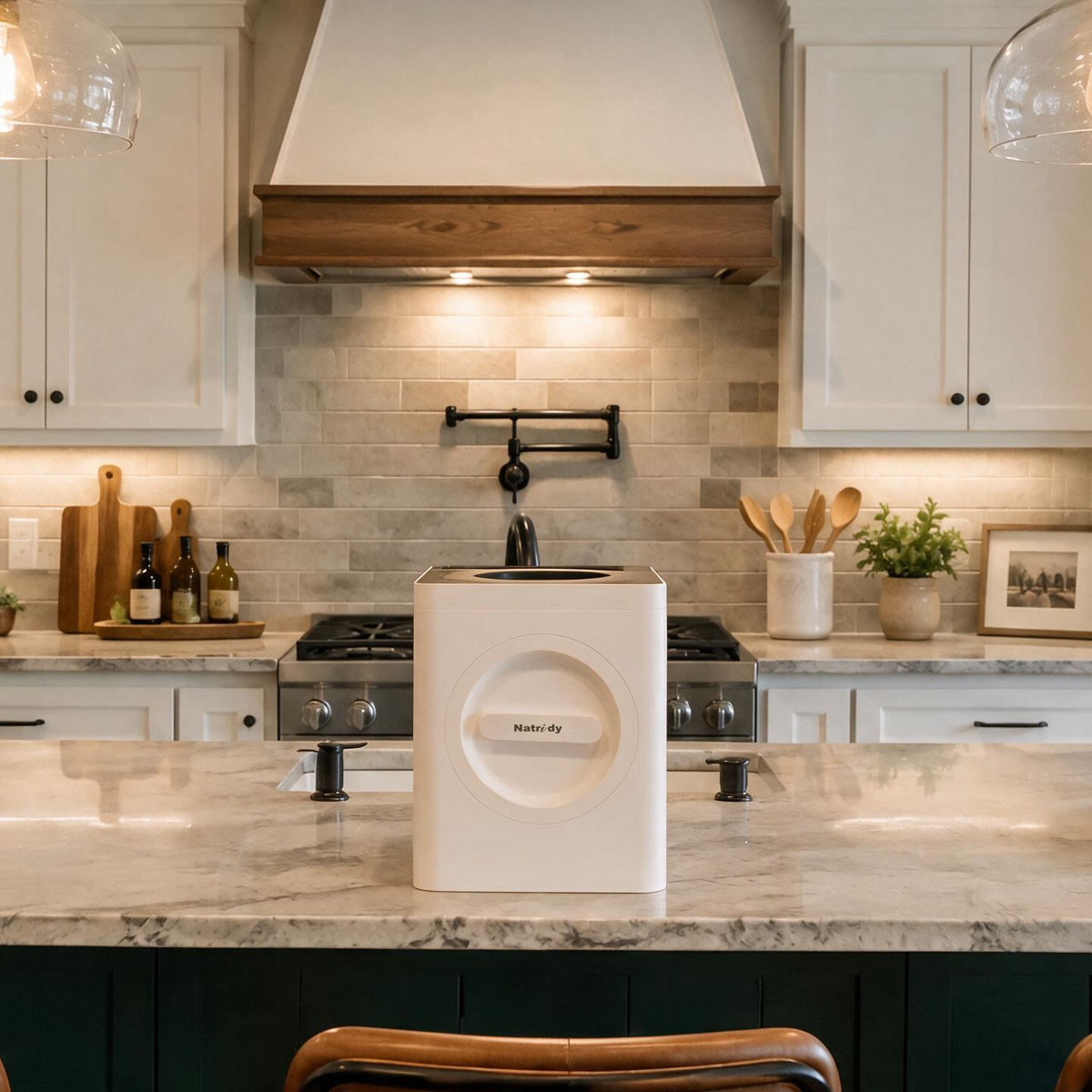
What an Electric Composter Produces
This page covers one narrow question. For what the output is and where it can go, see what electric composters actually make.
Food-waste outputs should be named by state, not appearance. Finish-and-empty dryers create dry, ground food-derived material. Bokashi creates an acidic ferment that needs another step. A continuous microbial system may require post-harvest curing. Stable compost is a biological endpoint that dryness, dark color, small particles, or a soil-like look cannot prove by itself.
Why output names create confusion
Several products can turn recognizable scraps into dark, fine material. That visual change is useful, but it does not identify the chemistry, stability, or appropriate destination.
Five observations are often collapsed into one word:
- the material is dry;
- the particles are smaller;
- it smells less intense;
- it contains nutrients originally present in food; and
- it is biologically stable enough for a particular use.
Only the first four can sometimes be observed directly. The fifth is a separate question. A soil-like photograph does not answer it.
Dry, ground food-scrap material
A residential grinder/dehydrator heats food scraps, removes much of their water, and mechanically reduces the particles. The US EPA says this category produces a dried food-scrap mixture rather than stable compost and that the output needs composting, curing, or other further treatment before use.
Natridy's published wording is dry, ground food-scrap material. The machine solves a storage and handling problem; it does not complete the biological process required for stable garden material.
Mill uses its own name, Food Grounds, while explicitly saying the result is still food with water and bulk removed and that Mill is not a composting device. FoodCycler calls its dry by-product Foodilizer. Lomi uses the name Lomi Earth and elsewhere says it is not the same as compost.
The names differ. The safe question is what process occurred and what the maker says must happen next.
Sources: US EPA approaches to composting, Mill Food Grounds guidance, FoodCycler FAQ, and Lomi use guidance, retrieved August 27, 2026. Competitor terms and handling statements remain manufacturer-published.
Fermented material
Bokashi is an anaerobic fermentation routine. The owner compacts food scraps in an airtight container, adds inoculated bran, drains liquid, and waits after the bin is full. The material is acidic and still needs a destination step such as burial away from plants or addition to another composting process.
That output is not merely a wetter version of dryer grounds. It has followed a different process and arrives with a different handling routine.
Source: Arizona Department of Environmental Quality Bokashi guide, retrieved August 27, 2026.
Material harvested from a retained microbial bed
Reencle uses an owner-added starter in a powered chamber. Its harvest instructions tell owners to remove material only from MAX down to MIN, return undecomposed pieces, and preserve the active bed.
Reencle's destination guidance distinguishes surface mulch from planting or seeding. For direct root or seed use, it tells owners to mix one part harvested material with four parts soil and cure the mixture for three to four weeks.
That prescribed curing step matters. Reencle also hosts a test summary for three user samples that were harvested, cured outside the appliance for three to four weeks, combined, and then tested. The combined sample was reported as just short of the site's stated stable rating. The result does not establish the condition of material immediately after a 24-hour marketing interval or immediately at harvest.
Sources: Reencle harvest instructions, post-harvest use guidance, and manufacturer-hosted test summary, retrieved August 27, 2026. The test is limited and manufacturer-hosted, not a same-basis comparison across brands.
Cured material
Curing is time after active processing or harvest during which biological and chemical changes continue. It is not a decorative waiting period. When a maker requires curing before root or seed contact, that instruction is evidence that “scraps changed quickly” and “material is ready for this destination” are different endpoints.
The correct curing method depends on the material. Reencle specifies a breathable container for its post-harvest route. Bokashi guidance uses burial or another composting system. A municipal facility follows its own controlled process. Do not transfer one product's curing instructions to another output.
Stable compost
Stable compost describes the result of managed biological decomposition reaching an appropriate endpoint for its intended use. Particle size, darkness, dryness, or an earthy smell may accompany that result, but none proves it alone.
A serious output assessment may consider:
- remaining biological activity and oxygen demand;
- temperature behavior after active processing;
- moisture and rewetting response;
- maturity or phytotoxicity testing for plant use;
- pathogens where the intended use requires it; and
- the exact destination's acceptance standard.
This article does not assign a laboratory grade to any product output. No reviewed source provides a same-basis stability, maturity, pathogen, nutrient, and destination comparison across Natridy, Mill, Lomi, FoodCycler, and Reencle.
A state-and-destination table
| Material state | What changed | What is not established automatically | Next question |
|---|---|---|---|
| Raw stored scraps | Location or temperature | Volume reduction, stability, destination | When and where will they be handed off? |
| Dry grinder/dehydrator output | Water and particle size | Biological stability or direct plant use | Will it be collected, composted, cured, or otherwise treated? |
| Bokashi ferment | Fermentation in a sealed bin | Direct plant readiness | Is there soil or another composting step? |
| Retained-bed harvest | Maker-described biological processing | Immediate condition for every destination | Does the prescribed use require curing or dilution? |
| Cured material | Additional time and biological change | Universal safety or acceptance | What test or local rule applies to the intended use? |
The table avoids ranking one state as universally better. It connects the process to the next responsibility.
Why dry output can smell again
CalRecycle's commercial-scale dehydration guidance notes that dried food can regain odor and pest risk if it reabsorbs water. FoodCycler similarly warns that re-wetted output can smell or mold.
Those sources do not prove a shelf-life number for Natridy. They support a simple handling rule: dry output should remain dry and move to its planned destination. Dehydration changes the current state; it does not erase the fact that the material came from food.
Sources: CalRecycle food-scrap technologies and FoodCycler FAQ, retrieved August 27, 2026. CalRecycle discusses commercial systems, so the citation is used only for the rewetting principle.
The honest label before checkout
Ask any brand four questions:
- What physical or biological process occurs inside the appliance?
- What state is the material in when the owner removes it?
- What test supports the output name?
- What must happen before the intended destination?
Natridy answers the second question with dry, ground food-scrap material. For a broader introduction, read why electric composters do not complete composting. For non-appliance routes, compare Green Bins, freezing, Bokashi, and electric drying.
FAQ
Does dry, soil-like material equal stable compost? No. Dryness, color, particle size, and smell are observations. Biological stability and destination readiness are different endpoints that require appropriate processing, instructions, or testing.
What does Natridy produce? Natridy's published description is dry, ground food-scrap material. It is easier to store and carry than wet scraps, but it still needs an appropriate organics, composting, curing, or other permitted destination.
Is Bokashi output the same as electric-dryer output? No. Bokashi ferments food in an airtight container with inoculated bran. A grinder/dehydrator removes water and reduces particles. Their handling and next-step instructions differ.
Does a 24-hour breakdown claim prove immediate garden readiness? No. Breakdown time, harvest condition, curing time, and biological stability are separate measurements. Reencle's own root and seed guidance requires three to four weeks of post-harvest curing.
Why do brand output names differ? Names help brands describe or market their systems, but they are not standardized scientific categories. Use the process, material state, test basis, and destination instructions to interpret them.