Are Electric Composters Worth It? A Cost Guide
An electric composter may be worth it when changing wet-scrap storage is valuable enough to justify the appliance, electricity, cleaning, and filter upkeep. It may not be worth it when a washable caddy, freezer container, municipal collection, or outdoor compost system already works well.
There is no universal payback period. The value depends on the household's current routine, local utility rate, cycle frequency, accepted destination, and the importance placed on convenience.
For category context, see the EPA's home-composting guidance and WIRED's electric-composter buying guide, retrieved September 5, 2026. A dryer-grinder changes scrap handling, but its output still needs a destination.
Start with the job, not a savings claim
Write down the problem you want to change:
- wet scraps waiting indoors;
- limited freezer or caddy space;
- carrying wet material to a collection point;
- a need to store scraps between collection days; or
- a preference for a finish-and-empty appliance routine.
If none of those is a recurring problem, another appliance may add more work than it removes.
Count the costs you can verify
Use current checkout prices and your own bills rather than a national average or a stale comparison table.
- Purchase cost: record the current price, tax, shipping, and any optional coverage.
- Electricity: multiply the maker's energy figure or your plug-meter result by the number of cycles you expect, then by the rate on your bill.
- Consumables: use the current filter price and the replacement guidance for the exact model. Do not turn a calendar suggestion into a guaranteed service life.
- Owner work: include loading, emptying, cleaning, and moving the output to its destination.
- Space: account for the counter, lid, ventilation, and storage area the routine needs.
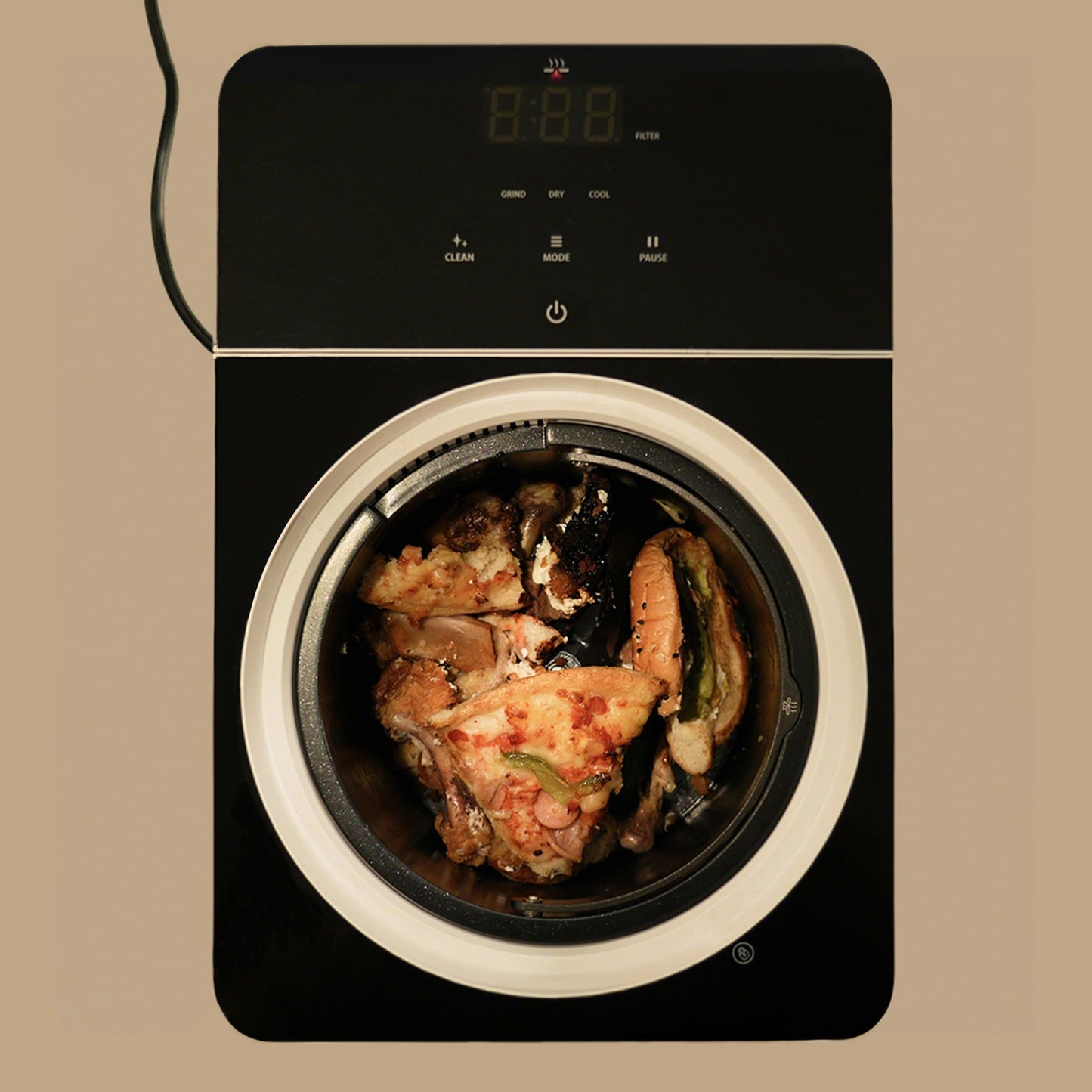
For Natridy, the current product information describes a finish-and-empty batch appliance that produces dry, ground food-scrap material. Check the current product page and supplied guide before making a cost calculation.
Compare complete routines
| Routine | What you pay for | What remains |
|---|---|---|
| Washable caddy | Container and cleaning | Frequent handoff of wet scraps |
| Refrigerator or freezer storage | Container and cold-storage space | Transfer on collection day |
| Municipal organics | Any local fees, liners, and handling | Compliance with local accepted-material rules |
| Outdoor compost system | Bin or pile setup and management | Moisture, air, carbon balance, pests, and curing |
| Electric dryer-grinder | Appliance, electricity, cleaning, and carbon | An accepted destination for dry output |
The rows are not price estimates. They identify the parts of each routine that a household should price locally.
Will it lower your trash bill?
Drying can change wet weight and handling, but that does not prove a lower trash bill. Some households pay by container or bag; others do not. Some local programs accept dried food material; others require a different route. Calculate any savings from your actual waste fees and changes in the bags, containers, or collections you pay for.
Likewise, a convenience benefit is not financial payback. It is reasonable to value fewer wet handoffs or a cleaner storage routine, but count it as a preference, not a guaranteed return.
A decision rule
Choose an electric dryer-grinder when all three statements are true:
- Wet-scrap handling is a recurring problem.
- The household has space and will maintain the appliance.
- The dry output has a confirmed destination.
Choose a simpler route when a caddy, freezer, collection program, or outdoor system already meets those needs.
FAQ
How much does an electric composter cost to run?
There is no universal monthly figure. Multiply energy per cycle by expected cycles and the electricity rate on your own bill, then add model-specific consumables.
Will it pay for itself?
Not automatically. It pays for itself only if the costs you avoid exceed the purchase price, electricity, and upkeep. Easier storage and fewer wet-scrap handoffs may still be worthwhile even without cash savings.
Does it eliminate disposal fees or fines?
No. Owning a dryer-grinder does not automatically remove disposal fees or exempt you from local waste rules. Any fee reduction depends on your collection service and how you dispose of the output.
What is the main limitation?
The output still needs an accepted destination. EPA says residential grinder-dehydrator output is dried food-scrap material, not biologically stable compost. See what electric composters actually make.