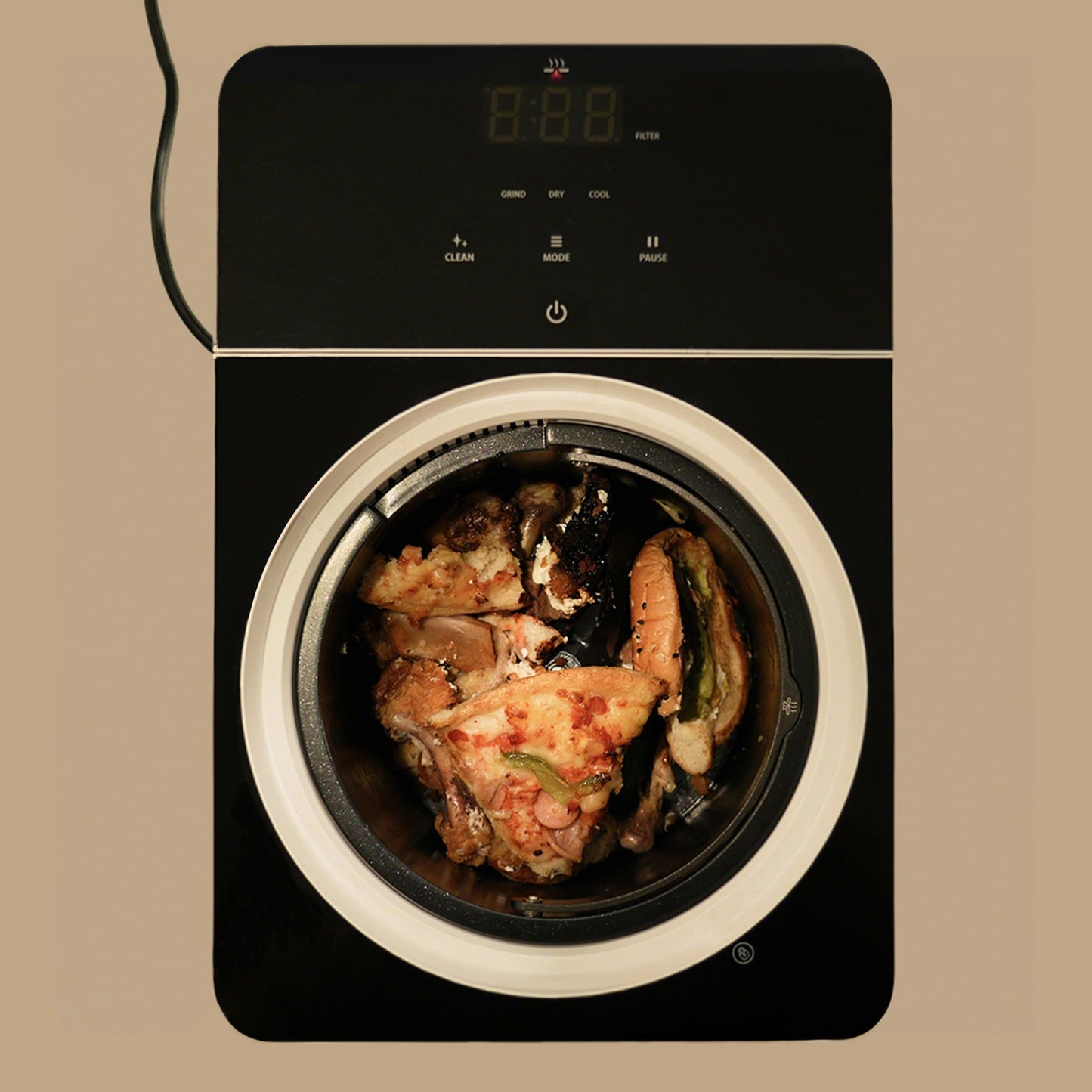
What Electric Composters Actually Make
A residential electric grinder-dehydrator makes dried food-scrap material, not finished compost. The US EPA says this output is not biologically stable and should be composted, cured, or otherwise further treated before use. Drying can make scraps easier to handle, but it does not complete the biological process that makes mature compost.
Source: US EPA — Approaches to Composting, retrieved September 3, 2026.
What changes inside a dryer-grinder
A dryer-grinder removes water and reduces particle size. Those changes can reduce wet weight and storage bulk. They do not establish biological stability, maturity, nutrient availability, pathogen status, or suitability for direct contact with roots and seeds.
That is why appearance is a poor endpoint. Dark, fine, dry material may look soil-like while still needing another treatment or an accepted collection route.
Four options for the dry material
Add it to a managed compost system
EPA says dried output from a residential grinder-dehydrator can enter a home or collection-program composting system. Treat it as unfinished food-scrap input. Mix it with carbon-rich, porous material and manage moisture and air for the pile you use. Do not apply a universal ratio: the appropriate balance depends on the output, the existing pile, and local compost guidance.
Sources: US EPA — Composting at Home and Washington State University Extension — Backyard Composting, retrieved September 3, 2026.
Use a local organics program only after checking its rules
Acceptance depends on the municipality and hauler. EPA tells residents to confirm accepted materials with their local curbside or drop-off program. Toronto, for example, accepts dried food waste in its Green Bin. That Toronto rule does not establish acceptance anywhere else.
Sources: US EPA — Standardized Terms for Municipal Programs and City of Toronto — What Goes in the Green Bin, retrieved September 3, 2026.
Use trench composting only as a further-processing method
University Extension programs describe trench or pit burial as a composting method, but their depth, soil-cover, compatible-input, pest, and waiting-period directions vary. Follow one Extension method that fits the site and local rules. Do not plant into material that has not finished decomposing.
Sources: Oregon State University Extension — Do the Rot Thing, Nebraska Extension — Trench Composting, and University of Florida IFAS Extension — Composting Methods, retrieved September 3, 2026.
Use another permitted disposal route when composting is unavailable
Drying does not guarantee that a household will have a composting or organics route. If no accepted route is available, follow local waste rules. The appliance may still change indoor handling, but it does not eliminate the destination decision.
Do not treat mixed output as animal feed
A mixed batch may contain ingredients unsuitable for worms or chickens. Drying and grinding do not automatically make those ingredients suitable feed. Choose a composting or collection route unless animal-specific guidance supports feeding the exact ingredients.
Sources: Oregon State University Extension — Composting with Worms and Oregon State University Extension — How to Feed Your Laying Hens, retrieved September 3, 2026.
The practical bottom line
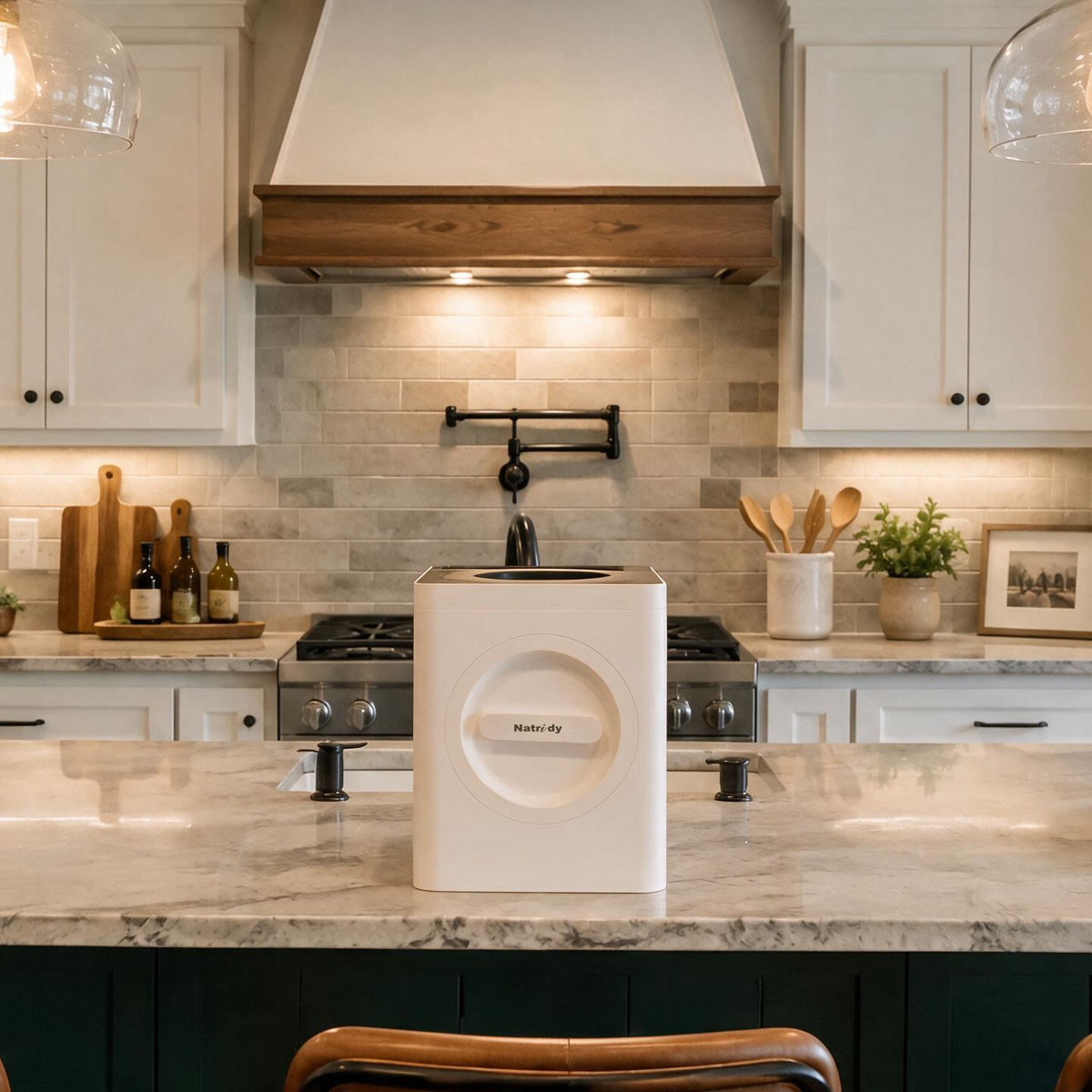
The Natridy Electric Composter produces dry, ground food-scrap material. It does not make finished compost. Choose the destination first, keep the material dry until handoff, and use local or Extension instructions for any further composting step.
FAQ
Is dryer-grinder output compost?
No. EPA describes it as a dried food-scrap mixture that is not biologically stable compost.
What ratio should I mix into a pile or soil?
There is no supported universal ratio for electric-composter output. Manage it as an unfinished food-scrap input and follow guidance for the compost system or site you use.
Can it go in a Green Bin?
Only if the local program accepts it. Toronto accepts dried food waste; other programs may use different rules.
Can I feed it to worms or chickens?
Do not assume a mixed appliance batch is feed. Follow university or veterinary guidance for the exact animal and ingredients.