How to Start Composting at Home: Choose a Method That Fits
To learn how to start composting at home, choose a method that fits your space, scraps, and plans for the output. A backyard pile or worm bin processes suitable scraps over time; local collection follows local rules, while a countertop appliance dries and grinds scraps for later handling.
Choose a home composting method
Starting to compost at home begins with choosing a method that fits your space, because a backyard pile, a worm bin and a city collection program each take different scraps and different amounts of time.
The EPA lists backyard composting and worm composting as home methods. It also suggests a local municipal or community program for people without space to compost. A countertop appliance is another way to handle kitchen scraps, but it does not complete the composting process.
A backyard pile suits a home with outdoor space and dry leaves or woody material. The EPA says a pile can be built from wire, wood, or cinder blocks. It can also sit in an enclosed bin. A well-maintained pile may be ready in about three to five months.
A worm bin can fit indoors or outdoors. The EPA says it takes little space and, when properly maintained, should not smell or attract pests. Worm castings may be harvested after three to six months. A local collection program can suit homes without room for a pile or bin. Check what the local service accepts.
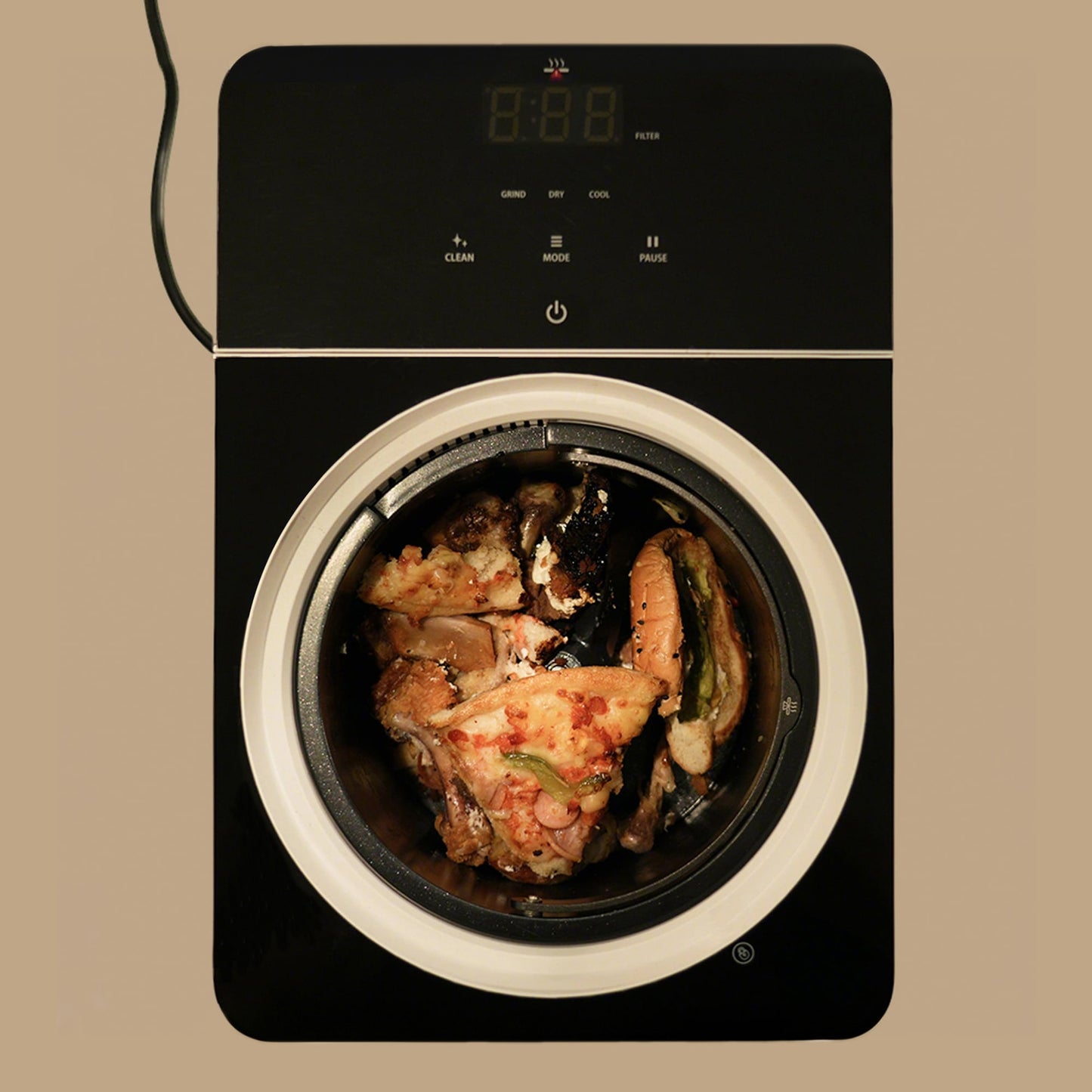
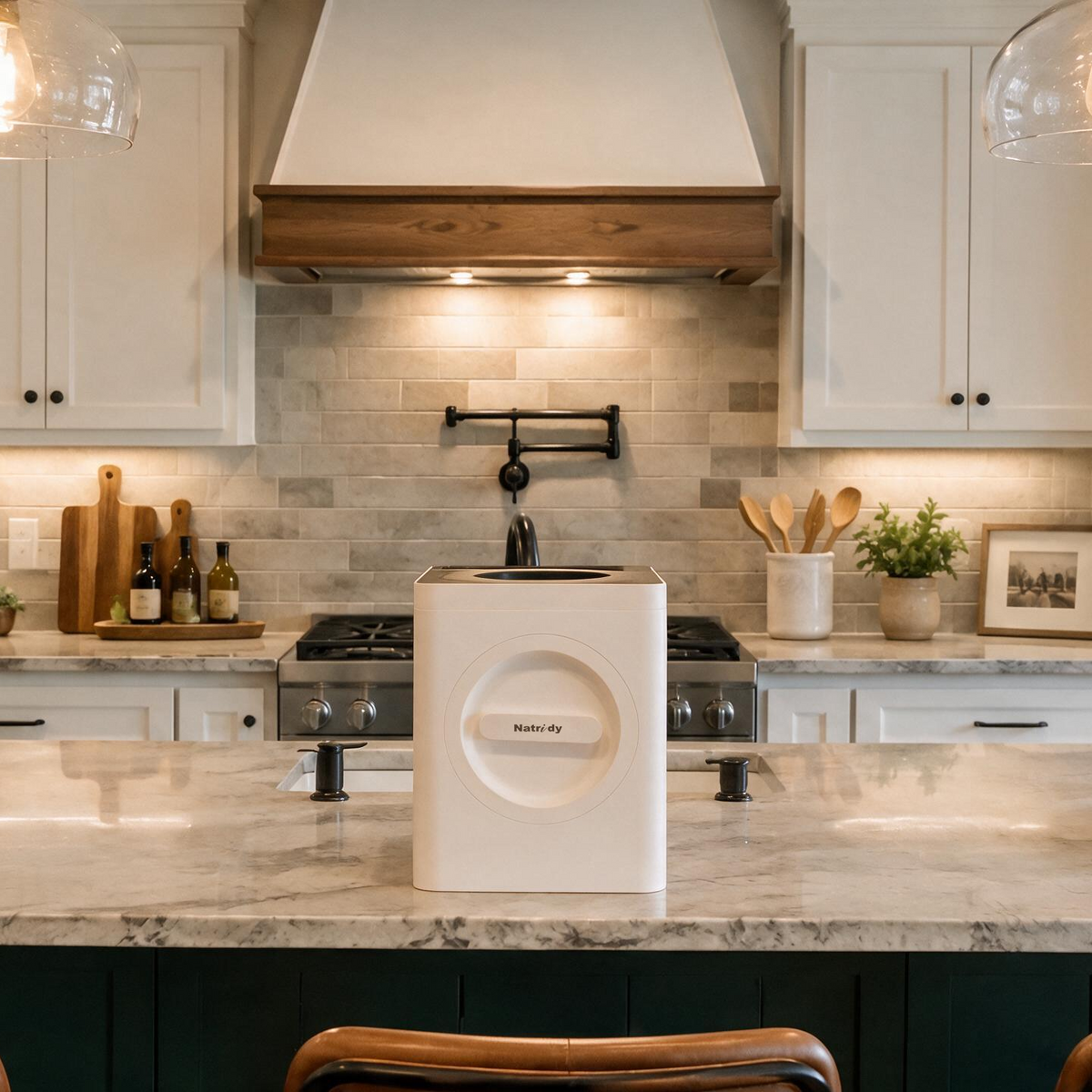
A countertop food-scrap appliance dries and grinds scraps. The EPA describes this as pre-processing, not composting. Its dry mixture can go into a home composting system or collection program. If you want a machine for this step, compare accepted scraps, output, and care needs. Natridy's manual says to install it at least 7.9–11.8 in (20–30 cm) from the wall for ventilation, and not in a confined space such as under cabinets. Our guide to what can go in an electric composter covers accepted items.
What to add, and what happens next
For a backyard pile, the EPA recommends balancing greens, browns, water, and air. Fruit and vegetable scraps, coffee grounds, and crushed eggshells count as greens. Dry leaves, twigs, and shredded cardboard without wax, tape, or glue count as browns.
The EPA recommends at least two to three times as much browns as greens by volume. Cover food scraps with four to eight inches of dry leaves or other browns. The combined material should feel like a wrung-out sponge. Turning the pile occasionally helps air circulate.
Keep meat, fish, bones, dairy, fats, oils, and grease out of a backyard pile, according to the EPA. These foods can attract animals, and backyard piles may not get hot enough to break them down fully. Local collection rules may differ. Portland's curbside program accepts all types of food scraps, including bones and leftovers. It asks residents to drain liquids first.
A worm bin needs a different feed list. The EPA advises using composting worms such as red wrigglers, not worms dug outdoors or bought at a bait shop. It says to avoid citrus, onions, garlic, meat, dairy, greasy foods, bones, and pet waste. Keep the bin between 59°F and 77°F.
A countertop appliance also has its own accepted-scrap list. Natridy lists fruit, vegetables, coffee grounds, eggshells, plant trimmings, meat, fish, leftovers, and cooked chicken bones and ribs (drained) as suitable. Its directions exclude plastic, glass, metal, beef bones, pork shank bones, fruit pits, pet waste, and large amounts of oil or liquid. Check a machine's accepted-scrap list before loading it.
The output matters as much as the input. The EPA says a well-maintained backyard pile may be ready in about three to five months. An untended pile may take a year. Worm castings may be harvested after three to six months. Natridy describes its output as dry, ground food-scrap material. Its directions say to mix it into soil or a compost pile, add it to a green bin, or put it in the trash.
Set up a bin and a kitchen container
A backyard pile does not need a bin. UF/IFAS Extension says a heap 3 to 5 feet wide and 3 feet high needs no bin and costs nothing, though the material tends to spread and pests have free access. If you want a bin, UF/IFAS lists $5 to $100 for a mobile holding bin, $20 to $150 for a stationary bin, $100 to $250 for a multi-bin turning system, and $100 to $400 for tumblers and drums, depending on type and whether the bin is home-made or manufactured. Do-it-yourself bins can be built from wood, welded wire, concrete blocks or wooden pallets.
The EPA says a compost pile breaks down in sun or shade. It suggests starting with a 4- to 6-inch layer of bulky browns such as twigs and wood chips, then layering greens and browns. To keep rodents out, it advises a lid on a bin with no gaps larger than 1/4 inch, burying food scraps in the pile, and leaving out meat, dairy and greasy foods.
Indoors, a kitchen container holds scraps between trips outside. The EPA suggests a closed container on the counter, under the sink, or in the fridge or freezer. Sacramento's organics program says no special pail is needed: a bowl, a paper bag, or a reused coffee tin or yogurt tub works. Sacramento also suggests lining it with a paper bag or towel, newspaper or a compostable bag. Check local rules first, since San Diego does not accept plastic or plant-based compostable bags in its green bin. Portland advises not leaving scraps in the container for more than a few days, to prevent smells and fruit flies, and a quick rinse each time you empty it, with a good scrub with soap or a run through the dishwasher at least once a week.
Compare methods by space, scraps, and time
The right choice depends on where you can keep the system, what scraps you want to use, and what you plan to do with the output. The table separates composting methods from countertop appliances because they do different jobs.
| Method | Space and setup | Scraps | Time and output |
|---|---|---|---|
| Backyard pile | Outdoor space; pile or bin | Greens and browns; EPA advises keeping meat, fish, bones, dairy, fats, oils, and grease out | About three to five months for a well-maintained pile; compost |
| Worm bin | Indoors or outdoors; small space | Worm-safe scraps; EPA excludes citrus, onions, garlic, meat, dairy, greasy foods, bones, and pet waste | Harvest worm castings after three to six months |
| Local collection | Kitchen container and local service | Depends on local program; Portland accepts all food scraps and asks residents to drain liquids | Follow the local pickup or drop-off schedule |
| Natridy Electric Composter (CYF01-500CD5) | Countertop machine; manual says at least 7.9–11.8 in (20–30 cm) from the wall, not under cabinets | Maker lists fruit, vegetables, coffee grounds, eggshells, plant trimmings, meat, fish, and leftovers; some items must stay out | Auto cycle about two to eight hours; dry, ground food-scrap material for further handling |
Capacity alone does not tell you how much material to add at once. Natridy lists a 100 oz (3 L) total capacity and recommends a 68 oz (2 L) batch. Check a machine's loading directions rather than treating bucket size as a recommended batch.
For an appliance, consider where its output will go. The EPA says dried food-scrap mixtures from residential pre-processing appliances can go into a composting system or collection program. Natridy also lists mixing its dry, ground material into soil or a compost pile, adding it to a green bin, or putting it in the trash. Local green-bin rules vary, so check them before using that route.
If you want to compare countertop models in more detail, read our countertop electric composter buyer guide. For a plain-language starting point on the word “best,” see how to define best before comparing composters.
Quick answers to the questions buyers ask
How to start composting at home?
Choose a method that fits your space and scraps: a backyard pile, worm bin, or local collection program. For a pile, the EPA recommends food scraps and yard browns, with at least two to three times as much browns by volume. A well-maintained pile may be ready in about three to five months. Check local rules before using curbside collection.
How does composting at home work?
Home composting uses microorganisms to break down organic material, and the EPA says the process needs carbon-rich browns, nitrogen-rich greens, water, and air. A backyard pile needs those materials balanced and turned occasionally. A worm bin uses composting worms. A countertop appliance dries and grinds scraps but leaves a mixture for further handling.
What is composting at home?
Composting at home is the managed breakdown of organic material, such as food scraps and yard trimmings, into a soil amendment. The EPA lists backyard and worm composting as home methods. A local collection program is another route for scraps. A countertop appliance pre-processes scraps; its dried output is not the same as completed compost.
How to start composting at home for beginners?
Start by choosing a method and checking what it accepts. For a backyard pile, gather food scraps and dry leaves or other browns, then keep the mix moist and turn it occasionally. If you lack outdoor space, the EPA suggests a worm bin or local collection program. Follow that method's directions.
How to compost at home for plants?
For plants, use compost from a managed pile or worm bin according to the EPA's guidance. A well-maintained backyard pile may be ready in about three to five months; worm castings may be harvested after three to six months. Natridy says its dry, ground output needs further handling, such as mixing into soil or a compost pile.
Tested-on-CYF01 fact box
These figures are for model CYF01-500CD5.
- Capacity: 100 oz (3 L), the maker's published figure.
- Recommended batch: 68 oz (2 L), the maker's published figure.
- Noise: 39 dB (Natridy's own measurement).
- Energy: ~1 kWh per 4-hour cycle.
- Rated power: 500 W.
- Voltage and frequency: 120 V / 60 Hz.
- Weight: 19.2 lb.
- Dimensions: 9.84 x 14.3 x 11.8 in.
- Output: dry, ground food-scrap material.
- Warranty: 2 years.
- Returns: 90 days.
- Listed price: $299.99 (as listed).
How we compared
We used the EPA's home composting guidance and public local-program pages for method details, and Natridy's product page, read on October 31, 2026, for the machine row.
We make Natridy.
A machine's cycle time is not the same as the time needed for composting. The EPA describes a managed biological process. Countertop pre-processing appliances dry and grind scraps. If you want compost for plants, choose a method that produces it, or plan where the appliance's dried material will go next.
FAQ
Can I put meat in a home compost system?
It depends on the method. The EPA advises keeping meat, fish, and bones out of a backyard pile because they can attract animals and may not break down fully there. Natridy lists meat and fish among accepted machine scraps. Portland's curbside program accepts all types of food scraps, including bones and leftovers, but local collection rules vary.
How do I keep a kitchen scrap container manageable?
Portland suggests a container that is easy to empty and clean, and advises not leaving scraps in it for more than a few days. Freezing scraps is another option. Sacramento suggests draining excess liquid and washing the container often. Check local rules before adding liners, since accepted bags differ by program.
What should I do if a backyard pile smells bad?
The EPA says a bad smell may mean the pile is too wet or needs air. It suggests adding browns and turning the pile. If the pile is too dry, moisten and turn it. A worm bin has separate care needs, so use the EPA's worm-bin guidance rather than pile fixes.
Can I use dried scraps from a countertop machine on plants?
The EPA says dried food-scrap mixtures from residential pre-processing appliances can be added to a home composting system or collection program. Natridy says its dry, ground output can be mixed into soil or a compost pile. Check local green-bin rules if you plan to use curbside collection.
Sources
- U.S. Environmental Protection Agency, “Composting At Home” — retrieved November 3, 2026: https://www.epa.gov/recycle/composting-home
- City of Portland, “Residential Compost Tips” — retrieved November 3, 2026: https://www.portland.gov/bps/garbage-recycling/residential-compost-tips
- City of Sacramento, “Tips for Food Waste” — retrieved November 3, 2026: https://www.cityofsacramento.gov/public-works/recycling-solid-waste/Collectionservices/Organics/Tipsforfoodwaste
- City of San Diego, “My Green Bin” — retrieved November 3, 2026: https://www.sandiego.gov/node/295425
- UF/IFAS Extension Sarasota County, “Composting Bins” — retrieved November 3, 2026: https://sfyl.ifas.ufl.edu/sarasota/natural-resources/waste-reduction/composting/what-is-composting/compost-bins/
- Natridy, “Natridy Core Unit” — retrieved October 31, 2026: https://shop.natridy.com/products/natridy-core-unit