Food Storage Ends Where the Scrap Handoff Begins
Food storage and scrap processing are different decisions. First decide whether food is safe and edible using product-specific storage guidance. Then consider reuse or donation where appropriate. Only after food becomes a scrap should you choose composting, collection, an appliance, or disposal.
Start With Edible Food, Not the Bin
EPA places prevention at the top of its Wasted Food Scale. Inventorying food before shopping, making a list, and buying only what is needed preserve the resources already used to grow, process, transport, and prepare that food.
Source: US EPA — Prevent Wasted Food Through Source Reduction, retrieved September 12, 2026.
Use this sequence for each item:
- Safe and edible now: plan it into a meal.
- Safe but unlikely to be eaten: freeze, repurpose, or share it when appropriate.
- Uncertain: use product-specific government guidance; do not guess from appearance or a generic blog table.
- Spoiled or inedible: stop treating it as food and choose the permitted scrap route.
| Decision | Evidence to check |
|---|---|
| Still within a safe storage window? | FoodSafety.gov chart or USDA FoodKeeper item guidance |
| What does the package date mean? | Exact label phrase and product type |
| Was cold food handled correctly? | Refrigerator temperature, time, and product-specific limit |
| Is it still edible but surplus? | Safe reuse, freezing, or donation route |
FoodSafety.gov publishes item-specific cold-storage periods and links to USDA FoodKeeper for more than 650 foods and beverages. For example, its chart lists cooked meat or poultry leftovers for 3–4 days at 40°F (4°C) or below. That example is not a universal limit for every leftover.
Source: FoodSafety.gov — Cold Food Storage Chart, retrieved September 12, 2026.
Read Date Labels Without Treating Them as a Safety Clock
USDA FSIS says that, except for infant formula, package dates are generally quality dates rather than federally required safety dates. “Best if Used By,” “Sell-By,” “Use-By,” and “Freeze-By” describe different quality or inventory purposes in the cited federal guidance.
That does not mean any food past a date is automatically safe. Handling history, storage temperature, product-specific time limits, and spoilage still matter. Follow infant-formula dates exactly, use the appropriate government storage guide, and discard food with spoilage characteristics.
Source: USDA FSIS — Food Product Dating, retrieved September 12, 2026.
Decide When Food Becomes a Scrap
“Unavoidable” depends on the household. Peels, stems, bones used for stock, and other parts may be edible or reusable in one recipe and unwanted in another. The useful boundary is not a fixed ingredient list; it is the point when a safe food use is no longer practical for that household.
Once an item crosses that boundary, keep the route explicit. Backyard composting, municipal collection, community drop-off, and powered appliances accept different materials. Check the destination first, then the container or machine. For apartment storage, see where food-scrap smell starts.
Separate Wet Scrap Storage From Processed Output
Container volume does not establish scrap weight. The same container can hold different masses depending on food type, particle size, void space, and water content. Measure your household's actual route rather than converting liters into pounds with a universal factor.
Drying and grinding change physical state but do not complete biological composting. EPA says residential grinder/dehydrator output is not biologically stable and should be composted, cured, or otherwise further treated before use.
Source: US EPA — Approaches to Composting, retrieved September 12, 2026. See also why food scraps are heavy.
Choose the Scrap Handoff Before Processing
Compare each route by accepted inputs, holding time, space, labor, odor controls, collection schedule, and the final permitted destination. Processing a scrap does not guarantee that a municipal program will accept the result. Local rules govern.
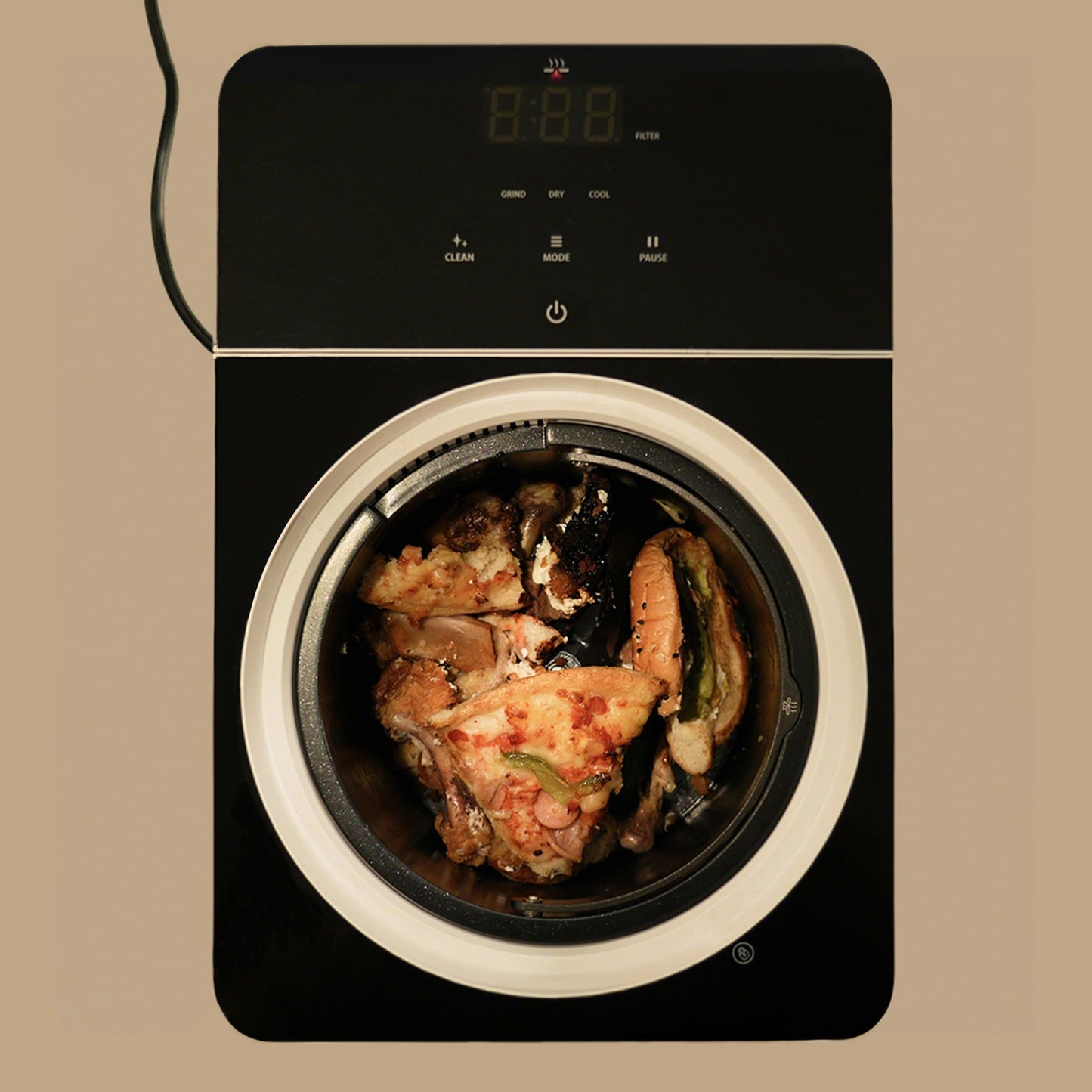
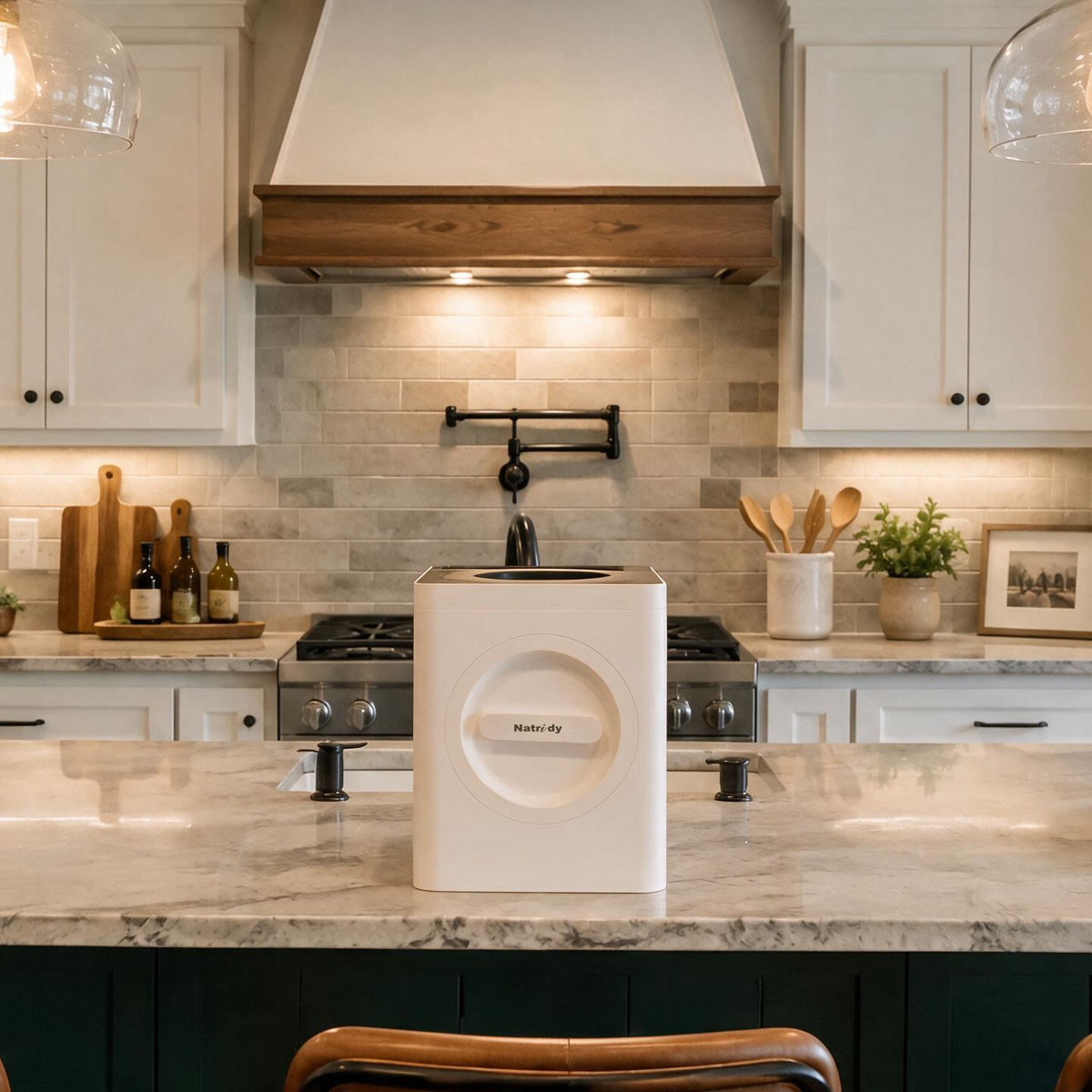
One batch option is the Natridy Core Unit. Quick is fixed at four hours; Auto is about 2–8 hours depending on the load. Natridy reports about 1 kWh per four-hour cycle and a measured sound level of 39 dB. Its output is dry, ground food-scrap material, not finished compost or fertilizer.
Source: Natridy Core Unit product page, retrieved September 12, 2026.
Natridy product specifications
- Model: CYF01-500CD5
- Bucket capacity: 100 oz (3 L)
- Working batch volume: 68 oz / 2 L
- Energy: ~1 kWh per 4-hour cycle
- Noise: 39 dB (measured)
- Output: dry, ground food-scrap material
FAQ
What is preventable food waste? Preventable wasted food is edible food that could have served its intended purpose but instead leaves the food system. EPA prioritizes preventing that outcome over later management routes because prevention preserves the resources already invested in the food.
How can families reduce preventable food waste? Inventory the refrigerator and pantry, plan meals around food already present, make a shopping list, and buy only what is needed. Use FoodSafety.gov or FoodKeeper for item-specific storage limits; do not rely on one generic lifespan for all produce or leftovers.
What are unavoidable food scraps? The boundary varies by household, cuisine, and recipe. Treat an item as a scrap only after safe eating, reuse, freezing, sharing, or donation is no longer appropriate. Then check the exact acceptance rules for the chosen composting, collection, appliance, or disposal route.
When should I use a kitchen food-waste appliance? Consider an appliance only after prevention and safe food-use options, and only when its input rules and downstream route fit the household. A batch dryer-grinder changes physical state; EPA says its output still needs further treatment before use. Confirm local collection or disposal rules before processing.