Why Electric-Composter Input Lists Differ by Model
There is no universal electric-composter input list. Identify the exact model, read its current maker list item by item, and preserve every condition such as drain first, thaw first, or small amounts. If an item is missing or ambiguous, leave it out. Input permission and output readiness are separate questions.
Why similar-looking machines publish different lists
An input list is not simply a catalog of materials that can decompose somewhere. A machine combines a particular vessel, heater, grinder or mixing mechanism, airflow path, control logic, and owner routine. Its maker sets limits around that complete system.
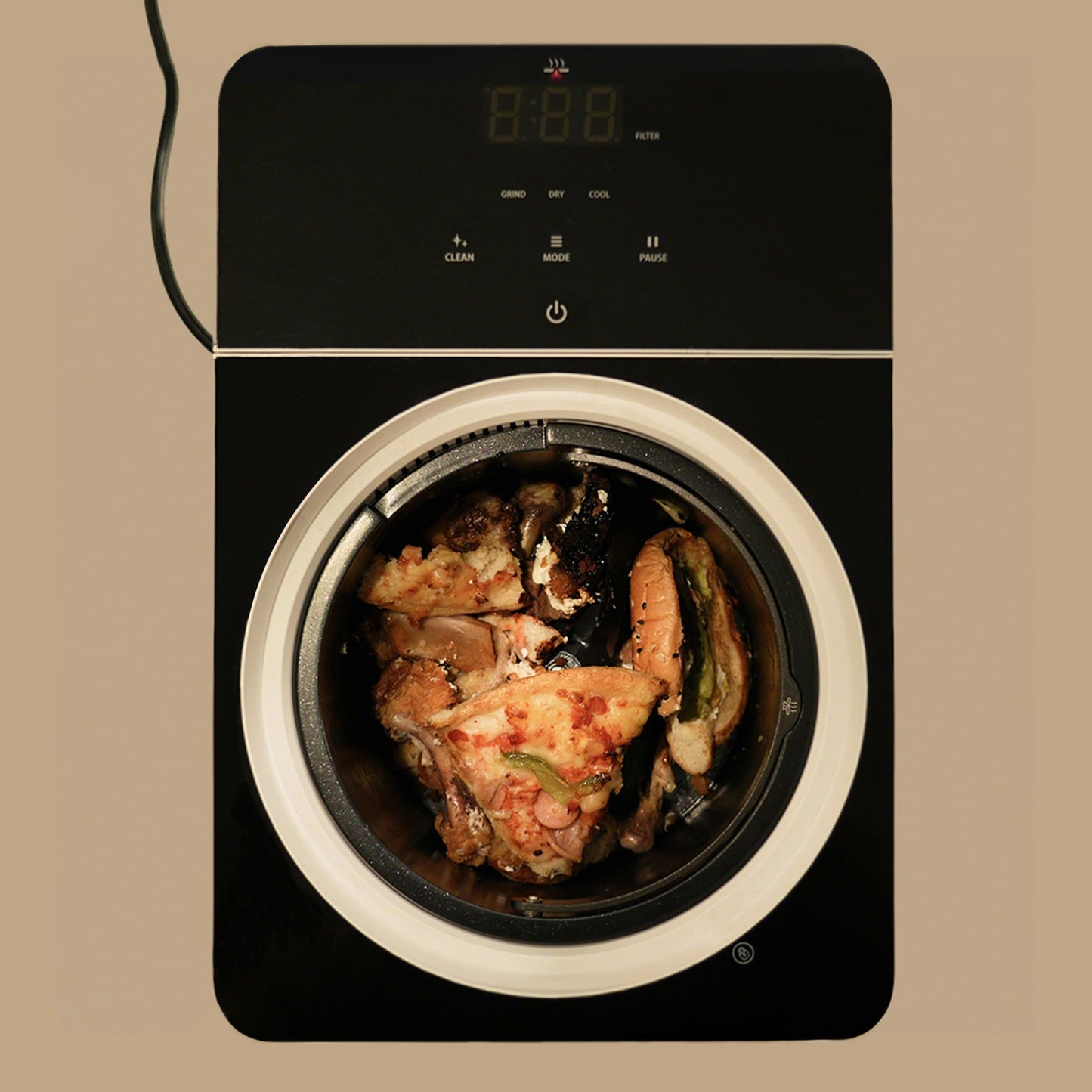
Even countertop dryer-grinders disagree on useful edge cases. Natridy's current page lists cooked chicken bones and ribs but excludes beef bones, pork shank bones, hard shells, and large fruit pits. FoodCycler lists poultry and fish bones as suitable, while its current guide treats pork and lamb bones as small-amount inputs and does not recommend beef bones. Lomi publishes a different model-specific mix and its own exclusions.
Sources: Natridy Core Unit, FoodCycler Do's & Don'ts, and Lomi 3 Get Started, retrieved September 10, 2026. Each source establishes that maker's current instructions; it does not validate another model.
Read every line as four separate decisions
| Decision | Question to ask | What not to assume |
|---|---|---|
| Item identity | Is the exact food or material named? | A similar item is automatically included |
| Preparation | Must it be drained, thawed, cut, or cooked? | “Accepted” means any condition |
| Proportion | Is it unrestricted, a small amount, or part of a mixed load? | Chamber size is a recipe |
| Exclusion | Is the item or a denser version kept out? | A mechanism explanation grants permission |
These distinctions matter. “Meat is accepted” can still mean drain it first. “Bread and rice are accepted” can still mean small amounts. “Bones are accepted” can still exclude denser bones. Dropping the qualifier changes the instruction.
Natridy's current public list
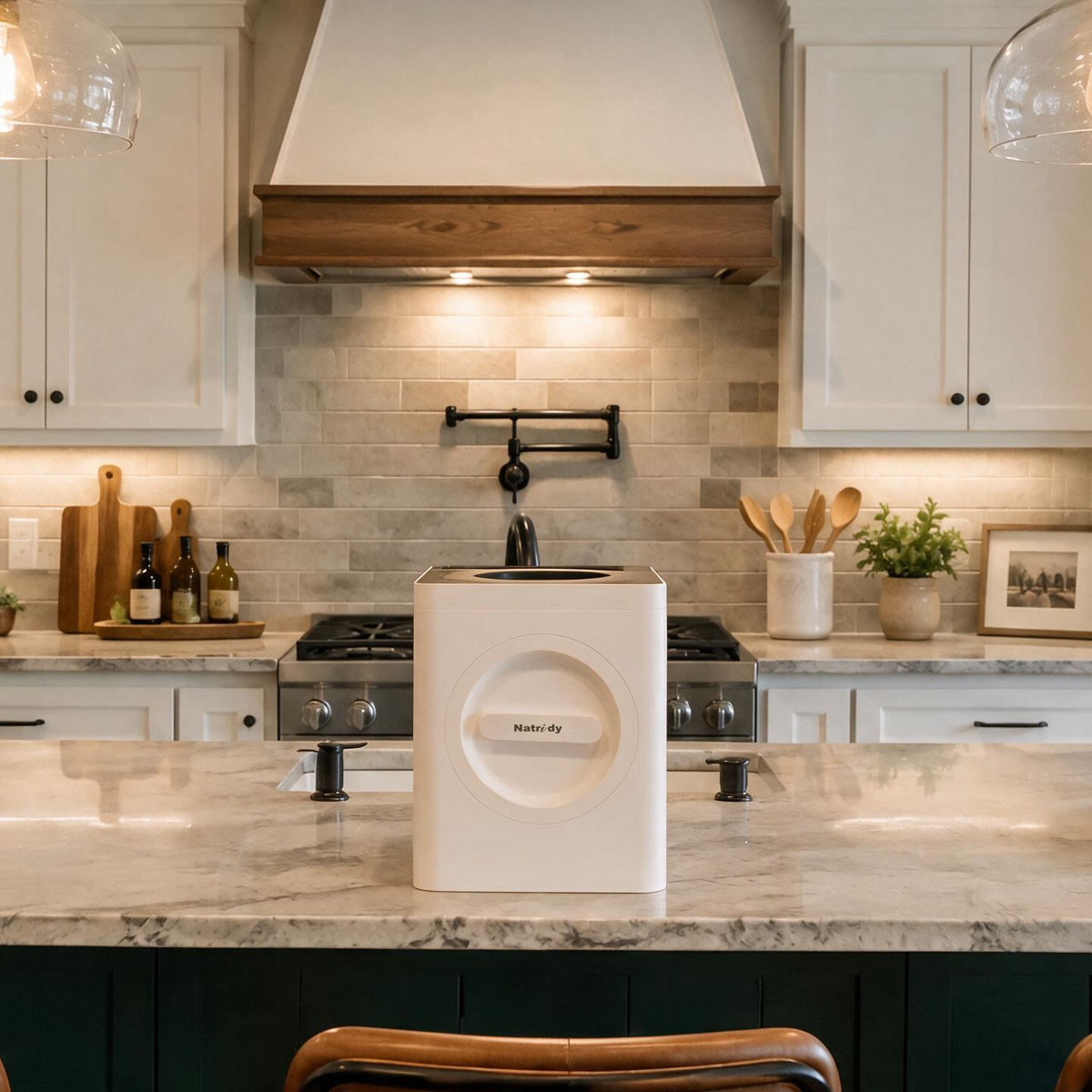
The current Natridy Core Unit page groups inputs for model CYF01-500CD5 this way:
- Add freely: fruit and vegetable scraps, coffee grounds, eggs and shells, plant trimmings, loose tea, and compostable tea bags.
- Add with a stated condition: drain meat, fish, and leftovers first; cooked chicken bones and ribs are listed; bread, rice, and grains are limited to small amounts; corn cobs and husks are listed.
- Keep out: glass, metal, plastic, beef bones, pork shank bones, hard walnut, clam, and oyster shells, avocado, mango, and peach pits, lots of oil, butter, or liquid, frozen scraps unless thawed, uncooked dough, pet waste, diapers, and hygiene products.
- Balance the batch: the page advises going easy on a single sticky or sugary load because syrup and sauce can bake onto the bucket.
This is the public product-page list, not a substitute for the guide supplied with a particular unit. “Lots of liquid” is also not a numerical allowance. If a household needs a precise limit that the page does not provide, ask Natridy before loading it.
For the shorter item-by-item Natridy list, read What Can and Cannot Go in an Electric Composter.
Mechanisms explain limits; they do not create permissions
Hardness can load a grinder. Free liquid increases the amount of water a drying system must move. Sticky, starch-heavy, or sugar-heavy single-food loads can cake on heated surfaces. Those observations help explain why a maker may set a limit.
They do not prove that an unlisted item belongs in the machine. A food can be biodegradable and still be outside a model's mechanical, moisture, or maintenance instructions. When in doubt, leave it out rather than turning a general principle into a new recipe.
If a permitted load finishes wet or clumped, use the model's own troubleshooting instructions. The under-dried batch guide explains the diagnostic sequence without inventing an input allowance.
Keep the output question separate
An item going into a machine does not prove that the removed material is finished compost or ready for plants. The US EPA says residential grinder/dehydrator appliances produce a dried food-scrap mixture that is not biologically stable compost and needs composting, curing, or other further treatment before use.
Source: US EPA — Approaches to Composting, retrieved September 10, 2026.
Natridy describes its result as dry, ground food-scrap material, not finished compost or fertilizer. Decide where that material will go before choosing the input. The output glossary separates appearance from biological condition and destination.
Natridy product specifications
- Model: CYF01-500CD5
- Bucket capacity: 100 oz (3 L)
- Working batch volume: 68 oz (2 L)
- Energy: about 1 kWh per 4-hour cycle
- Noise: 39 dB (measured)
- Output: dry, ground food-scrap material
FAQ
Can all electric composters take the same food scraps? No. Current maker lists differ on bones, shells, pits, liquids, oils, paper-like items, and how much of one food belongs in a load. Use the exact model's current instructions. Another maker's allowance is evidence about that other machine, not permission for yours.
What should I do when an item is not listed? Leave it out and ask the maker. Do not infer permission from biodegradability, from another appliance's list, or from a general explanation about hardness and moisture. The exact model and its preparation and quantity rules control the decision.
Does “accepted” mean I can fill the whole bucket with it? Not necessarily. An accepted item may still require draining, thawing, cutting, or limiting it to a smaller part of a mixed load. Container volume, working fill, food mass, moisture, and mixture are different measures.
Does the removed material need further treatment? Not in a residential grinder/dehydrator. EPA says the dried mixture is not biologically stable compost and requires further treatment. Natridy calls its output dry, ground food-scrap material. Follow the destination rules for the exact output and local program.