Cycle Time vs Retention Time: The Number Buyers Miss
This page covers one narrow question. For the three clocks and retained inventory, see the guide to the two electric composter designs.
Cycle time is how long a defined processing event runs. Retention time is how long food-derived material remains inside the vessel before emptying or harvest. Post-removal handling is a third clock. A short cycle does not prove a short ownership routine, an empty bin, or output ready for direct garden use.
Three clocks, three different questions
| Clock | Buyer question | Possible endpoint |
|---|---|---|
| Processing time | How long does this cycle or scheduled event run? | Drying, grinding, cooling, or another maker-defined event ends |
| Vessel-retention time | How long does food-derived material remain inside? | Batch is emptied, fill line is reached, or material is harvested |
| Post-removal time | What happens after removal? | Municipal handoff, further composting, curing, storage, or disposal |
Marketing comparisons often select the shortest clock. Ownership depends on all three.
Batch machines can have a clear empty endpoint
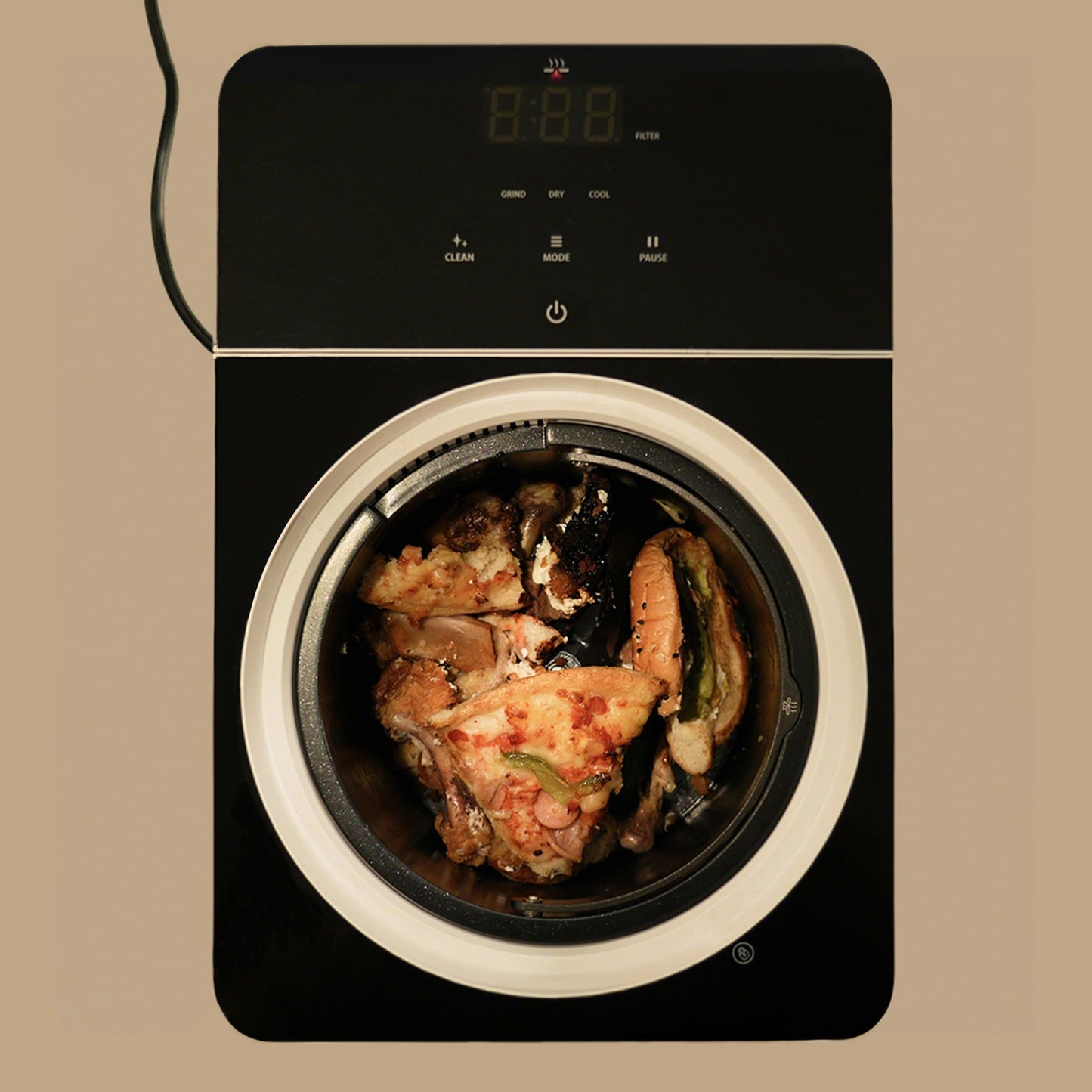
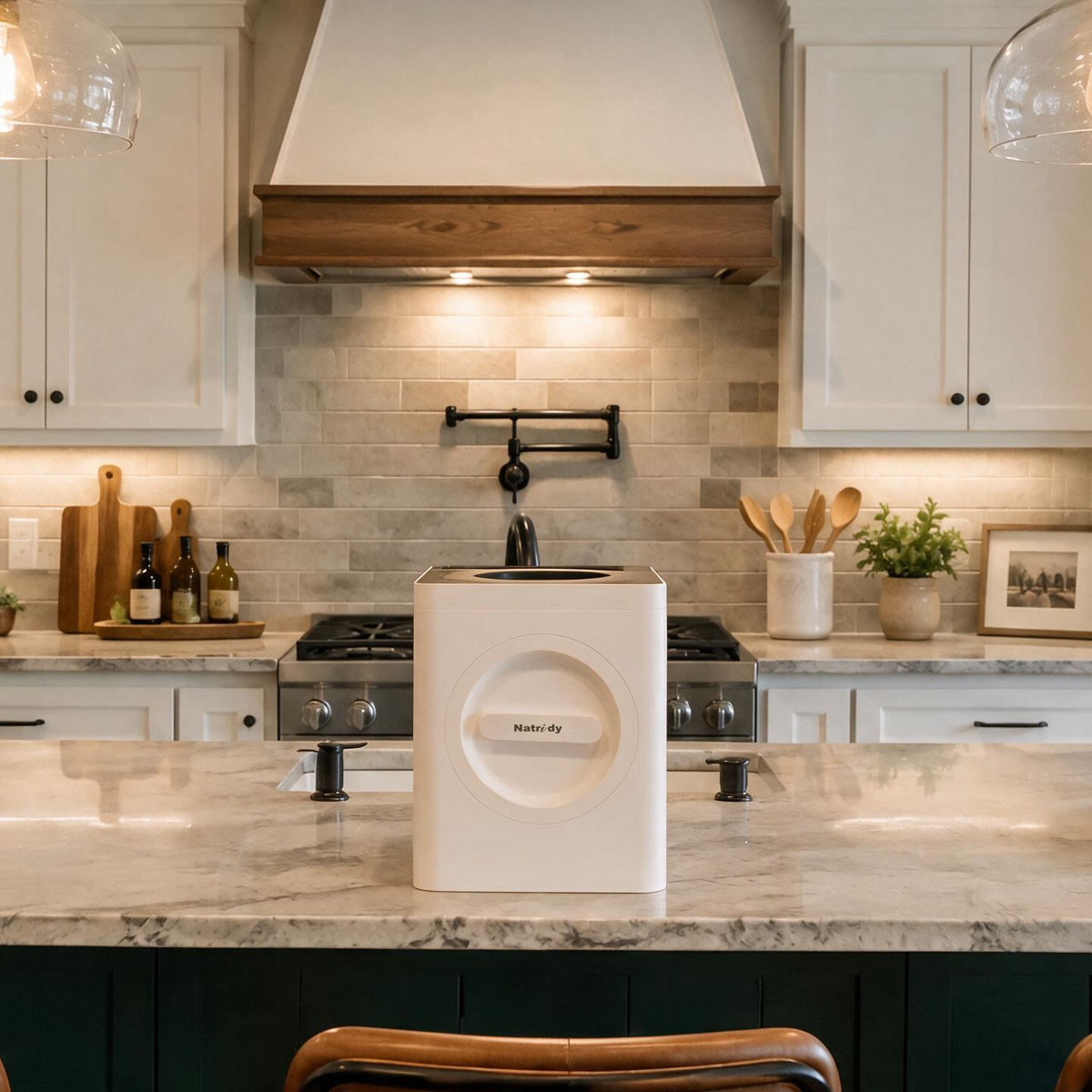
Natridy, Lomi, and FoodCycler follow a finish-and-empty batch routine. The owner loads a supported batch, starts a cycle, and can remove the result after completion. The vessel can return to empty.
FoodCycler currently publishes a typical 4–9-hour range for its models. Lomi publishes different times by model and mode. Those are maker-specific cycle claims, not universal category endpoints.
Natridy's published energy wording is ~1 kWh per 4-hour cycle. That describes an energy reference; it should not be reversed into a promise that every possible batch takes exactly four hours.
Sources: FoodCycler FAQ and the Lomi 3 product page, retrieved August 27, 2026.
Mill shows why cycle and emptying cadence diverge
Mill says a Dry & Grind event generally takes 3–8 hours, with timing affected by the amount, density, moisture, and additions. Processed Food Grounds remain in the bucket while later scraps are added.
Mill's emptying instruction is not "after 3–8 hours." It is to empty when grounds reach the fill line, which its support page says usually takes a couple of weeks for most households.
The correct interpretation is:
- new material is changed by scheduled processing;
- earlier processed material remains in the vessel; and
- the vessel-emptying interval can be much longer than one processing event.
It would be inaccurate to say every scrap remains raw and unchanged for the full interval. It would also be inaccurate to describe the bin as empty after each cycle.
Sources: Mill Dry & Grind tips and Mill emptying, retrieved August 27, 2026.
Reencle does not reduce cleanly to a batch clock
Reencle's prescribed routine begins with an owner-added starter and retained bed. The owner keeps the appliance powered, adds food over time, and harvests excess material from MAX down to MIN rather than emptying the chamber.
That routine has input, bed-management, and harvest clocks. A "24-hour" or daily-input statement is not directly comparable with a finish-and-empty processing cycle because the vessel endpoint and material inventory differ.
Reencle also instructs owners to cure harvested material before planting or seeding. That adds a post-removal clock that should not be hidden by the in-machine speed claim.
Sources: Reencle daily capacity and feeding and Reencle harvest instructions, retrieved August 27, 2026. These are manufacturer-prescribed routines and claims.
Why the third clock matters
EPA says the dry mixture from a residential grinder/dehydrator is not biologically stable and needs an appropriate next step. Reencle prescribes a different post-harvest route for its removed material. Neither endpoint should be inferred from a soil-like appearance.
This means "done" can mean at least three things:
- The appliance event stopped.
- The owner removed material from the vessel.
- The material reached its accepted destination or treatment endpoint.
Source: US EPA Approaches to Composting, retrieved August 27, 2026.
Compare the complete routine
A shorter processing cycle does not necessarily mean earlier emptying or usable finished material. Compare batch-processing time, time retained in the vessel and any processing needed after removal separately.
Choose the routine whose processing, emptying and post-removal steps fit your household.
Buyer checklist
Ask every brand:
- What exact event starts and stops the stated time?
- Can new material be added while processing occurs?
- What remains inside after that event?
- What tells the owner to empty or harvest?
- Can the vessel return to empty?
- What treatment or destination is still required after removal?
For the capacity version of the same problem, read Four Weeks of Food Waste Indoors.
Also compare the two ownership systems, the Natridy vs Mill routine, and the Natridy Electric Composter.
FAQ
Is cycle time the same as how often I empty the machine? Only for routines that prescribe emptying after the defined batch. In a retained-material system, a processing event may change new inputs while earlier material remains until a later fill-line or harvest trigger. Always ask what remains inside after the advertised time ends.
Does a short cycle mean the output is ready for direct garden use? No. Processing duration, vessel emptying, and biological stability are separate questions. EPA says residential grinder/dehydrator output still needs an appropriate next step. Evaluate the material by the actual mechanism, prescribed destination, and any further treatment, not by cycle length or appearance.
How long does one scrap stay inside Mill or Reencle? The reviewed sources describe scheduled cycles, daily inputs, fill lines, retained beds, and harvest routines. They do not track the residence time of an identifiable food particle. Avoid turning a vessel-level interval into a particle-level claim.
Which routine is better for an apartment? Choose based on space and inventory preference. A batch machine can return to an empty countertop vessel. A retained system reduces emptying frequency but keeps food-derived material in a powered floor bin. The better fit depends on counter space, floor space, destination, and desired routine.