Dry lightweight output can wait differently
Natridy produces dry, ground food scraps, not finished compost. Dehydration changes weight and volume, but it does not make the material biologically stable or establish a universal storage duration. Plan its next destination separately.
Why Dry Output Changes the Emptying Routine
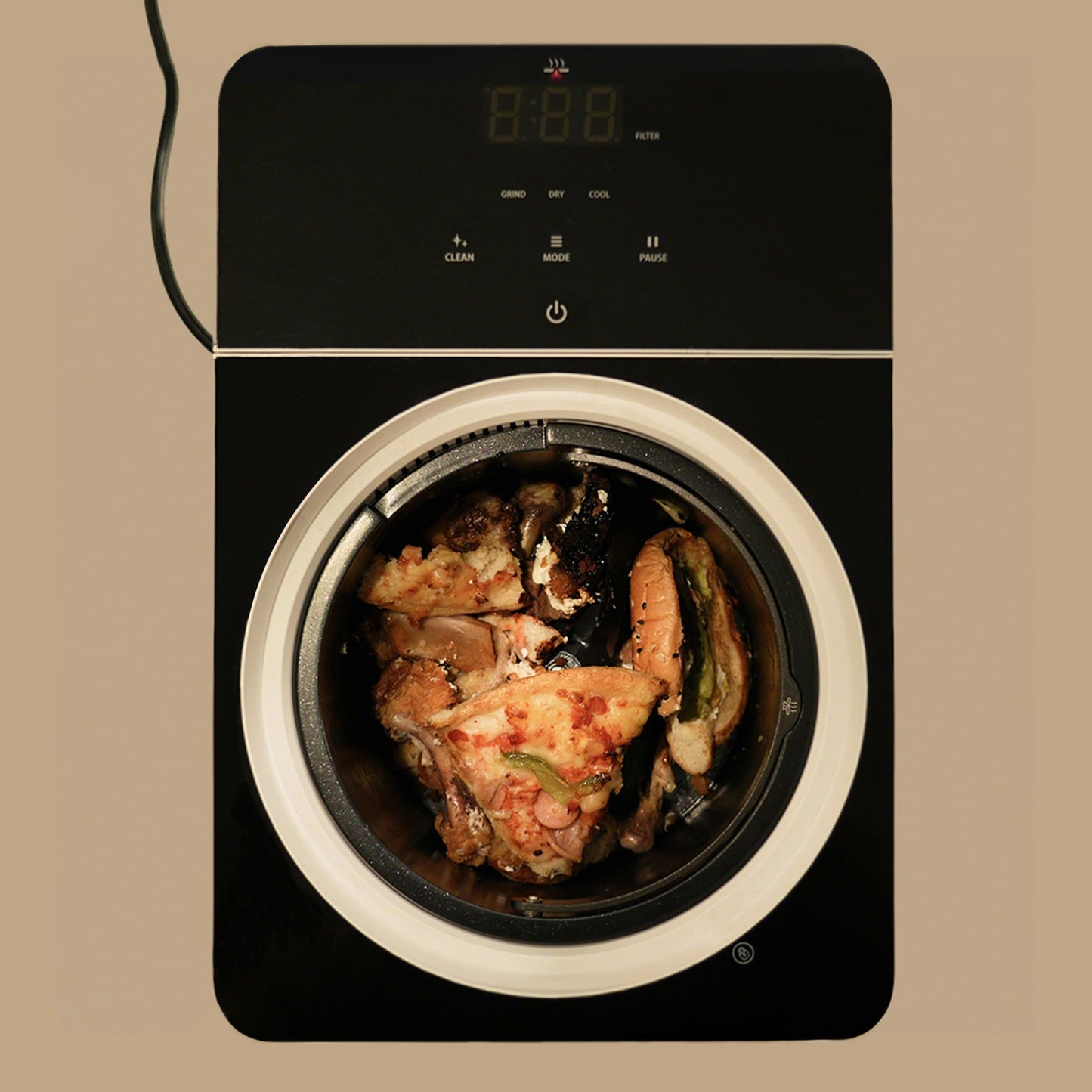
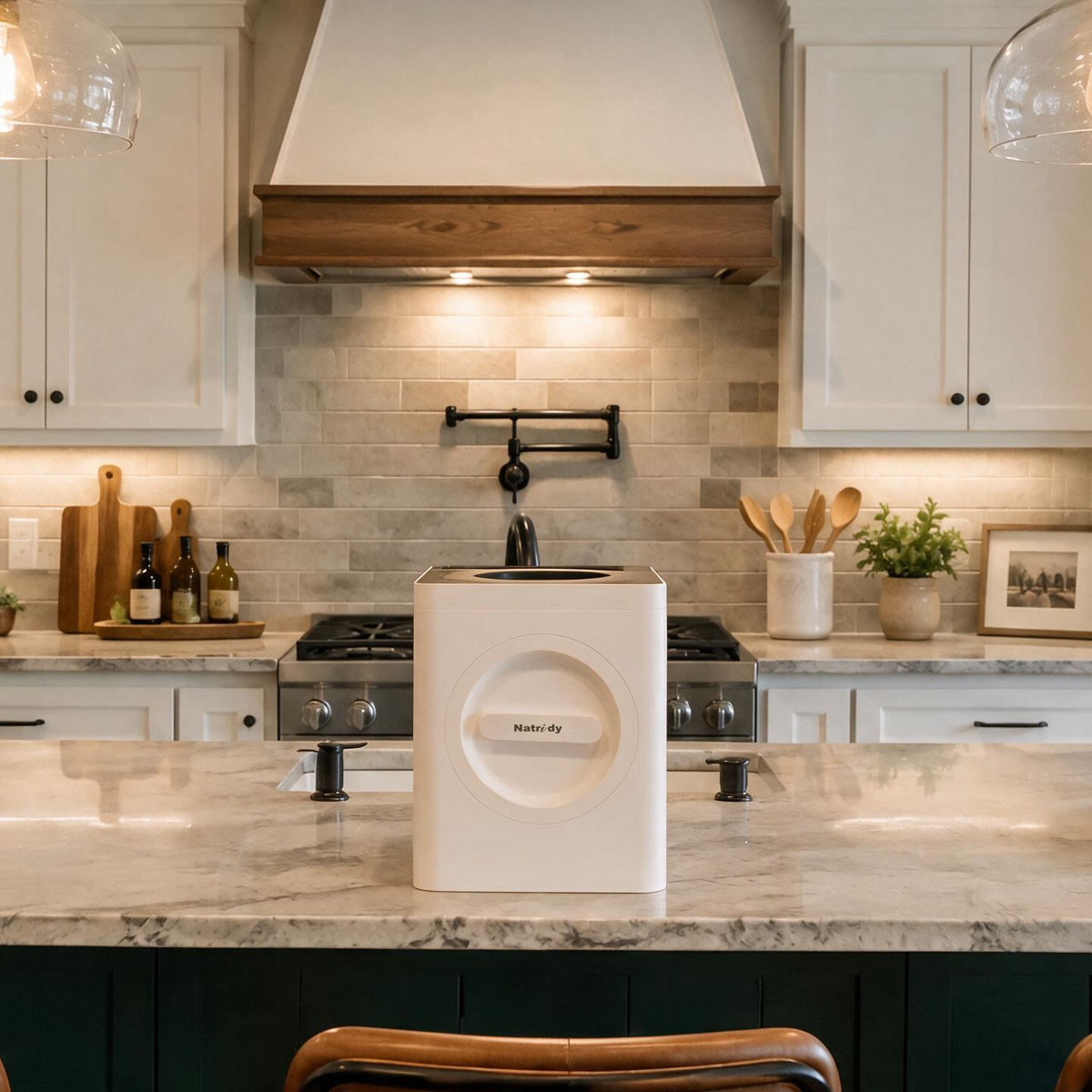
The Natridy Core Unit is a batch dryer-grinder without microbes. It changes a supported load of wet scraps into dry, ground food-scrap material that can be removed after the batch. That state change can reduce weight and volume and can make the material easier to handle.
It does not establish that the output is finished compost, sterile, shelf-stable, or safe to store for a particular number of days. The U.S. Environmental Protection Agency classifies residential grinder/dehydrator output as a dried food-scrap mixture that is not biologically stable and needs composting, curing, or other further treatment before that use.
| Output State | Handling Need |
|---|---|
| Wet food scraps | Follow a frequent removal routine and local collection rules |
| Dry, ground material | Plan a destination; dryness alone does not establish a storage duration |
To learn what materials you can process, see What Can Go in an Electric Composter?.
Planning the Next Handling Step
The next step depends on your household and local rules. Natridy's output can be mixed into soil or a compost pile to continue processing, or put in the trash. It is not finished compost. If you want to use an organics collection service, confirm that the service accepts dehydrated, ground food scraps. Plan the destination separately from the machine's cycle. For more on the material boundary, read What an Electric Composter Produces.
| Planned Destination | What to Confirm |
|---|---|
| Composting system | It accepts this feedstock and you can follow its mixing guidance |
| Soil finishing | You understand this is unfinished organic material, not ready compost |
| Organics collection | The program accepts dehydrated, ground food scraps |
| Trash | The container and pickup routine meet local disposal rules |
For temporary household storage of dry food scraps, prevent them from getting wet again and inspect them before use. An EPA review of food-waste pre-processing technologies notes that dehydrated food waste can regain odor and vector-attraction characteristics if it reabsorbs water. That is a reason to avoid promising a fixed storage window.
If you are comparing machines, check Cycle Time vs Retention Time: The Number Buyers Miss.
Natridy product specifications
- Model: CYF01-500CD5
- Bucket capacity: 100 oz (3 L)
- Working batch volume: 68 oz / 2 L
- Energy: ~1 kWh per 4-hour cycle
- Noise: 39 dB (measured)
- Output: dry, ground food-scrap material
FAQ
How long can dry food-scrap output stay in the composter bucket? Dryness alone cannot tell you how long output will remain suitable in a bucket. Natridy's batch routine lets you remove the result after processing. Move it to its planned destination rather than treating the processing bucket as indefinite storage.
Do I need to empty the composter after every cycle? For Natridy, plan around a batch routine: process a supported load and remove the dry result. The Natridy product page does not specify a required emptying interval or require a separate storage container.
What can I do with the dry material if I am not ready to use it? Keep it separate from new wet scraps, prevent it from getting wet again, and move it to an accepted destination without relying on a universal day count. For composting, soil finishing, or organics collection, follow the receiving system's guidance. Otherwise, use the trash route allowed locally.
Does the dry output smell if left in the bucket? No odor-free duration can be guaranteed. The result varies with the inputs, remaining moisture, handling, and whether the material gets wet again. If odor, visible growth, or moisture appears, do not treat the material as stable compost; move it to an appropriate next step and clean the container.