Natridy vs Reencle: Batch vs Retained Bed
Natridy and Reencle prescribe different household routines. Natridy processes a selected batch that can be removed after the cycle. Reencle asks the owner to maintain an added microbial bed that remains in the chamber between additions and ordinary harvests. Compare the space, input, power, maintenance, emptying, and destination instructions that accompany each routine.
The important difference is what remains in your kitchen
Reencle's marketing category focuses on microbes. Natridy's focuses on drying and grinding. A buyer still has to live with the physical system, not the label.
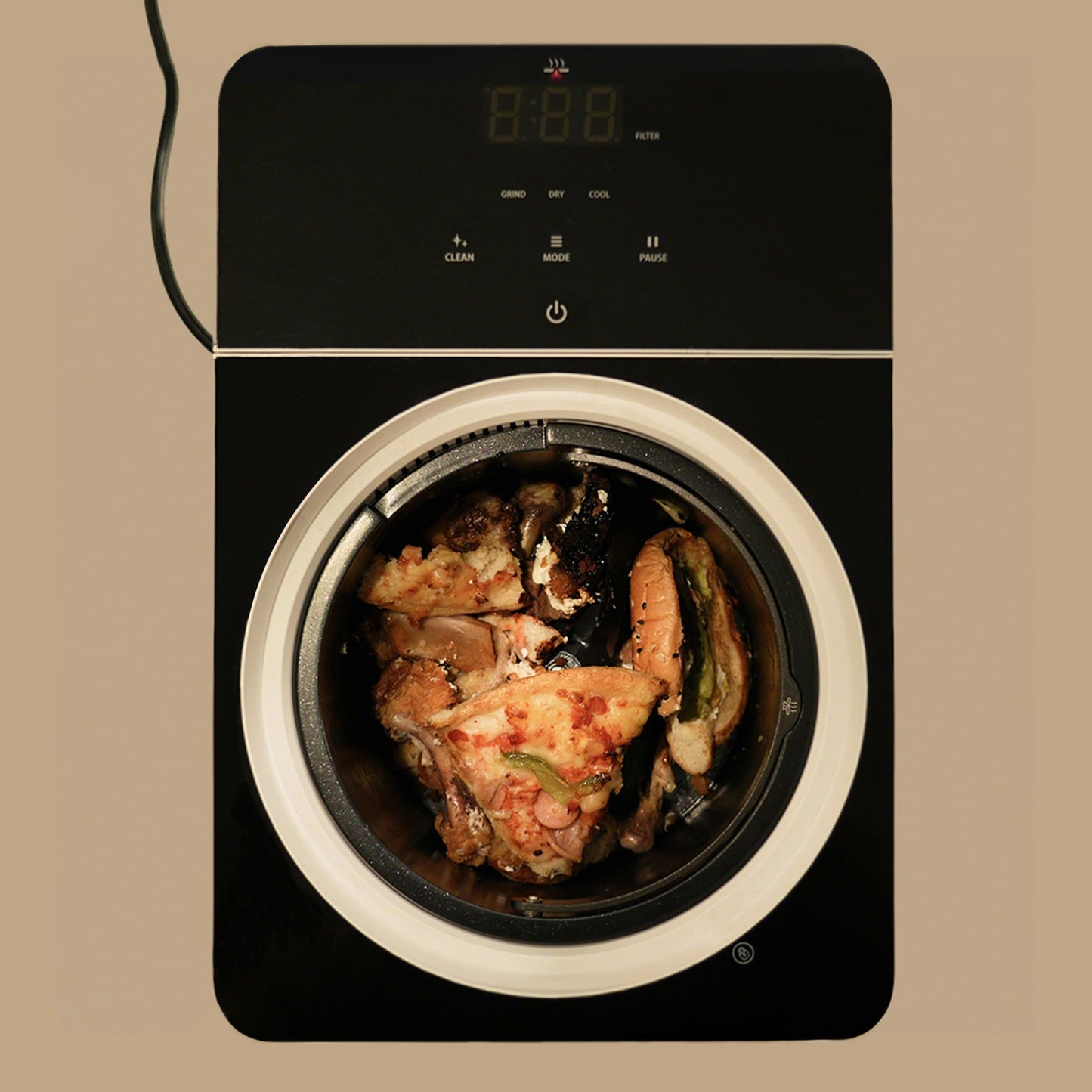
Natridy is a finish-and-empty batch appliance. Load the drum, run Auto for about 2–8 hours or Quick for a fixed 4 hours, and empty the dry, ground food-scrap material. The drum can be empty before the next meal.
Reencle is a continuous-retention floor bin. The owner adds a packaged microbial starter during setup. The hardware then supplies heat, mixing, and airflow around that active bed. New scraps are added to material already inside, and the bed stays in the vessel between additions.
Microbes are not built into Reencle's electronics or motor. They are a living input that the owner adds and maintains. The hardware is the environment around them.
Fast breakdown is not the same as an empty vessel
Four different clocks appear in continuous-system marketing:
- How quickly a recognizable scrap changes form
- How long the active bed remains in the appliance
- How often material is harvested
- How long removed material needs before a final destination
Those are not interchangeable.
Reencle can claim fast visible breakdown while its operating instructions still require material to remain at or above the minimum line. When the chamber reaches the maximum line, the instructions say to remove roughly half, not empty everything. The active bed is the system.
Source: Reencle starter-bed operating instructions, retrieved August 26, 2026.
What the machine itself actually contributes
The Reencle hardware has a heating wire, mixing motor, and fan motor. Its current specification table lists daily figures for named models. Natridy publishes about 1 kWh for a 4-hour reference cycle. These denominators are different: one is per cycle and the other is per day. A household comparison should use expected Natridy cycles over the same number of days as the Reencle figure and should not claim an efficiency winner without the same food load and measurement method. The packaged starter provides the biological input.
Source: Reencle model specifications, retrieved September 3, 2026.
That combination can change food material. It does not follow that everything removed from the chamber is immediately stable or ready for plants. Biological stability has to be evaluated after the material leaves, rather than inferred from the presence of a starter packet.
Natridy makes a narrower promise. A 68 oz (2 L) working batch inside its 100 oz (3 L) drum becomes dry, ground food-scrap material. The output is not finished compost. It is easier to store or move to a green bin, outdoor pile, or another appropriate destination.
The ownership comparison
| Question | Natridy | Reencle Prime / Gravity |
|---|---|---|
| Daily pattern | Accumulate a batch, press start, empty after the cycle | Keep adding scraps to an active bed |
| What remains inside | Nothing, if the owner empties the drum | Starter bed plus material at or above the minimum line |
| Power pattern | ~1 kWh per 4-hour cycle, only when started | Published 1.13–1.25 kWh per day |
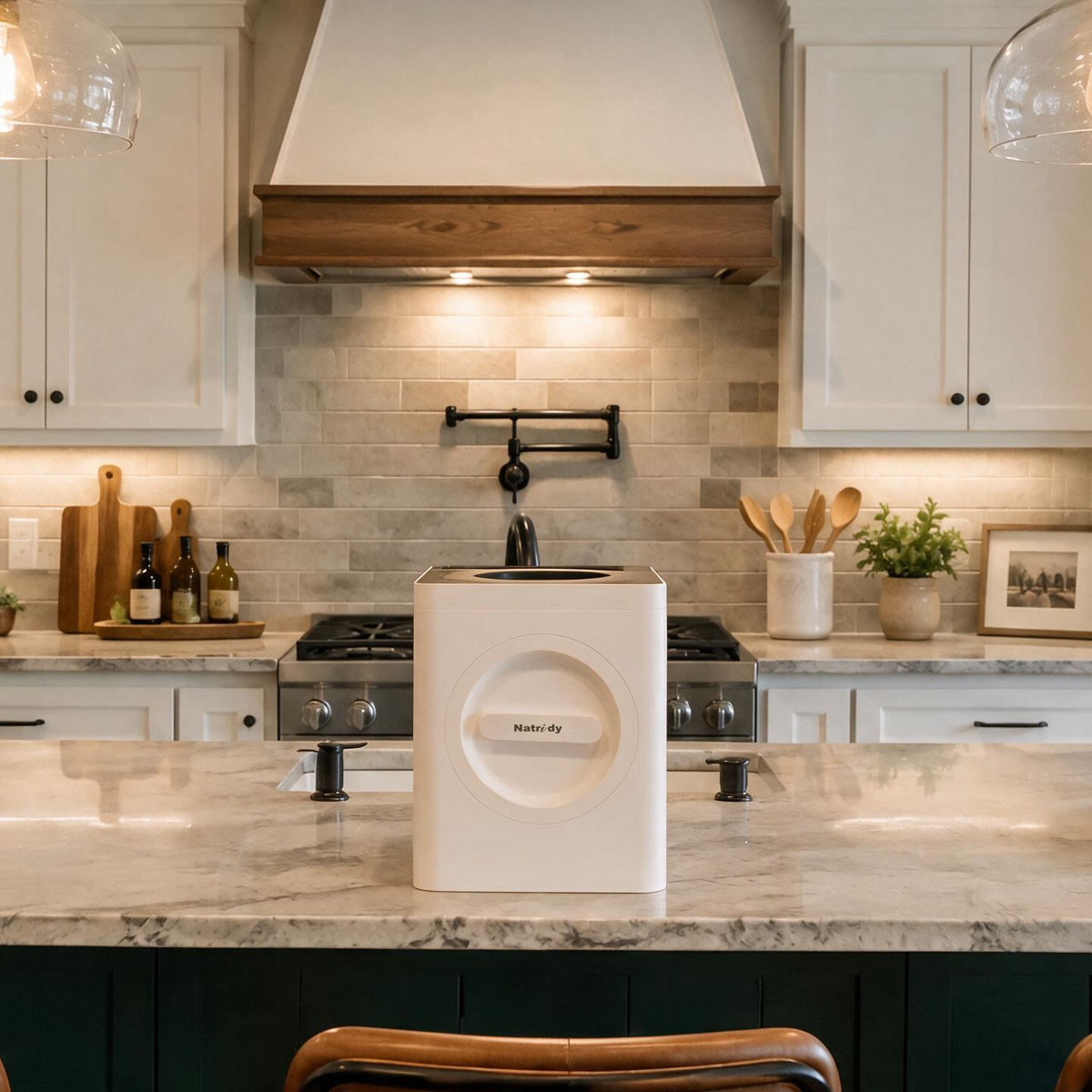
| Location | 9.84 x 14.3 x 11.8 in countertop appliance | 18.4–20.6 in tall floor-bin class |
| Noise | 39 dB (measured) during a cycle | Published 24–28 dB while operating continuously |
| Owner-maintained biology | None | Owner-added starter bed with moisture and feed balance |
| Emptying pattern | Can empty every batch | Remove part at the fill line; active bed remains |
| Carbon | 1.32 lb (600 g) refill; follow model guidance | Published replacement guidance; not a same-basis capacity test |
| Failure recovery | Clean the drum and correct the next load | Instructions include drying or replacing a damaged starter bed |
| Output statement | Dry, ground food-scrap material | Depends on bed condition, harvest timing, and any later curing |
Reencle specifications above come from its current support table, retrieved August 26, 2026.
Treat filter intervals as maintenance guidance
Treat every stated replacement interval as maker maintenance guidance. Carbon life depends on load, humidity, airflow, installed media, operating time, and the endpoint used to call breakthrough. Use the electric-composter odor guide before interpreting odor as filter depletion.
The maintenance surface is fundamentally different
Natridy maintenance is mechanical: stay within the input rules, avoid excess liquid, clean the drum, remove the blade with a Phillips screwdriver when needed, and replace carbon when the odor signal says it is spent.
Reencle adds biological state. Its support material discusses moisture balance, overfeeding, mesh-filter cleaning, bed recovery, and replacement starter when the material becomes a liquid slurry. That is not proof the product is bad. It is proof that “drop it in” is only part of the ownership routine.
A buyer who wants a living indoor system may accept that work. A buyer who wants a defined batch with a clean ending may not.
Which routine fits?
Consider Natridy if a defined finish-and-empty batch, countertop footprint, and cycle-based routine fit the household. Consider Reencle if the household wants its retained-bed process and is prepared to follow its setup, moisture, feeding, and MAX-to-MIN harvest instructions. Neither choice is universally better; the relevant question is which complete routine the owner will maintain.
Natridy's result is dry, ground food-scrap material. For either system, evaluate the output and its next destination separately from the marketing category.
For the broader category model, read Two Electric Composter Designs.
FAQ
Are the microbes built into Reencle? No. Reencle ships a packaged starter that the owner adds during setup. The machine supplies heat, mixing, and airflow around that starter. The bed remains in the chamber and has to be maintained within moisture, feeding, and fill-level limits.
Does Reencle hold raw food for months? That wording is too crude. New scraps are mixed into an active bed and change over time. The defensible ownership fact is that food-derived material remains in the vessel continuously and the bed is not emptied after every day's additions.
Which system uses less energy? The published figures use different denominators: Natridy reports per cycle and Reencle reports per day for named models. Compare expected Natridy cycles over the same number of days and record the food handled. The figures do not establish an efficiency winner without the same load and measurement method.
Is either output automatically ready to use? Natridy does not make finished compost. For Reencle, the presence of microbes and fast breakdown does not by itself prove that every harvest is biologically stable. Follow its removal and curing instructions and evaluate the destination separately from the marketing name.