Microbial Starter Is an Owner-Added Input, Not Machine Hardware
A microbial starter can be included with an appliance without being part of its hardware. Reencle's own setup separates the main unit from a starter pack, then tells the owner to pour that material and water into the chamber. Compare the complete operating system: hardware, added inputs, retained material, electricity, airflow, and owner care.
Start with a physical inventory
Marketing often compresses a whole operating routine into a phrase such as "microbial technology." That phrase does not tell a buyer where the microbes come from or what the appliance itself contains.
Reencle's Prime setup page provides a clearer inventory. It lists the main unit and Compost Starter 1.0 as separate items in the box. The owner is instructed to pour the full starter pack into the chamber, add water, power the unit, and wait before the first food input.
Source: Reencle Prime setup, retrieved August 29, 2026. These are manufacturer instructions, not independent proof of output maturity or biological performance.
The owner adds the starter during setup. It is not a motor, heater, fan, sensor, mixing arm, vessel, or other installed hardware component.
Five layers that should not be collapsed
| Layer | What belongs there | Question for the buyer |
|---|---|---|
| Appliance hardware | Vessel, motor, heater, fan, controls, filter path, mixing parts | What physical work does the machine perform? |
| Supplied consumables | Starter pack, carbon, additives supplied in the box | What must be added, replaced, or maintained? |
| Household inputs | Food, water, dry balancing material, electricity | What does the owner provide during use? |
| Retained inventory | Starter bed and material deliberately kept between additions | What remains in the kitchen, and for how long? |
| Operating discipline | Feeding rate, moisture checks, harvest level, cleaning | What repeated work keeps the system within its prescribed range? |
Calling all five layers a machine feature hides the ownership routine. Calling the starter irrelevant would be equally inaccurate. The honest comparison keeps each layer visible.
Included in the box does not mean built into the machine
A coffee maker may ship with sample beans. A printer may ship with ink. An appliance may ship with a microbial starter. In each case, the supplied material can be necessary for the intended routine without becoming hardware.
This distinction matters for replacement and failure analysis. Reencle says its starter can remain in use with proper care, but also describes conditions in which replacement may be necessary. The same guidance tells owners to retain material at or above the MIN line.
Source: Reencle starter guidance, retrieved August 29, 2026.
Those instructions describe a maintained material bed. They do not turn that bed into permanently installed equipment.
The owner is part of the mechanism
Reencle distinguishes chamber volume from recommended daily input. It tells owners to check moisture, avoid feeding when the bed is wet, stay within a daily input range, and retain material at or above MIN after harvesting.
Sources: Reencle feeding guidance and harvest guidance, retrieved August 29, 2026.
That means the relevant system is not simply "machine plus scraps." It is:
hardware + owner-added starter + water + food inputs + retained bed + heat + mixing + airflow + feeding and harvest decisions
This equation is a classification tool, not a performance verdict. It neither proves nor disproves the maker's biological or output claims.
Compare outcomes with measurements, not labels
Once the physical boundary is clear, buyers can ask better questions:
- What mass and moisture enter over the same time window?
- What material remains in the vessel between additions?
- What mass, moisture, and stability leave at harvest?
- How much electricity and carbon are used over that period?
- What feeding, moisture, and cleaning work does the owner perform?
- What happens after the material leaves the appliance?
A branded word such as "microbial" does not answer these questions. A controlled comparison would hold the food recipe, time window, environmental conditions, and measurement method constant.
Why this matters beside batch machines
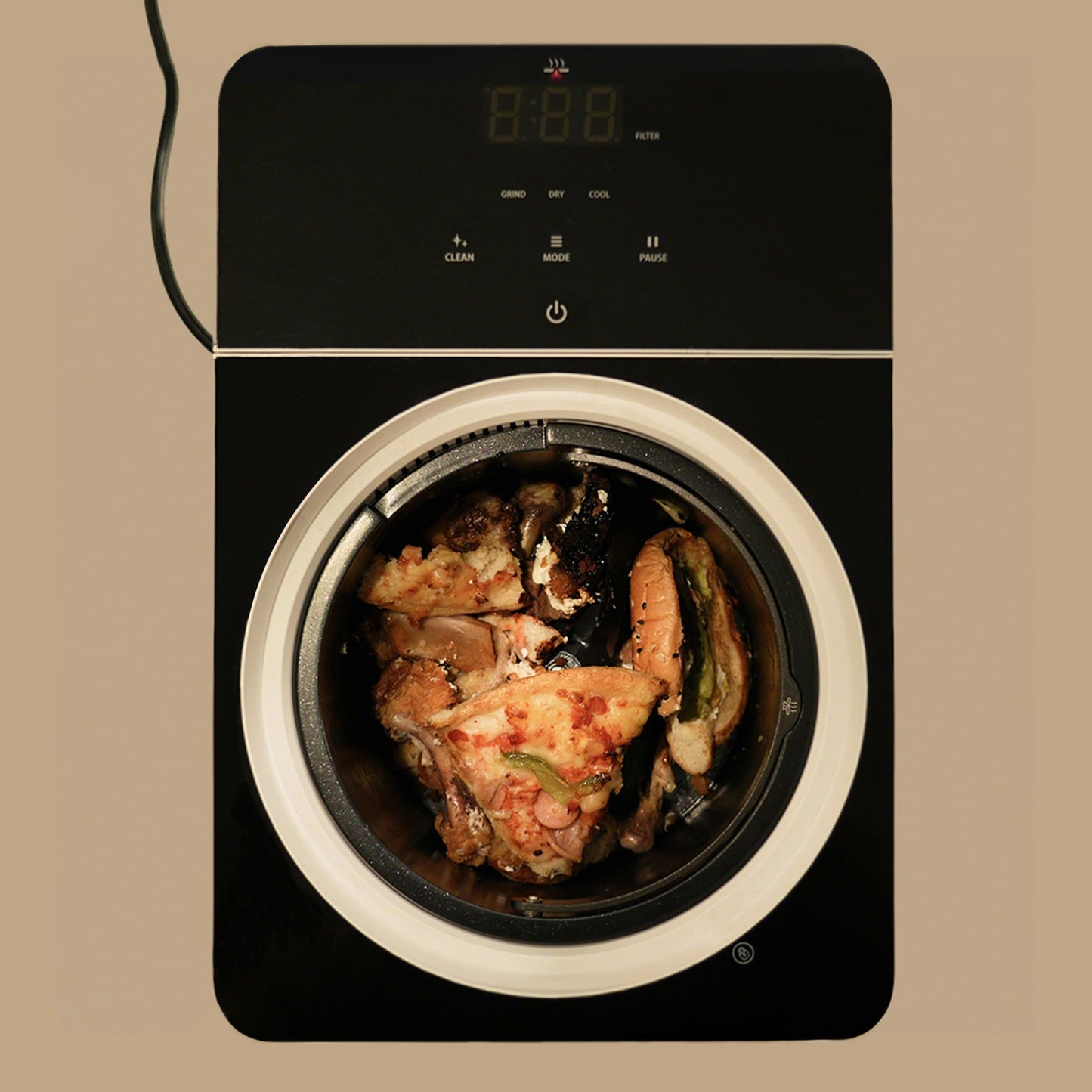
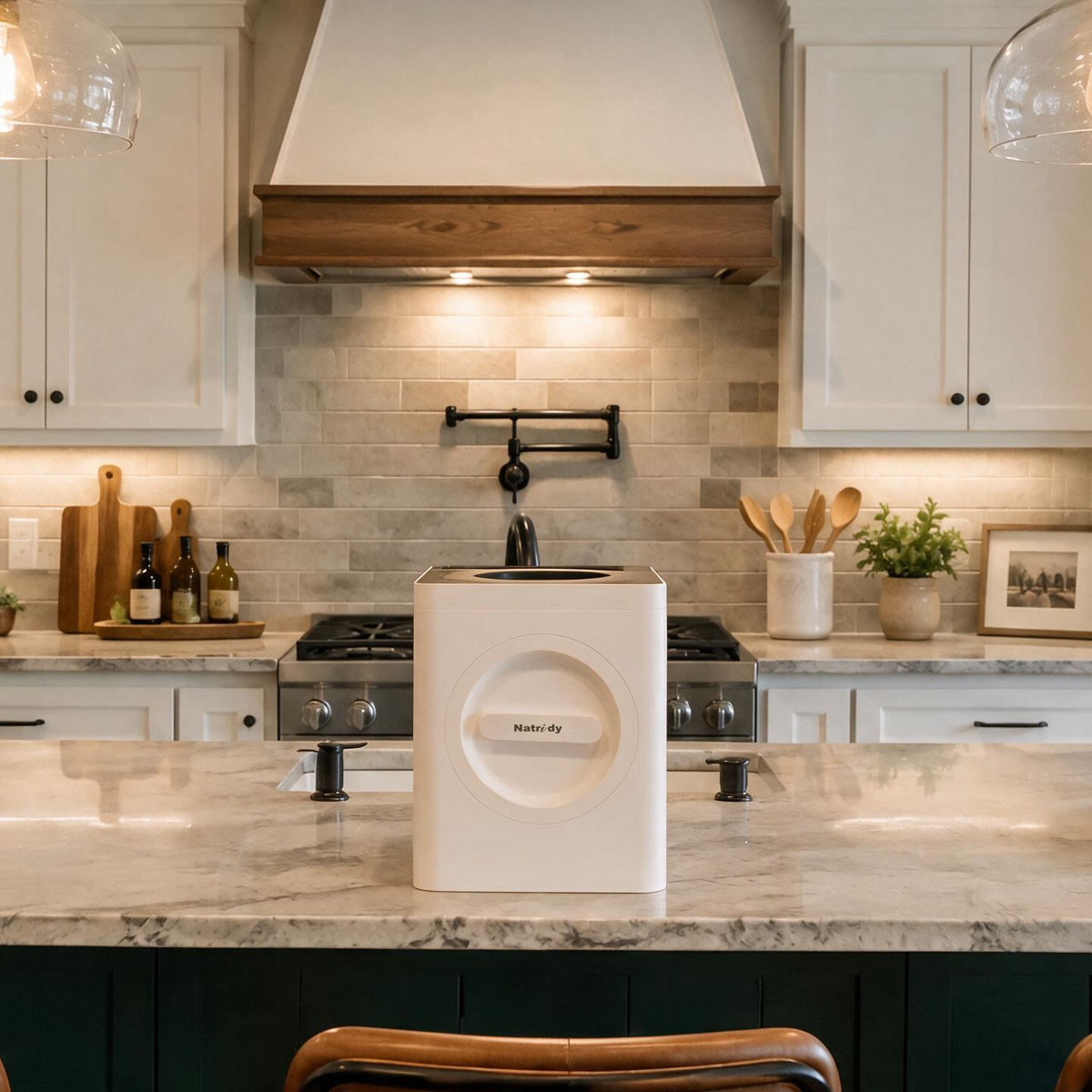
A finish-and-empty machine such as the Natridy Electric Composter uses hardware to grind, heat, move air, and cool a chosen batch. Its stated result is dry, ground food-scrap material, not finished compost. The owner can remove that batch and return the vessel to empty.
A retained-bed routine has a different reset point. Some material is intentionally kept in the chamber across additions and harvests. That may suit an owner who accepts ongoing bed management; a batch routine may suit an owner who prefers visible emptying events. The comparison is about the work and inventory each household wants, not a contest between slogans.
Continue with the two ownership systems, Mill versus Reencle, and the 1-, 7-, and 28-day vessel timeline.
FAQ
Does Reencle include microbes in the box? Yes. Reencle's setup instructions list a starter pack separately from the main unit and tell the owner to add the full pack to the chamber. "Included" describes the purchase bundle. It does not make the starter installed appliance hardware.
Is the microbial starter unimportant because it is not hardware? No. It is part of Reencle's prescribed operating system and the owner is told to establish and maintain a retained bed. The point is accurate classification: hardware, consumables, inputs, and care may all matter, but they should not be presented as the same thing.
Does this prove that a retained microbial system cannot work? No. The hardware-versus-input distinction does not measure decomposition, maturity, stability, odor, energy, or plant safety. Those outcomes require defined tests. An owner-added starter is part of the operating system, but its inclusion does not establish those performance outcomes.
What should an honest microbial-machine test report? Report the starter and water added, food mass and recipe, retained mass, moisture, temperature, energy, carbon, feeding interruptions, harvest mass, post-harvest handling, and the method used to assess stability. Without those data, a mechanism label remains a description, not a result.