Is a 68 oz Working Batch Enough for a Family of Four?
A 68 oz (2 L) working batch can fit a family of four when its supported scraps fit within that working volume at a cycle frequency the household will maintain. Track a representative week's loads and peak days; headcount alone cannot answer the question.
Start with mass, not people
Two four-person households can produce very different food-scrap loads. One cooks vegetables from scratch and eats most leftovers. Another hosts often, trims more produce, and clears more plate scraps. A “family of four” label hides meal location, cooking style, prevention habits, food type, and moisture.
EPA recommends prevention before diversion and provides a household toolkit intended to help people determine how much food is actually going to waste.
Source: EPA Preventing Wasted Food at Home, retrieved September 8, 2026.
That is the correct starting point for appliance sizing: measure your own supported stream, not an internet average.
Separate working volume from scrap weight
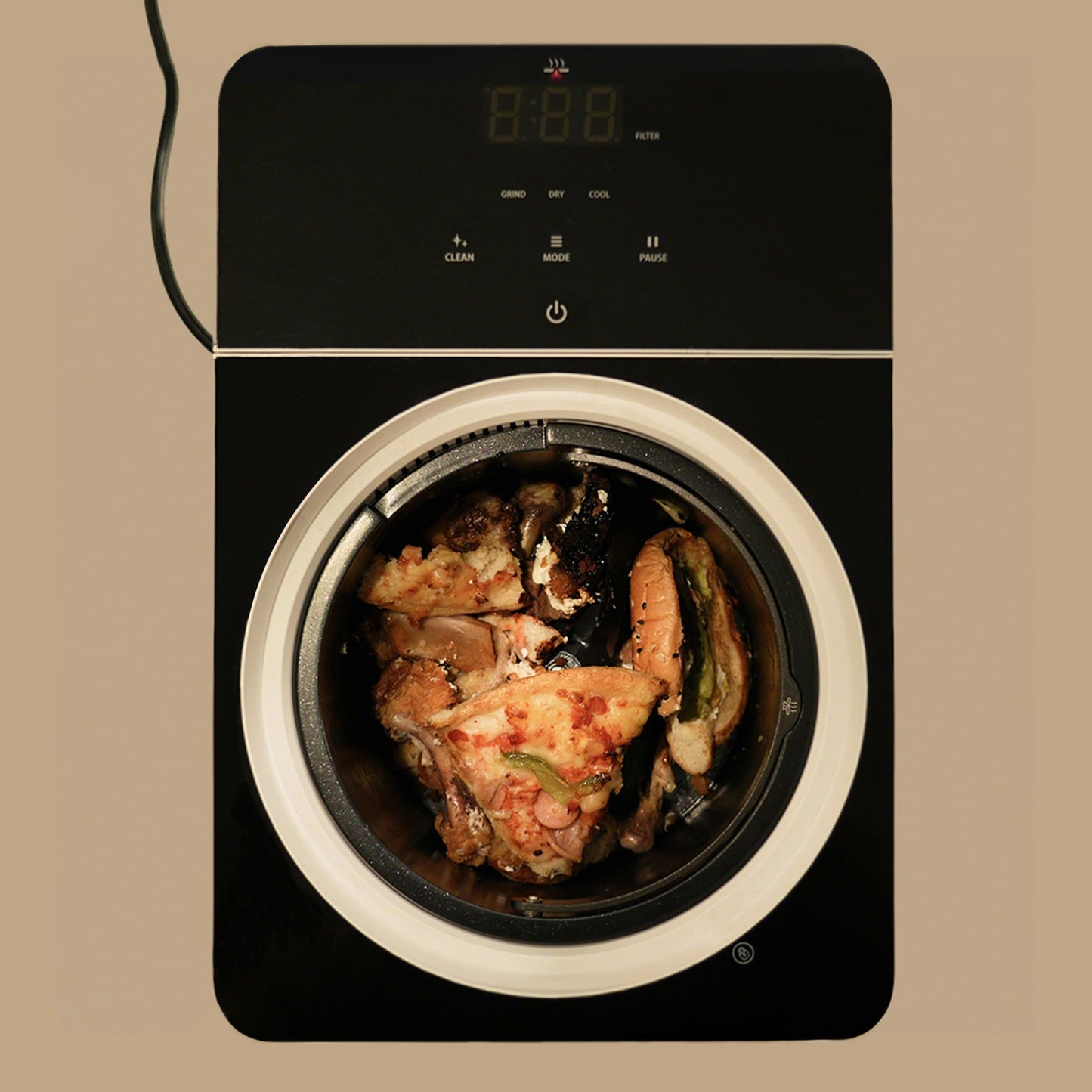
Natridy's capacity specification is 100 oz (3 L), with a 68 oz (2 L) working batch. This volume specification does not establish a 4.25 lb loading allowance. The weight occupying that volume varies with the scraps and how they settle.
Use scale readings to track household waste. Use the working volume and supplied loading instructions to assess whether a batch fits.
The appliance dries and grinds supported food scraps. It does not produce finished compost. Size the input and plan the output destination as separate decisions.
Run a seven-day scrap audit
Use a kitchen scale, one holding container, and a simple table. Tare the empty container before each weighing.
| Day | Supported scraps | Unsupported items | Preventable edible food | Moisture-heavy notes |
|---|---|---|---|---|
| 1 | ___ oz | ___ | ___ oz | ___ |
| 2 | ___ oz | ___ | ___ oz | ___ |
| 3 | ___ oz | ___ | ___ oz | ___ |
| 4 | ___ oz | ___ | ___ oz | ___ |
| 5 | ___ oz | ___ | ___ oz | ___ |
| 6 | ___ oz | ___ | ___ oz | ___ |
| 7 | ___ oz | ___ | ___ oz | ___ |
Exclude glass, metal, plastic, beef bones, pork shank bones, hard shells such as walnut, clam and oyster shells, fruit pits, lots of oil, butter or liquid, uncooked dough, pet waste, diapers and hygiene products. Thaw frozen scraps first. Cooked chicken bones and ribs are supported inputs.
Our supported-input guide explains why hardness, liquid, stickiness, and load balance matter.
Separate preventable food from unavoidable scraps
A sizing audit should not reward overbuying. Mark edible leftovers and spoiled purchases separately from peels, shells, coffee grounds, and preparation scraps. First try meal planning, better storage, portion adjustment, freezing, or reuse where food safety permits.
Then size the appliance for what remains. This gives you a more durable number and keeps the machine focused on material that actually needs a route.
Check actual loads against working volume
For each planned cycle, record whether the supported scraps fit within the 68 oz (2 L) working volume while following the supplied preparation and loading instructions. Record overflow separately.
Count the cycles actually needed, including peak days. A weekly average can hide an oversized individual load. Weight records help describe the household's waste stream, but dividing weekly weight by cycle count does not establish compliance with a volume limit.
Plan for peaks, not just the weekly mean
Family routines are lumpy. Weekend cooking, guests, holidays, meal preparation, and refrigerator clean-outs can create a load much larger than the average day.
Choose a peak plan before buying:
- run an additional supported batch;
- stage scraps safely until the next cycle;
- use a building or municipal organics stream;
- divert suitable material to a compost route; or
- prevent or repurpose food before it becomes waste.
A household can fit the average and still dislike the peak-day workflow. The batch-size guide helps compare mass, volume, and cycle cadence.
Include cycle frequency in cost and effort
More cycles can make a smaller working batch fit a larger weekly stream, but that changes:
- the owner's loading and emptying cadence;
- electricity over the week;
- filter exposure and service timing;
- bucket cleaning frequency; and
- the amount of dry material awaiting its destination.
Natridy's current product page publishes about 1 kWh per four-hour cycle. That is a manufacturer-published specification, not an independent test for every food recipe. If energy matters to the decision, measure plug energy alongside the exact supported load rather than multiplying a headline alone.
Source: Natridy Electric Composter specifications, retrieved September 8, 2026.
Use the first week as calibration
During the first ownership week:
- keep each batch within Natridy's 68 oz (2 L) working volume;
- record input mass and important composition notes;
- note cycle duration and any under-dried or sticky result;
- weigh or contain the removed dry grounds consistently;
- record how many supported batches your household needs; and
- keep a second permitted route for peak days.
The first-week checklist turns that calibration into a repeatable routine.
The answer is a threshold, not a family label
A 68 oz (2 L) working batch is enough when supported loads fit within that working volume and the required cycle frequency suits the household. If overflow recurs, reduce preventable waste, plan additional cycles or use another accepted disposal route.
The measurement takes one week. The result is more useful than any “serves four people” badge.
FAQ
How many pounds fit in the working batch? There is no fixed conversion from the 68 oz (2 L) working volume to pounds of mixed scraps. The weight depends on the mixture and its bulk density.
Why not size an electric composter by family size? Cooking habits, meals away from home, food types and peak days change the load. Record how many supported batches your household actually needs and whether that cycle frequency suits your routine.
Is the 100 oz capacity the same as the 68 oz working batch? No. Natridy's product page lists 100 oz capacity, and 68 oz is the comfortable working batch. Physical bucket capacity should not be interpreted as permission to process every food mix at the maximum fill.
What if our scraps exceed the 68 oz (2 L) working volume between cycles? Reduce preventable waste, run another supported batch, shorten the collection interval, or use a second permitted route such as building organics or compost finishing. Keep each batch within the 68 oz (2 L) working volume and use only supported inputs.