Food-Waste Digester vs Dehydrator: Compare the Actual Process
“Food-waste digester” is not one precise household-appliance category. The label may describe a commercial wet system, an anaerobic vessel, or a consumer machine built around an owner-added microbial bed. A dehydrator removes water, often while grinding. Compare the actual process, what remains inside, the emptying rule, and the required destination—not the label alone.
Start by refusing the false two-column comparison
The US EPA uses biodigester for commercial wet systems that combine biological and mechanical processing and discharge a liquid to a drain or holding tank. EPA separately describes residential grinder/dehydrators as appliances that produce a dried food-scrap mixture that is not biologically stable compost.
Those definitions do not place every consumer product advertised with “microbes” into the same digester bucket. A microbial starter can be an owner-added input rather than hardware inside the appliance. The vessel, heater, agitator, airflow path, feed rules, retained inventory, and harvest instructions are the machine-and-owner system that must be evaluated.
Source: US EPA — Approaches to Composting, retrieved September 9, 2026. EPA's wet-system discussion addresses commercial preprocessors; it is not a performance finding about a named countertop product.
Compare five observable questions
| Question | Finish-and-empty grinder/dehydrator | Retained-material appliance |
|---|---|---|
| What changes? | Heat removes water; grinding reduces particle size | The named model may dry repeatedly or maintain an owner-added microbial bed |
| What remains between additions? | The vessel can return to empty after a chosen batch | Processed material or a starter bed remains in the vessel |
| What limits input? | Working-batch and item rules | Daily-feed, moisture, condition, and fill-line rules |
| What triggers removal? | A completed batch and safe handling state | A fill line, MAX line, or other model-specific trigger |
| What comes next? | An accepted collection, further composting, curing, or permitted disposal route | A pickup, collection, curing, garden-use, or disposal route specified for that output |
This is why Mill and Reencle can share a retained-material ownership pattern while using different claimed mechanisms. Mill tells owners to remove accumulated Food Grounds at its fill line. Reencle tells owners to add a packaged starter during setup, preserve material above MIN, and harvest from MAX down to MIN. Those are manufacturer-prescribed routines, not independent proof of output quality.
Sources: Mill — How to empty your Mill, Reencle — Initial setup, and Reencle — Harvesting at MAX, retrieved September 9, 2026.
Name the output by state and evidence
A dry, dark, fine material is visibly dry, dark, and fine. Those observations do not establish stability, maturity, nutrient availability, pathogen status, or readiness for roots and seeds. EPA says residential grinder/dehydrator output needs composting, curing, or other further treatment before use.
Reencle's current harvest instructions also separate removal from every later use: they say planting or seeding requires three to four weeks of curing after harvest. That instruction matters more than the appearance of the material or a short breakdown-time claim.
For Natridy, the supported description is dry, ground food-scrap material. It is not finished compost. Plan the destination before running a batch: use an organics service only if it accepts the material, add it to a managed further-composting route, or follow another permitted local option.
Read what remains inside after 1, 7, and 28 days for the retention model and the kitchen food-waste route comparison for destination choices.
Choose the routine, not the word “digester”
Before buying, write down:
- the exact model and its supported inputs;
- working input per batch or per day—not just chamber volume;
- whether material stays inside between additions;
- the ordinary removal trigger and how much remains afterward;
- energy on a common time and food-mass basis;
- cleaning, carbon, starter, and recovery requirements; and
- the accepted destination for the removed material.
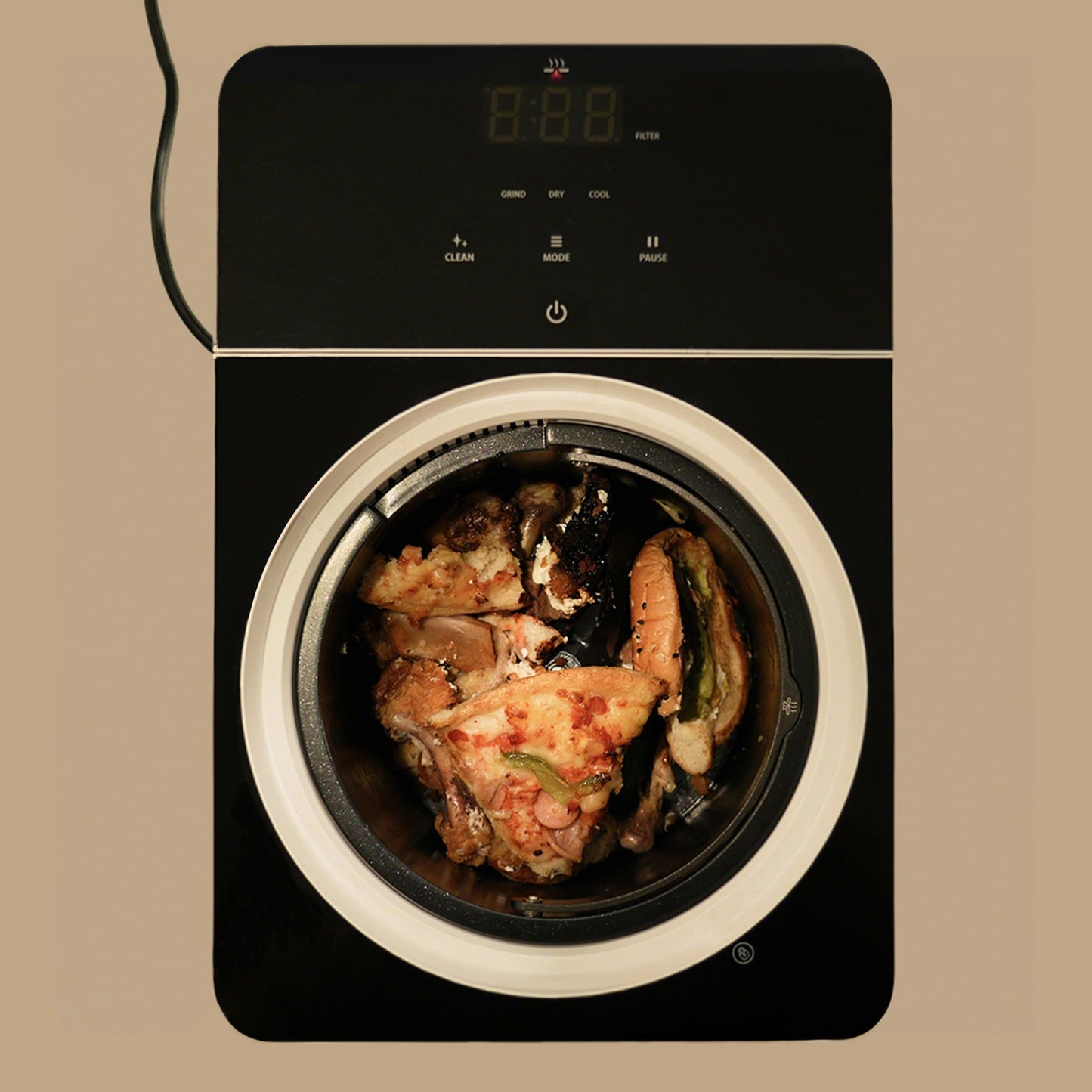
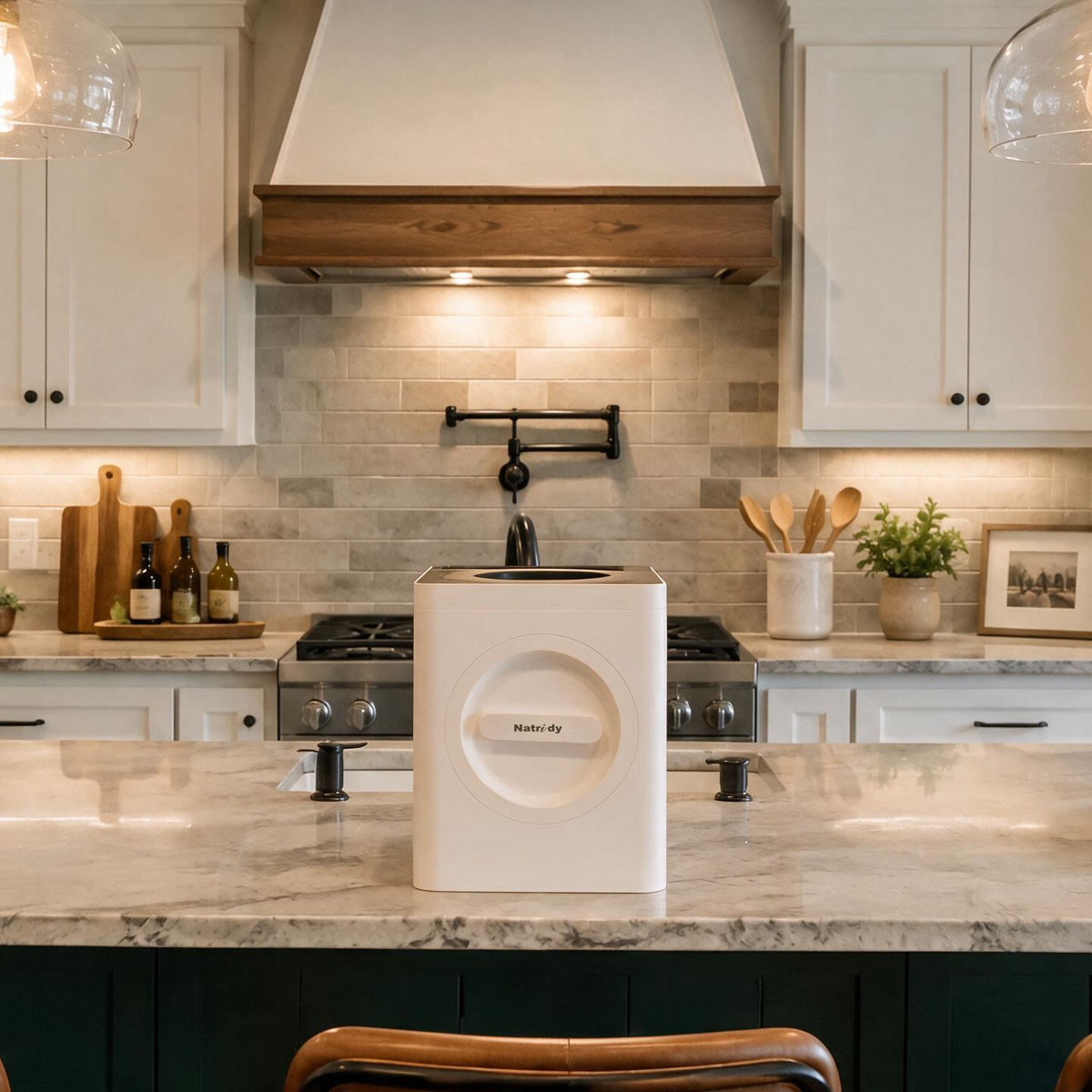
The Natridy Core Unit follows a finish-and-empty batch routine. Its published working batch is 68 oz (2 L) inside a 100 oz (3 L) bucket. The machine dries and grinds a selected load; the owner removes the result and chooses the next destination.
Natridy product specifications
- Model: CYF01-500CD5
- Bucket capacity: 100 oz (3 L)
- Working batch volume: 68 oz / 2 L
- Energy: ~1 kWh per 4-hour cycle
- Noise: 39 dB (measured)
- Output: dry, ground food-scrap material
FAQ
What is the main difference between a food-waste digester and a dehydrator? “Digester” is ambiguous. It can refer to commercial wet processing, anaerobic digestion, or a consumer retained-bed product. A dehydrator removes water, sometimes with grinding. Identify the exact mechanism, retained inventory, removal rule, output state, and destination before comparing the two labels.
Do I need to do anything with the output from a digester? Follow the exact system's output and destination instructions. A commercial wet system, anaerobic digester, and consumer retained-bed appliance do not produce interchangeable outputs. For example, Reencle's current instructions require post-harvest curing before planting or seeding. A category label alone cannot establish readiness.
Is the output from a dehydrator ready to use in the garden? Not automatically. EPA says residential grinder/dehydrator output is not biologically stable compost and needs further treatment. Follow the exact appliance instructions and the rules for the intended destination. For Natridy, describe the result as dry, ground food-scrap material—not finished compost.
Which routine is easier for a busy kitchen? That depends on the household bottleneck. A finish-and-empty batch creates a defined endpoint but requires batch timing and removal. A retained-material system accepts additions under model-specific condition and feed rules but preserves inventory inside. Compare the complete routine against cooking volume, space, maintenance, and destination access.